Wellness Water Filtration System: Are They Worth It?
Wellness Water Filtration System: Are They Worth It?
When it comes to improving your home’s water quality, there are countless filtration options available. From simple faucet filters to advanced whole-house systems, homeowners have more choices than ever before. Among these options, Wellness Water Filtration Systems have attracted attention as a solution for families looking to treat water throughout their entire home.
But are they actually worth the investment?
The answer depends on several factors, including your local water quality, your household’s needs, your budget, and what you’re hoping to achieve. While some homeowners prioritize better-tasting drinking water, others are more concerned about reducing sediment, minimizing chlorine taste and odor, or protecting plumbing fixtures and appliances.
This guide explores how Wellness Water Filtration Systems work, their potential advantages and limitations, what features to look for, and how to decide whether a whole-home filtration system is right for you.
Understanding Whole-Home Water Filtration
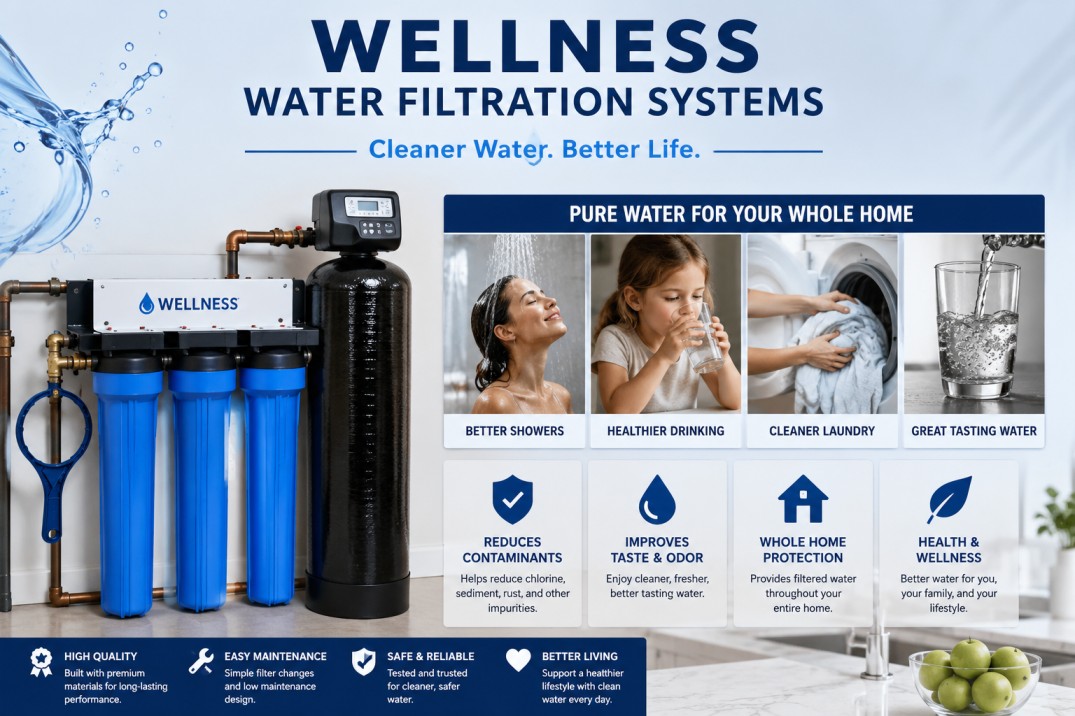
Unlike countertop or under-sink filters that treat water at a single location, whole-home water filtration systems are installed where water enters the home. This means filtered water is available throughout the house, including the kitchen, bathrooms, laundry room, and outdoor taps (depending on installation).
These systems typically include one or more filtration stages that may help reduce sediment, chlorine taste and odor, and other contaminants depending on the filter media used.
For information about drinking water quality in the United States, visit the U.S. Environmental Protection Agency (EPA):
EPA – Drinking Water
https://www.epa.gov/ground-water-and-drinking-water
What Are Wellness Water Filtration Systems?
Wellness Water Filtration Systems are designed to provide whole-home water treatment rather than filtering only drinking water at one faucet. Depending on the specific model and configuration, these systems may include sediment filtration, activated carbon, or other treatment technologies.
Because water quality differs from one location to another, the effectiveness of any filtration system depends on the condition of your incoming water and the contaminants you want to address.
Why Do Homeowners Consider Installing One?
There isn’t a single reason people invest in whole-home filtration. Common motivations include:
- Improving water taste
- Reducing chlorine odor
- Removing sediment
- Protecting plumbing fixtures
- Supporting appliance longevity
- Providing filtered water for bathing and laundry as well as drinking
Many homeowners simply want greater confidence in the quality of the water used throughout their homes.
Potential Benefits of Wellness Water Filtration Systems
Cleaner Water Throughout the Home
One of the biggest advantages is that filtered water reaches multiple locations rather than just one tap.
This means treated water can be available for:
- Drinking
- Cooking
- Bathing
- Washing dishes
- Laundry
- Cleaning
Improved Taste and Odor
Activated carbon filtration is commonly used to reduce chlorine taste and odor, making tap water more pleasant for many households.
Learn more about activated carbon and water treatment from the Water Quality Association:
Water Quality Association
https://www.wqa.org
Reduced Sediment
Some homes experience sediment in their water from aging infrastructure or private wells.
Sediment filters may help reduce:
- Sand
- Rust
- Dirt
- Silt
Reducing these particles may also help protect plumbing components.
Appliance Protection
Water-using appliances such as washing machines, dishwashers, and water heaters can be affected by sediment buildup over time.
Although no filtration system eliminates all maintenance needs, cleaner incoming water may help reduce unnecessary wear caused by sediment.
Convenience
Instead of installing multiple filters throughout the home, one central system treats water as it enters the property.
For larger households, this can be a practical solution.
Are Wellness Water Filtration Systems Worth the Cost?
Whether Wellness Water Filtration Systems are worth the investment depends on your specific circumstances.
They may provide good value if:
- Your local water has noticeable chlorine taste or odor.
- Your home receives water with sediment.
- You want filtered water throughout the entire house.
- You prefer a centralized filtration system.
They may be less necessary if:
- Your municipal water already meets your expectations for taste and quality.
- You only want filtered drinking water at one sink.
- You’re looking for the lowest-cost solution.
A professional water test is one of the best ways to determine whether a whole-home system makes sense.
Test Your Water Before Buying
Before investing in any filtration system, it’s wise to understand your water quality.
Testing can identify issues such as:
- Sediment
- Hardness
- Chlorine
- Iron
- Other contaminants
Knowing what is actually present helps you choose the most appropriate treatment rather than paying for features you may not need.
If you rely on a private well, the Centers for Disease Control and Prevention (CDC) recommends regular testing:
CDC – Private Wells
https://www.cdc.gov/healthywater/drinking/private-wells/
Why Wellness Water Filtration Systems Matter
Access to clean, great-tasting water is essential for everyday health and comfort. Wellness Water Filtration Systems are designed to help improve water quality throughout your home by reducing unwanted impurities, enhancing taste, and supporting cleaner water for drinking, cooking, and bathing. Understanding how these systems work and what they offer can help you decide whether they’re a worthwhile investment for your household.
Features to Look For
Not every filtration system offers the same capabilities.
When comparing products, consider:
Filtration Technology
Different systems use different filtration media. Common options include activated carbon, sediment filters, and specialized treatment media designed for particular water conditions.
Flow Rate
Choose a system capable of supplying enough water for your household without significantly reducing water pressure.
Capacity
Check how many gallons the system is rated to treat before filter replacement or servicing is needed.
Maintenance
Ask:
- How often are filters replaced?
- Are replacement parts readily available?
- Can maintenance be done by the homeowner?
Warranty
A comprehensive warranty can provide additional confidence in your purchase.
Installation Considerations
Whole-home systems are generally installed near the main water line entering the home.
While some experienced homeowners may choose to install a system themselves, professional installation can help ensure proper plumbing connections and compliance with the manufacturer’s recommendations.
Ongoing Maintenance
Every filtration system requires maintenance.
Typical maintenance tasks include:
- Replacing filter cartridges
- Inspecting seals
- Monitoring water pressure
- Following the manufacturer’s service schedule
Ignoring maintenance can reduce filtration performance over time.
Whole-House Filter vs. Under-Sink Filter
If you’re unsure whether a whole-home system is necessary, compare your options.
Whole-House Filtration
Best for homeowners who want filtered water throughout the house.
Under-Sink Filtration
Best for households focused primarily on drinking and cooking water.
Your choice depends on your goals, budget, and household size.
Understanding Product Certifications
When evaluating water treatment products, look for independent certifications that verify performance against recognized standards.
Useful resources include:
Water Quality Association
https://www.wqa.org
These organizations provide information about testing and certification programs for water treatment products.
Questions to Ask Before Purchasing
Before choosing a system, consider these questions:
- Has my water been tested?
- What problem am I trying to solve?
- What contaminants do I want to reduce?
- What maintenance costs should I expect?
- Is professional installation recommended?
- What warranty is offered?
Taking the time to answer these questions can help you make a more informed decision.
Common Misconceptions
“Every home needs a whole-house filtration system.”
Not necessarily. Water quality varies widely, so the best solution depends on your individual circumstances.
“All filters remove every contaminant.”
Different filters are designed to address different water quality issues. Always review the manufacturer’s performance claims and certifications.
“Filtered water requires no maintenance.”
Even high-quality systems need routine maintenance to continue performing effectively.
Frequently Asked Questions
Will a whole-house filtration system soften hard water?
Not by itself. Water softeners and filtration systems serve different purposes, though some homes use both.
How long do filters last?
Filter life depends on water quality, household usage, and the specific product. Always follow the manufacturer’s maintenance recommendations.
Can filtered water taste better?
Many people notice an improvement in taste and odor after reducing chlorine and certain other compounds, though results vary depending on local water conditions.
Is professional installation necessary?
Some systems are suitable for DIY installation, while others are best installed by qualified professionals.
Final Thoughts
So, are Wellness Water Filtration Systems worth it? For many homeowners, the answer is yes—especially if they want cleaner water throughout the entire house, improved taste and odor, or a centralized filtration solution. However, the value of any system depends on your home’s water quality, your goals, and your willingness to maintain the equipment.
Before making a purchase, start with a reliable water test, compare certified products, and choose a system that addresses your household’s actual needs rather than assuming one solution fits every home. By making an informed decision, you can invest in a filtration system that delivers long-term value and supports your family’s water quality goals.
For more information, consult trusted resources such as the U.S. Environmental Protection Agency (EPA), the Centers for Disease Control and Prevention (CDC), the Water Quality Association (WQA), and NSF, all of which provide evidence-based guidance on drinking water and water treatment.
For more: click here