What Is Autoflower? Everything You Need to Know
What Is Autoflower? Everything You Need to Know
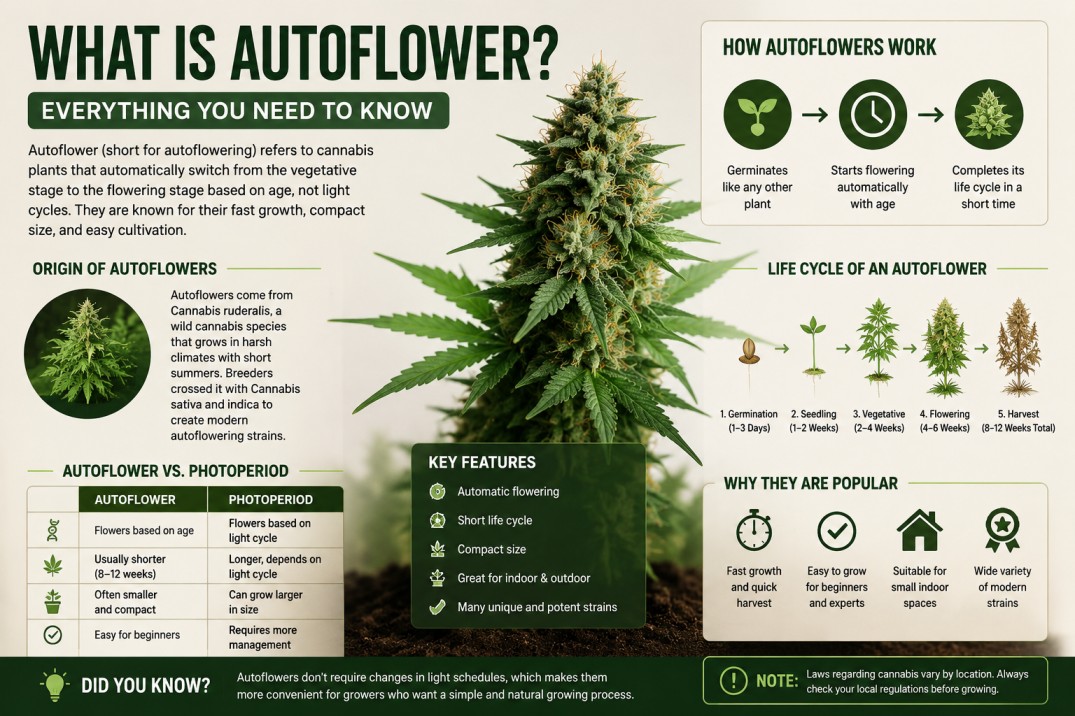
If you’ve been researching different types of cannabis plants, you’ve probably come across the term autoflower. Many beginners ask, “What Is Autoflower?” because autoflowering plants have characteristics that set them apart from traditional cannabis varieties. They are known for transitioning from the vegetative stage to the flowering stage based primarily on age rather than changes in the daily light cycle.
Understanding what autoflowers are, where they come from, and how they differ from other cannabis plant types can help you better understand cannabis botany and breeding. Whether you’re simply curious about the science behind these plants or exploring cannabis education, this guide covers the basics in a clear and easy-to-understand way.
What Is Autoflower?
An autoflower is a cannabis plant that begins flowering automatically as it matures, instead of relying mainly on seasonal changes in daylight. This characteristic comes from the genetics of Cannabis ruderalis, a variety that evolved in regions with shorter growing seasons and long summer daylight hours.
Unlike many traditional cannabis varieties, which typically begin flowering as daylight hours decrease, autoflowering plants generally transition to flowering based on age.
For general botanical information about cannabis, see:
Encyclopaedia Britannica – Cannabis
https://www.britannica.com/plant/cannabis-plant
The Origin of Autoflowering Cannabis
To understand What Is Autoflower?, it’s helpful to know its history.
Modern autoflowering varieties were developed by breeders who combined the automatic flowering trait of Cannabis ruderalis with characteristics from other cannabis varieties. The goal was to create plants that retained the automatic flowering behavior while also expressing other desired characteristics.
Today, autoflowering varieties are widely recognized within the cannabis industry.
How Does an Autoflower Differ from Other Cannabis Plants?
One of the biggest differences is how flowering begins.
Generally speaking:
- Autoflowering plants begin flowering primarily based on age.
- Photoperiod plants usually begin flowering in response to changes in the amount of daily light they receive.
This biological difference is one of the defining features of autoflowering genetics.
Why Are Autoflowers Popular?
Autoflowering plants have become well known within the cannabis community for several reasons.
People often associate them with:
- A relatively simple life cycle
- Faster overall development compared with many photoperiod varieties
- Compact growth in many varieties
- Breeding innovations over the years
Keep in mind that individual characteristics vary depending on the specific cultivar and breeder.
The Role of Cannabis Ruderalis
The automatic flowering trait originates from Cannabis ruderalis, a cannabis variety adapted to challenging climates.
Researchers believe these plants evolved to flower according to age because seasonal daylight changes were less reliable in their native environments.
Learning more about plant adaptation:
Royal Botanic Gardens, Kew
https://www.kew.org
Why Are Autoflowers So Popular?
Autoflowering plants have become increasingly popular because of their unique growth characteristics and ease of understanding for those interested in cannabis botany. Since they begin flowering automatically as they mature, many people find them an interesting example of how plant genetics can influence development. Their compact growth, relatively short life cycle, and diverse modern varieties have made autoflowers a widely recognized topic among cannabis enthusiasts, researchers, and horticulture learners around the world.
Understanding the Cannabis Life Cycle
Like other flowering plants, cannabis goes through several stages during its life.
These generally include:
- Germination
- Seedling development
- Vegetative growth
- Flowering
- Seed production (when pollination occurs)
Autoflowering plants differ mainly in how they transition into the flowering stage.
Common Characteristics of Autoflowers
Although every variety is unique, autoflowering plants are often described as having characteristics such as:
- Automatic flowering
- Compact size in many cultivars
- Relatively short life cycle
- Diverse genetics available through modern breeding
Not every autoflower shares the same appearance or growth pattern, so characteristics can vary considerably.
Are All Autoflowers the Same?
No.
Modern breeders have developed many different autoflowering varieties with unique characteristics.
Differences may include:
- Plant size
- Leaf shape
- Aroma
- Flower structure
- Cannabinoid profile
- Growth duration
These differences depend on the specific genetics involved.
Autoflower vs. Photoperiod Plants
People often compare autoflowering plants with photoperiod plants.
Some general distinctions include:
| Autoflower | Photoperiod |
|---|---|
| Flowers primarily according to age | Flowers mainly in response to light cycle |
| Often has a shorter overall life cycle | Growth period can vary depending on lighting conditions |
| Derived using Cannabis ruderalis genetics | Commonly derived from other cannabis varieties |
Individual plants may differ from these general patterns.
Scientific Interest in Autoflowers
Autoflowering cannabis has attracted attention because it demonstrates how plant genetics influence developmental timing.
Scientists studying flowering mechanisms examine how genetics and environmental conditions interact to control plant development.
For broader information on plant science:
American Society of Plant Biologists
https://plantae.org
Common Misconceptions
“Every autoflower is identical.”
Not true. Different breeders produce many distinct autoflowering cultivars.
“Autoflower means a different species.”
Autoflower refers to a flowering characteristic rather than a completely separate plant species.
“All autoflowers look the same.”
Plant appearance varies depending on genetics.
Legal Considerations
Cannabis laws vary widely depending on the country, state, or region.
Before purchasing, possessing, or cultivating any cannabis-related product, always check the laws where you live.
For information about laws in your jurisdiction, consult official government resources.
Frequently Asked Questions
What Is Autoflower?
An autoflower is a cannabis plant that typically begins flowering according to its age rather than changes in the daily light cycle.
Why are autoflowers called “autoflower”?
They are called autoflowers because they flower automatically as they mature.
Where does the autoflower trait come from?
The automatic flowering characteristic is associated with Cannabis ruderalis genetics.
Are all cannabis plants autoflowers?
No. Many cannabis plants are photoperiod varieties that generally rely on seasonal changes in daylight to begin flowering.
Final Thoughts
If you’ve been asking, “What Is Autoflower?”, the answer is that it refers to cannabis plants with genetics that allow them to begin flowering primarily according to age rather than changes in daylight. This unique characteristic, inherited from Cannabis ruderalis, has made autoflowering varieties an important part of modern cannabis breeding.
Understanding the science behind autoflowering plants can provide valuable insight into plant genetics, adaptation, and breeding. Whether you’re studying cannabis biology, exploring horticulture, or simply expanding your knowledge, learning about autoflowers highlights how genetics influence plant development in fascinating ways.
For reliable educational information, refer to reputable botanical and scientific resources such as Encyclopaedia Britannica, the Royal Botanic Gardens, Kew, and the American Society of Plant Biologists.
For more: click here