Can Water Filters Remove Harmful Chemicals?
Can Water Filters Remove Harmful Chemicals?
Can Water Filters Remove Harmful Chemicals?, Clean drinking water is something many people take for granted, but concerns about water quality have grown significantly in recent years. Reports of chemical contamination, aging water infrastructure, industrial pollution, and environmental changes have encouraged homeowners to pay closer attention to what comes out of their taps. As a result, more families are investing in home water filtration systems to improve both water quality and peace of mind.
One of the most common questions homeowners ask is: Can water filters really remove harmful chemicals? The answer is yes—but it depends on the type of filter, the specific chemicals present, and the overall quality of your water supply. Not all filtration systems are designed to remove every contaminant, which makes understanding how they work essential before making a purchasing decision.
Modern wellness water filtration systems are designed to reduce a wide range of impurities that may affect the taste, odor, appearance, and safety of drinking water. Some systems focus on removing chlorine and sediment, while others are capable of reducing heavy metals, pesticides, volatile organic compounds (VOCs), and other potentially harmful substances.
In this guide, we’ll explore how water filters work, which harmful chemicals they can remove, the different filtration technologies available, and how to choose the right wellness water filtration systems for your home.
Why Harmful Chemicals Can Be Found in Water
Before understanding how filtration works, it’s helpful to know how chemicals enter water supplies in the first place.
Water travels through rivers, lakes, underground aquifers, treatment facilities, and miles of pipelines before reaching your home. Along this journey, it may come into contact with natural minerals, industrial pollutants, agricultural runoff, or aging plumbing materials.
Some chemicals occur naturally, while others result from human activity.
Common sources include:
- Industrial manufacturing
- Agricultural fertilizers
- Pesticides
- Mining operations
- Water treatment processes
- Corroding household pipes
- Landfill runoff
Although public water systems are carefully monitored in many countries, certain contaminants may still be present at low levels or enter water after treatment due to old plumbing infrastructure.
What Are Harmful Chemicals in Drinking Water?
“Harmful chemicals” refers to substances that may negatively affect water quality or human health when present above recommended levels.
Some of the most commonly discussed contaminants include:
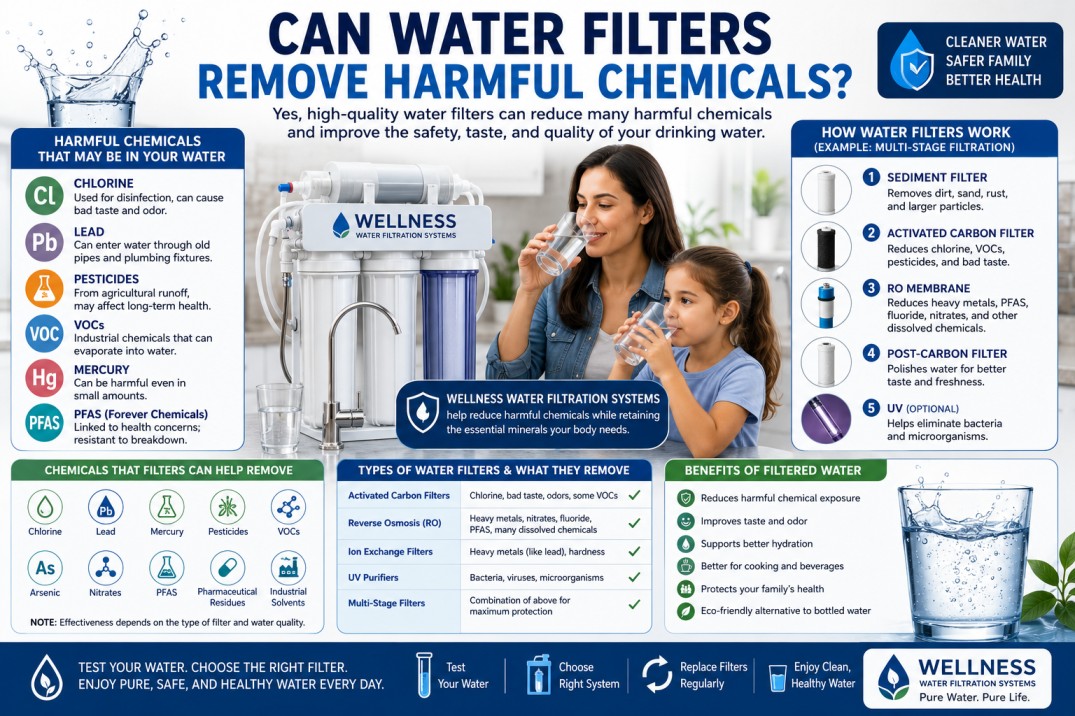
Can Water Filters Remove Harmful Chemicals?:: Chlorine
Municipal water systems often use chlorine to disinfect drinking water and kill harmful bacteria.
While chlorine plays an important role in public health, it can also leave behind an unpleasant taste or odor.
Many homeowners install wellness water filtration systems specifically to reduce chlorine and improve the overall drinking experience.
Lead
Lead can enter drinking water through older plumbing systems, lead service lines, or outdated household fixtures.
Long-term exposure to elevated lead levels can be particularly concerning for children and pregnant women.
Mercury
Although less common, mercury contamination may occur near certain industrial or mining areas.
Water filtration can help reduce mercury when the appropriate filtration technology is used.
Pesticides
Agricultural runoff sometimes carries pesticides into groundwater and surface water sources.
Depending on the type of pesticide, advanced filtration systems may help reduce these contaminants.
Volatile Organic Compounds (VOCs)
VOCs are chemicals commonly associated with industrial solvents, fuels, paints, and cleaning products.
Certain VOCs may affect both water taste and long-term water quality.
PFAS
Per- and polyfluoroalkyl substances (PFAS), sometimes called “forever chemicals,” have received increasing attention due to their persistence in the environment.
Some advanced filtration technologies are capable of reducing specific PFAS compounds.
Can Water Filters Remove Harmful Chemicals?:: How Water Filters Remove Chemicals
Different filtration technologies remove contaminants in different ways.
No single filter eliminates every chemical.
Instead, each system is designed to target specific categories of contaminants.
Understanding these technologies helps homeowners choose the most appropriate filtration solution.
Activated Carbon Filtration
Activated carbon is one of the most widely used filtration materials.
Its porous surface attracts and traps many unwanted substances through a process called adsorption.
Activated carbon filters commonly reduce:
- Chlorine
- Bad tastes
- Odors
- Some pesticides
- Certain VOCs
- Organic compounds
Many countertop, pitcher, refrigerator, and under-sink filters use activated carbon because it effectively improves drinking water taste while reducing several common contaminants.
Reverse Osmosis Systems
Reverse osmosis (RO) is considered one of the most comprehensive residential water purification methods.
These systems force water through an extremely fine membrane that blocks many dissolved contaminants.
Reverse osmosis systems may reduce:
- Lead
- Arsenic
- Nitrates
- Fluoride
- Heavy metals
- Some PFAS
- Various dissolved chemicals
Many premium wellness water filtration systems combine reverse osmosis with multiple additional filtration stages for enhanced purification.
Ion Exchange Filters
Ion exchange technology is commonly used to soften hard water.
These systems replace certain dissolved minerals with alternative ions.
They are particularly effective for reducing:
- Calcium
- Magnesium
- Certain heavy metals
Although primarily designed for water softening, ion exchange can also improve appliance efficiency by reducing mineral buildup.
UV Water Purification
Ultraviolet (UV) systems differ from other filters because they target microorganisms rather than chemicals.
UV light destroys bacteria, viruses, and other microorganisms by damaging their DNA.
However, UV systems do not remove chemical contaminants.
Many homeowners combine UV treatment with wellness water filtration systems that address both biological and chemical concerns.
Can Water Filters Remove Harmful Chemicals?:: Multi-Stage Filtration Systems
Some of today’s most effective home systems combine several technologies into one unit.
A typical multi-stage system may include:
- Sediment filtration
- Activated carbon
- Reverse osmosis
- Mineral balancing
- UV purification
Each stage targets different contaminants, providing more comprehensive protection than a single filtration method alone.
Can Water Filters Remove All Harmful Chemicals?
This is one of the most frequently asked questions.
The honest answer is no.
No filtration system removes every possible contaminant.
Instead, different systems are certified to reduce specific chemicals under defined conditions.
For this reason, homeowners should first understand their local water quality before selecting a filtration system.
Testing your water helps identify:
- Existing contaminants
- Water hardness
- pH levels
- Heavy metals
- Chlorine concentration
This information allows you to choose wellness water filtration systems that target your home’s specific water quality needs.
Why Water Testing Is Important
Water quality varies from one location to another.
Even neighboring communities may have different water characteristics due to varying water sources and infrastructure.
Professional water testing provides valuable information about:
- Chemical contaminants
- Mineral content
- Water hardness
- Iron levels
- Nitrates
- Lead
- pH balance
Instead of guessing, homeowners can use these results to invest in filtration systems that provide the greatest benefit for their household.
Benefits of Wellness Water Filtration Systems
Installing wellness water filtration systems offers more than just cleaner drinking water. These systems can improve your family’s daily hydration experience while providing greater confidence in the quality of the water used for drinking and cooking.
Better-Tasting Water
One of the first improvements most homeowners notice is the taste. Chlorine and certain dissolved compounds can give tap water an unpleasant flavor or smell. A quality filtration system reduces these issues, making water fresher and more enjoyable.
When water tastes better, people naturally tend to drink more of it, supporting healthy hydration.
Reduced Chemical Exposure
While municipal treatment facilities work hard to provide safe drinking water, additional filtration may reduce certain contaminants that remain in the water or enter through older household plumbing.
Depending on the filtration technology, wellness water filtration systems can help reduce:
- Chlorine
- Lead
- Certain pesticides
- Volatile Organic Compounds (VOCs)
- Some PFAS
- Sediment
- Rust particles
Always check the manufacturer’s certifications to see which contaminants a specific system is designed to reduce.
Improved Cooking Quality
Water is an important ingredient in many meals and beverages.
Filtered water can improve the flavor of:
- Coffee
- Tea
- Soups
- Rice
- Pasta
- Homemade beverages
Using cleaner water often produces more consistent cooking results.
Less Dependence on Bottled Water
Many families purchase bottled water because they dislike the taste of tap water.
Installing wellness water filtration systems provides a convenient source of clean drinking water at home, reducing the need for single-use plastic bottles.
This benefits both your budget and the environment.
Choosing the Right Water Filtration System
Selecting the right filtration system depends on your home’s water quality and your family’s needs.
Identify Your Water Source
Your water may come from:
- Municipal water systems
- Private wells
- Community water supplies
Each source has unique characteristics and may require different filtration solutions.
Review Your Water Test Results
Water testing helps identify contaminants that need attention.
Instead of buying a filter based on advertising alone, choose a system designed to address the specific issues found in your water.
Understand Filter Certifications
Look for systems independently tested and certified to reduce specific contaminants.
Certification provides confidence that the filter performs as advertised when used according to the manufacturer’s instructions.
Consider Household Size
Large families typically consume more drinking water and may benefit from higher-capacity filtration systems that require less frequent maintenance.
Maintaining Your Water Filter
Even the best filtration system cannot perform effectively without regular maintenance.
Proper care helps ensure consistent water quality.
Replace Filters on Schedule
Every filter has a limited lifespan.
Overused filters may become less effective at reducing contaminants.
Follow the replacement schedule recommended by the manufacturer.
Inspect the System Regularly
Periodically check for:
- Leaks
- Damaged fittings
- Reduced water pressure
- Unusual tastes or odors
Early maintenance prevents larger problems later.
Clean Components
Certain filtration systems require occasional cleaning of housings, storage tanks, or pre-filters.
Routine cleaning supports long-term performance.
Keep Records
Maintaining a simple record of installation dates and filter replacements helps ensure your wellness water filtration systems continue operating efficiently.
Common Myths About Water Filters
There are many misconceptions about home water filtration. Understanding the facts helps homeowners make informed decisions.
Myth 1: Every Water Filter Removes All Chemicals
Different filters target different contaminants.
For example, activated carbon may reduce chlorine and some VOCs, while reverse osmosis can reduce many dissolved substances. No single filter removes every possible contaminant.
Myth 2: If Water Looks Clear, It’s Completely Safe
Clear water isn’t necessarily free from dissolved chemicals or microorganisms.
Many contaminants cannot be seen, smelled, or tasted.
That’s why testing and proper filtration are important.
Myth 3: Water Filters Last Forever
All filtration systems require maintenance.
Eventually, filters become saturated and must be replaced to continue performing effectively.
Ignoring maintenance may reduce filtration efficiency.
Myth 4: Bottled Water Is Always Better
Many bottled water products come from municipal water sources and may undergo additional treatment before bottling.
In many cases, a well-maintained home filtration system provides excellent drinking water while reducing plastic waste and long-term costs.
Additional Ways to Improve Water Quality at Home
Filtration is only one part of maintaining healthy drinking water.
Families can also:
- Flush taps after long periods of non-use.
- Clean faucet aerators regularly.
- Store drinking water in clean containers.
- Replace aging plumbing fixtures when necessary.
- Schedule periodic water testing.
Combining these habits with wellness water filtration systems helps maintain consistently high water quality.
Frequently Asked Questions
Can water filters remove chlorine?
Yes. Activated carbon filters are highly effective at reducing chlorine, improving both the taste and smell of drinking water.
Can water filters remove lead?
Many reverse osmosis systems and certain certified filters are designed to reduce lead. Always verify product certifications before purchasing.
Are PFAS removable?
Some advanced filtration systems, including certain Can Water Filters Remove Harmful Chemicals? reverse osmosis and activated carbon systems, are certified to reduce specific PFAS compounds.
How often should I replace my water filter?
Replacement schedules vary depending on the filter type, water quality, and household usage. Always follow the manufacturer’s maintenance recommendations.
Do I need a whole-house filtration system?
Not necessarily. Some households only need point-of-use filters for drinking water, while others benefit from whole-house wellness water filtration systems that treat water throughout the home.
Conclusion
Water quality plays a vital role in protecting your family’s health and supporting everyday well-being. While municipal water supplies are treated to meet safety standards, additional filtration can improve taste, reduce certain contaminants, and provide greater peace of mind—especially in homes with older plumbing or unique water quality concerns.
The effectiveness of a water filter depends on the technology it uses and the contaminants it is designed to reduce. Activated carbon, reverse osmosis, ion exchange, and multi-stage filtration systems each serve different purposes, making it important to understand your specific water quality before choosing a solution.
High-quality wellness water filtration systems offer an excellent way to enjoy cleaner, fresher-tasting water while reducing exposure to selected chemicals and impurities. Combined with regular maintenance and periodic water testing, these systems can provide reliable performance for years to come.
Ultimately, the best filtration system is one that matches your household’s needs, is properly maintained, and is certified to address the contaminants present in your water. With the right approach, you can enjoy safer, better-tasting water while investing in the long-term health and comfort of your family.
For more:: Click here