How to Wash Sneakers Without Damage
How to Wash Sneakers Without Damage
How to Wash Sneakers Without Damage, Sneakers are more than just footwear—they’re part of your everyday style, comfort, and even your personality. Whether you wear classic white sneakers, running shoes, canvas shoes, or premium leather trainers, keeping them clean helps them look better and last longer. However, many people unknowingly damage their favorite pair by washing them the wrong way.
Throwing sneakers into a washing machine without preparation, scrubbing too aggressively, or drying them with direct heat can ruin the material, weaken the glue, or cause discoloration. The good news is that washing sneakers correctly isn’t difficult. With a little patience and the right techniques, you can make your shoes look almost new without causing damage.
In this complete guide, you’ll learn exactly how to wash sneakers safely, what mistakes to avoid, and how using clean water—including water filtered through wellness water filtration systems—can contribute to better cleaning results.
How to Wash Sneakers Without Damage: Why Proper Cleaning Matters
Sneakers go through a lot every day. They collect dirt, dust, mud, sweat, bacteria, and odors. If left uncleaned for long periods, these contaminants can break down the shoe materials and shorten their lifespan.
Proper cleaning offers several benefits:
- Extends the life of your sneakers
- Prevents unpleasant odors
- Removes bacteria and allergens
- Keeps colors vibrant
- Maintains comfort and appearance
- Saves money by reducing the need for replacements
Taking proper care of your sneakers is an investment that pays off over time.
How to Wash Sneakers Without Damage: Know Your Sneaker Material
Before cleaning any sneaker, identify the material. Different materials require different cleaning methods.
Canvas Sneakers
Canvas is durable and relatively easy to clean but can shrink or fade if washed improperly.
Leather Sneakers
Leather needs gentle cleaning because excessive water can dry, crack, or stain the material.
Suede Sneakers
Suede is delicate and should never be soaked in water.
Knit Sneakers
Modern athletic shoes often feature knit uppers that require gentle scrubbing to avoid stretching.
Mesh Sneakers
Mesh traps dirt easily but also dries quickly when cleaned correctly.
Understanding the material helps you choose the safest cleaning method.
How to Wash Sneakers Without Damage: Gather the Right Cleaning Supplies
Having the right supplies makes the process much easier.
You’ll need:
- Soft-bristle brush
- Microfiber cloth
- Mild laundry detergent
- Baking soda
- White vinegar (optional)
- Soft sponge
- Warm water
- Old toothbrush
- Shoe trees or paper towels
- Small bowl
- Mesh laundry bag (if machine washing)
Using harsh chemicals may permanently damage sneaker materials.
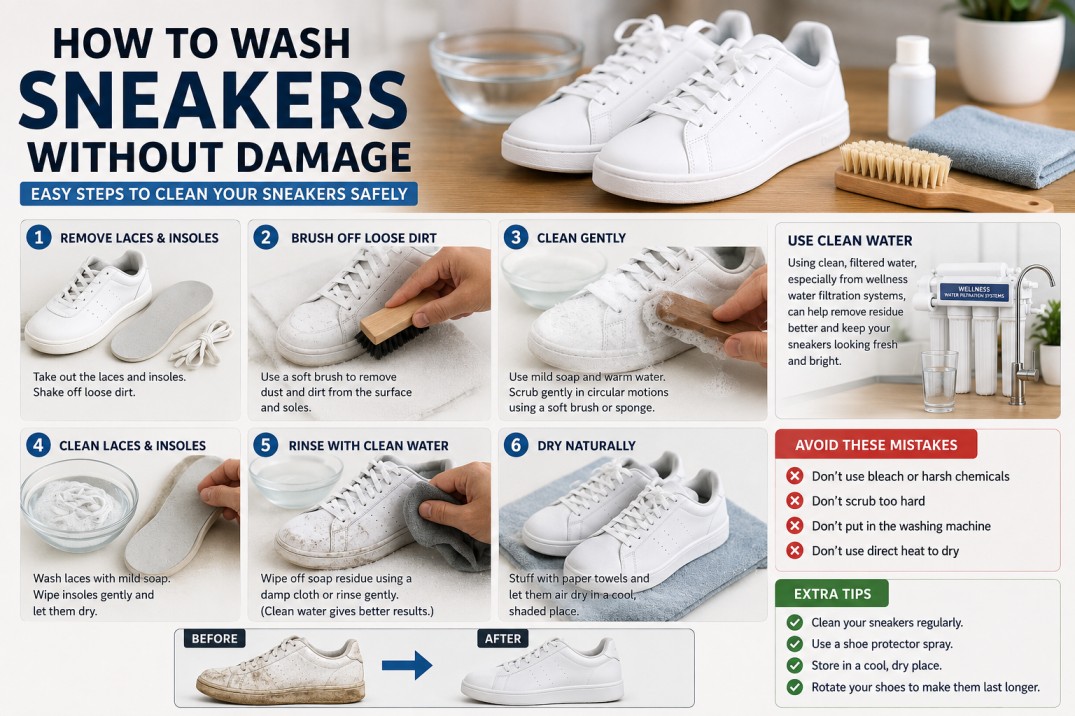
How to Wash Sneakers Without Damage: Remove Laces and Insoles First
One of the biggest mistakes people make is washing the entire shoe without removing the laces and insoles.
Instead:
- Remove shoelaces.
- Take out removable insoles.
- Shake out loose dirt.
- Brush away dry mud.
Wash the laces separately in warm, soapy water.
Insoles can usually be cleaned with mild soap and a soft cloth rather than soaking them completely.
How to Wash Sneakers Without Damage: Brush Away Loose Dirt
Always remove dry dirt before introducing water.
Use a soft brush to clean:
- Soles
- Tread patterns
- Sidewalls
- Fabric surfaces
Removing surface dirt prevents it from turning into muddy stains during washing.
This simple step makes the entire cleaning process much easier.
How to Wash Sneakers Without Damage: Clean with Mild Soap and Warm Water
For most sneakers, hand washing is the safest method.
Mix:
- Warm water
- A few drops of mild detergent
Dip your brush into the solution.
Scrub gently using circular motions.
Focus on:
- Toe box
- Heel
- Side panels
- Tongue
- Rubber midsoles
Avoid soaking the shoes.
A damp brush works better than fully submerging sneakers.
How to Wash Sneakers Without Damage: Why Clean Water Makes a Difference
Many people don’t think about the quality of the water they use for cleaning. Hard water can leave mineral spots on certain fabrics, while contaminated water may leave residue behind.
Using clean, filtered water can help rinse away detergent more effectively and reduce the chances of water stains on light-colored shoes. In homes equipped with wellness water filtration systems, filtered water may provide a cleaner rinse by reducing impurities and excess minerals.
While filtered water isn’t essential for every cleaning task, it can be especially helpful when caring for premium sneakers or delicate materials that show marks easily.
How to Wash Sneakers Without Damage: Cleaning White Sneakers
White sneakers require extra attention.
For fabric shoes:
Mix:
- Baking soda
- Mild detergent
- Warm water
Apply the paste gently.
Scrub using a toothbrush.
Rinse with a damp cloth.
Avoid bleach.
Although bleach appears to whiten shoes, it often causes yellowing over time.
How to Wash Sneakers Without Damage: Cleaning Leather Sneakers
Leather sneakers should never be soaked.
Instead:
- Wipe with a damp microfiber cloth.
- Apply mild soap.
- Clean gently.
- Remove soap residue immediately.
- Dry with a soft towel.
Finish with leather conditioner to prevent cracking.
Proper conditioning helps leather remain flexible and attractive.
How to Wash Sneakers Without Damage: Cleaning Suede Sneakers
Suede requires patience.
Never use excessive water.
Instead:
- Use a suede brush.
- Erase stains with a suede eraser.
- Brush in one direction.
- Allow shoes to dry naturally.
If stains remain, use a suede cleaner specifically designed for delicate materials.
How to Wash Sneakers Without Damage: Can You Use a Washing Machine?
Some sneakers are labeled as machine washable, but many are not.
If machine washing is allowed:
- Remove laces.
- Remove insoles.
- Place shoes in a mesh laundry bag.
- Wash on a gentle cycle.
- Use cold water.
- Use mild detergent.
- Skip bleach.
- Never use high spin settings.
Machine washing should always be considered a last resort.
Hand washing is almost always safer.
How to Wash Sneakers Without Damage: Dry Sneakers the Right Way
Drying incorrectly causes more damage than washing.
Never:
- Use a hair dryer.
- Place shoes near heaters.
- Leave them in direct sunlight.
- Put them in a clothes dryer.
Instead:
Stuff shoes with paper towels.
Replace the paper every few hours.
Allow sneakers to air dry naturally.
This helps maintain their shape while preventing glue damage.
How to Wash Sneakers Without Damage: Remove Odors Naturally
Even clean sneakers sometimes retain odors.
Natural odor removers include:
- Baking soda
- Activated charcoal bags
- Cedar shoe inserts
Leave baking soda inside overnight.
Vacuum or shake it out the next morning.
Keeping sneakers dry is the best long-term solution for odor prevention.
How to Wash Sneakers Without Damage: Mistakes to Avoid
Many sneaker owners accidentally shorten the life of their shoes.
Avoid these common mistakes:
- Using bleach
- Scrubbing aggressively
- Washing with hot water
- Skipping material identification
- Machine drying
- Soaking leather
- Ignoring manufacturer instructions
- Cleaning too infrequently
Small mistakes repeated over time can permanently damage sneakers.
How to Wash Sneakers Without Damage: Maintain Your Sneakers Between Washes
You don’t need to wash your sneakers every week.
Simple maintenance keeps them cleaner for longer.
Good habits include:
- Wiping dirt immediately.
- Using protective sprays.
- Rotating shoes.
- Storing them properly.
- Keeping them dry.
- Cleaning soles regularly.
Centers for Disease Control and Prevention shoe hygiene and health information
Preventive care reduces the need for deep cleaning.
How to Wash Sneakers Without Damage: The Importance of Clean Water and Wellness Water Filtration Systems
Cleaning products often get the most attention, but water quality also plays a role in the overall cleaning process. Water with fewer impurities can help detergents rinse away more effectively and reduce residue on fabrics and rubber.
Homes that use wellness water filtration systems often benefit from cleaner household water, which can be useful for a variety of cleaning tasks, including caring for sneakers. While these systems are primarily designed to improve water quality for everyday use, they may also contribute to cleaner rinsing when washing shoes, especially light-colored or premium materials.
Combining gentle cleaning methods with clean water helps protect the appearance and longevity of your favorite sneakers.
How to Wash Sneakers Without Damage: Final Thoughts
Learning how to wash sneakers without damage is one of the easiest ways to extend the life of your favorite footwear. Instead of relying on harsh chemicals or risky machine washing, focus on gentle hand-cleaning techniques, proper drying methods, and regular maintenance.
Every pair of sneakers deserves care based on its material, whether it’s canvas, leather, suede, mesh, or knit. Taking a few extra minutes to remove dirt, clean carefully, and let your shoes air dry can make a noticeable difference in both appearance and durability.
Using clean water during the cleaning process—and, where available, water supplied through wellness water filtration systems—can help achieve a cleaner finish by reducing residue and impurities. While the filtration system itself isn’t a sneaker-cleaning product, clean water supports better overall care.
With the right approach, your sneakers can stay fresh, comfortable, and stylish for years to come. A little effort today will help preserve both their look and performance, ensuring every step you take is in shoes that feel as good as they look.
For more: click here