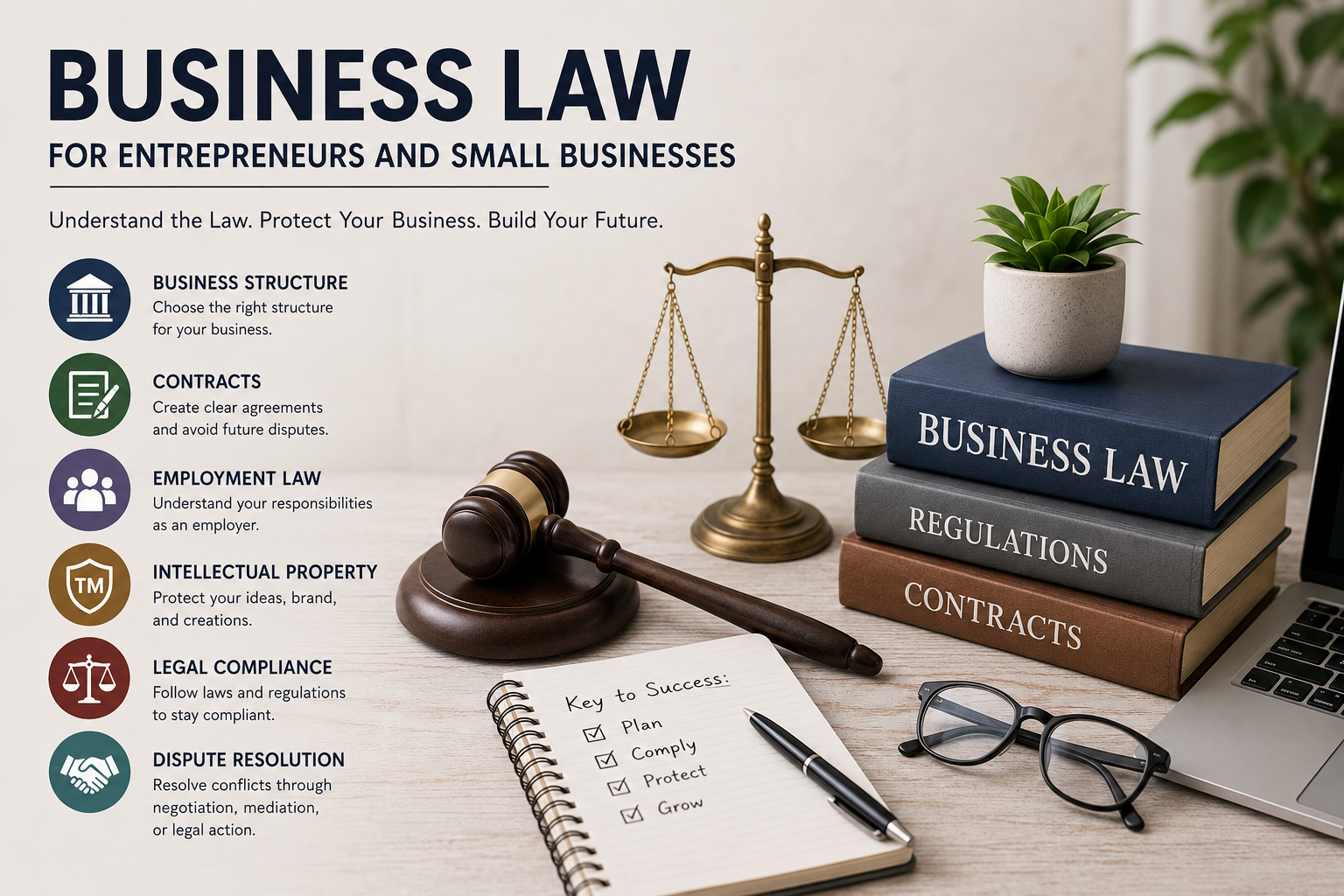
Business Law for Entrepreneurs and Small Businesses
Business Law for Entrepreneurs and Small Businesses
Starting a business is exciting, but it also comes with responsibilities that many entrepreneurs overlook. While people often focus on marketing, product development, and increasing sales, understanding business law is equally important. A single legal mistake can lead to financial losses, disputes, penalties, or even the closure of a business. Whether you’re launching a startup, opening a local shop, or running an online business, having a basic understanding of business law helps protect your company and supports long-term growth.
Business law is not only about solving legal disputes; it is also about preventing problems before they happen. Entrepreneurs who understand legal requirements can make smarter decisions, build trust with customers, and avoid unnecessary risks.
In this article, you’ll learn what business law is, why it matters for entrepreneurs and small businesses, and the key legal areas every business owner should know.
What Is Business Law?
Business law refers to the collection of laws and regulations that govern how businesses operate. It covers everything from starting a company and signing contracts to hiring employees, paying taxes, protecting intellectual property, and resolving disputes.
These laws exist to create fairness between businesses, customers, employees, suppliers, and government authorities. They ensure that businesses operate ethically and within legal boundaries.
To learn more about business law basics, visit:
- Cornell Law School Legal Information Institute: https://www.law.cornell.edu/wex/business_law
- U.S. Small Business Administration (Legal Requirements): https://www.sba.gov/business-guide/launch-your-business/register-your-business
Why Business Law Matters for Entrepreneurs
Many entrepreneurs believe legal issues only become important once a business grows. In reality, legal decisions begin the moment someone starts planning a business.
Understanding business law helps entrepreneurs:
- Protect personal and business assets.
- Avoid lawsuits.
- Build customer trust.
- Stay compliant with government regulations.
- Create enforceable agreements.
- Reduce financial risks.
- Attract investors.
- Expand into new markets confidently.
Instead of treating legal compliance as an expense, successful entrepreneurs view it as an investment in business stability.
Choosing the Right Business Structure
One of the first legal decisions an entrepreneur makes is choosing the business structure.
Different structures offer different legal protections and tax obligations.
Sole Proprietorship
A sole proprietorship is the easiest business structure to establish.
Advantages include:
- Simple registration
- Full control
- Lower startup costs
However, the owner is personally responsible for business debts.
Partnership
A partnership is formed when two or more individuals own a business together.
Partners usually share:
- Profits
- Responsibilities
- Risks
A written partnership agreement helps prevent misunderstandings in the future.
Limited Liability Company (LLC)
An LLC combines the flexibility of a partnership with liability protection.
Benefits include:
- Limited personal liability
- Flexible taxation
- Easier management
Many small businesses prefer LLCs because owners are generally protected from business debts.
Corporation
Corporations are separate legal entities from their owners.
Advantages include:
- Strong liability protection
- Easier investment opportunities
- Business continuity
However, corporations usually involve more paperwork and legal requirements.
For detailed comparisons, visit:
https://www.sba.gov/business-guide/launch-your-business/choose-business-structure
Business Registration and Licensing
Every business must meet local, state, or national registration requirements.
Depending on your industry, you may need:
- Business registration
- Tax registration
- Industry-specific licenses
- Professional permits
- Import or export licenses
Operating without required licenses may result in fines or business closure.
Before launching your business, always check your country’s official business registration portal.
Contracts: The Foundation of Every Business Relationship
Contracts are among the most important aspects of business law.
A contract clearly explains:
- Responsibilities
- Payment terms
- Delivery timelines
- Ownership rights
- Confidentiality
- Dispute resolution
Even if you trust someone, verbal agreements often create misunderstandings.
Written contracts protect everyone involved.
Common contracts include:
- Employment agreements
- Vendor agreements
- Service contracts
- Client contracts
- Partnership agreements
- Non-disclosure agreements (NDAs)
To understand contract law basics:
https://www.law.cornell.edu/wex/contract
Employment Laws Every Small Business Should Know
Hiring employees creates additional legal responsibilities.
Business owners must comply with employment laws regarding:
- Minimum wages
- Working hours
- Overtime
- Workplace safety
- Anti-discrimination
- Employee benefits
- Leave policies
Ignoring employment regulations may lead to lawsuits or government penalties.
Creating clear employee policies helps maintain a healthy workplace.
Useful resource:
https://www.dol.gov/general/aboutdol/majorlaws
Intellectual Property Protection
Many entrepreneurs underestimate the value of their ideas.
Intellectual property (IP) includes:
- Brand names
- Logos
- Inventions
- Software
- Creative works
- Product designs
There are several types of IP protection.
Trademark
Protects:
- Brand names
- Logos
- Business slogans
Example:
The Nike “Swoosh” logo is protected through trademark law.
Copyright
Protects original creative works such as:
- Books
- Blogs
- Videos
- Music
- Website content
Patent
Protects inventions and innovative products.
Patents prevent others from making or selling the invention without permission.
Learn more:
Consumer Protection Laws
Customers have legal rights.
Businesses must provide:
- Honest advertising
- Accurate product information
- Safe products
- Fair pricing
- Transparent return policies
False advertising may damage both reputation and finances.
Honesty builds long-term customer loyalty.
Tax Compliance
Taxes are unavoidable for every business.
Entrepreneurs should understand:
- Income tax
- Sales tax
- Payroll tax
- Business deductions
- Record keeping
Maintaining accurate financial records makes tax filing much easier.
Hiring a professional accountant often saves both money and stress.
Official tax information:
https://www.irs.gov/businesses/small-businesses-self-employed
Data Privacy and Cybersecurity
Today’s businesses collect customer information every day.
Examples include:
- Names
- Email addresses
- Payment information
- Phone numbers
Businesses must protect customer data from theft or misuse.
Privacy laws vary by country, but many require businesses to:
- Secure customer information.
- Explain how data is collected.
- Allow customers to request data deletion.
- Report data breaches.
Useful resources:
GDPR Overview:
Online Business Laws
Running an online business involves additional legal responsibilities.
Online businesses should have:
- Privacy Policy
- Terms and Conditions
- Cookie Policy
- Return Policy
- Shipping Policy
E-commerce stores also need secure payment systems.
Platforms like Shopify and WooCommerce provide tools to help businesses stay compliant.
Business Insurance
Insurance reduces financial risks.
Common insurance types include:
- General liability insurance
- Professional liability insurance
- Property insurance
- Cyber insurance
- Workers’ compensation insurance
Insurance cannot prevent problems but helps businesses recover more quickly.
Handling Business Disputes
Disagreements happen in every industry.
Common disputes involve:
- Customers
- Suppliers
- Employees
- Partners
- Contractors
Business law offers several ways to resolve conflicts.
Negotiation
The simplest and least expensive option.
Mediation
A neutral third party helps both sides reach an agreement.
Arbitration
A private legal process where an arbitrator makes a decision.
Litigation
Going to court is usually the most expensive option and should be the last resort.
Compliance with Industry Regulations
Different industries have different legal requirements.
For example:
Healthcare businesses follow medical regulations.
Food businesses follow food safety laws.
Financial companies follow banking regulations.
Construction companies follow building and safety codes.
Entrepreneurs should regularly review laws affecting their industry because regulations often change.
Record Keeping
Good records help businesses stay organized and legally compliant.
Maintain records for:
- Tax returns
- Employee information
- Contracts
- Licenses
- Financial statements
- Invoices
- Receipts
Cloud storage makes document management easier and safer.
The Role of Lawyers in Small Businesses
Many entrepreneurs avoid hiring lawyers because they worry about costs.
However, legal advice can prevent expensive mistakes.
A business lawyer can help with:
- Business formation
- Contract drafting
- Trademark registration
- Employment policies
- Legal disputes
- Regulatory compliance
Think of a lawyer as a business partner who helps reduce risk rather than someone you only contact during emergencies.
Common Legal Mistakes Entrepreneurs Make
Many startups fail to address legal issues early.
Common mistakes include:
- Operating without proper registration.
- Using verbal agreements instead of written contracts.
- Ignoring tax obligations.
- Copying website content.
- Using copyrighted images without permission.
- Hiring employees without legal documentation.
- Failing to protect trademarks.
- Mixing personal and business finances.
- Ignoring privacy laws.
- Not reviewing contracts carefully.
Avoiding these mistakes can save thousands of dollars in legal expenses.
Future Trends in Business Law
Technology continues to reshape the legal landscape.
Emerging areas include:
- Artificial Intelligence regulations
- Cryptocurrency laws
- Digital payments
- Cybersecurity compliance
- Remote work policies
- Cross-border e-commerce regulations
- ESG (Environmental, Social, and Governance) compliance
Entrepreneurs who stay informed about changing laws will have a competitive advantage.
How Business Law Builds Long-Term Business Success
Many entrepreneurs think of business law as something they only need when facing a lawsuit or legal dispute. However, the reality is quite different. Business law plays an important role in helping companies grow sustainably over the long term. Businesses that follow legal requirements from the beginning are more likely to gain the trust of customers, investors, employees, and business partners. Legal compliance also makes it easier to secure funding, enter new markets, and build strong commercial relationships because stakeholders feel confident working with a business that operates responsibly. In addition, keeping up with changing laws and regulations helps entrepreneurs avoid unexpected penalties and adapt quickly to new business environments. As a company expands, legal challenges naturally become more complex, making a solid understanding of business law an essential advantage rather than just a legal obligation. Entrepreneurs who prioritize legal compliance are not only protecting their businesses today but also creating a stronger foundation for future growth and long-term success.
Final Thoughts
Every entrepreneur dreams of building a successful business, but success requires more than innovative ideas and effective marketing. Understanding business law provides the legal foundation needed to operate confidently, protect valuable assets, and avoid unnecessary risks.
From choosing the right business structure and drafting contracts to protecting intellectual property and complying with employment, tax, and privacy regulations, business law influences nearly every aspect of running a company. Small legal decisions made today can have a lasting impact on the future of your business.
Rather than viewing legal compliance as a burden, entrepreneurs should see it as an essential part of building a trustworthy and sustainable business. Staying informed, maintaining proper documentation, and seeking professional legal advice when necessary can help businesses grow with confidence.
Whether you’re launching your first startup or managing an established small business, investing time in understanding business law is one of the smartest decisions you can make for long-term success.
For more: click here