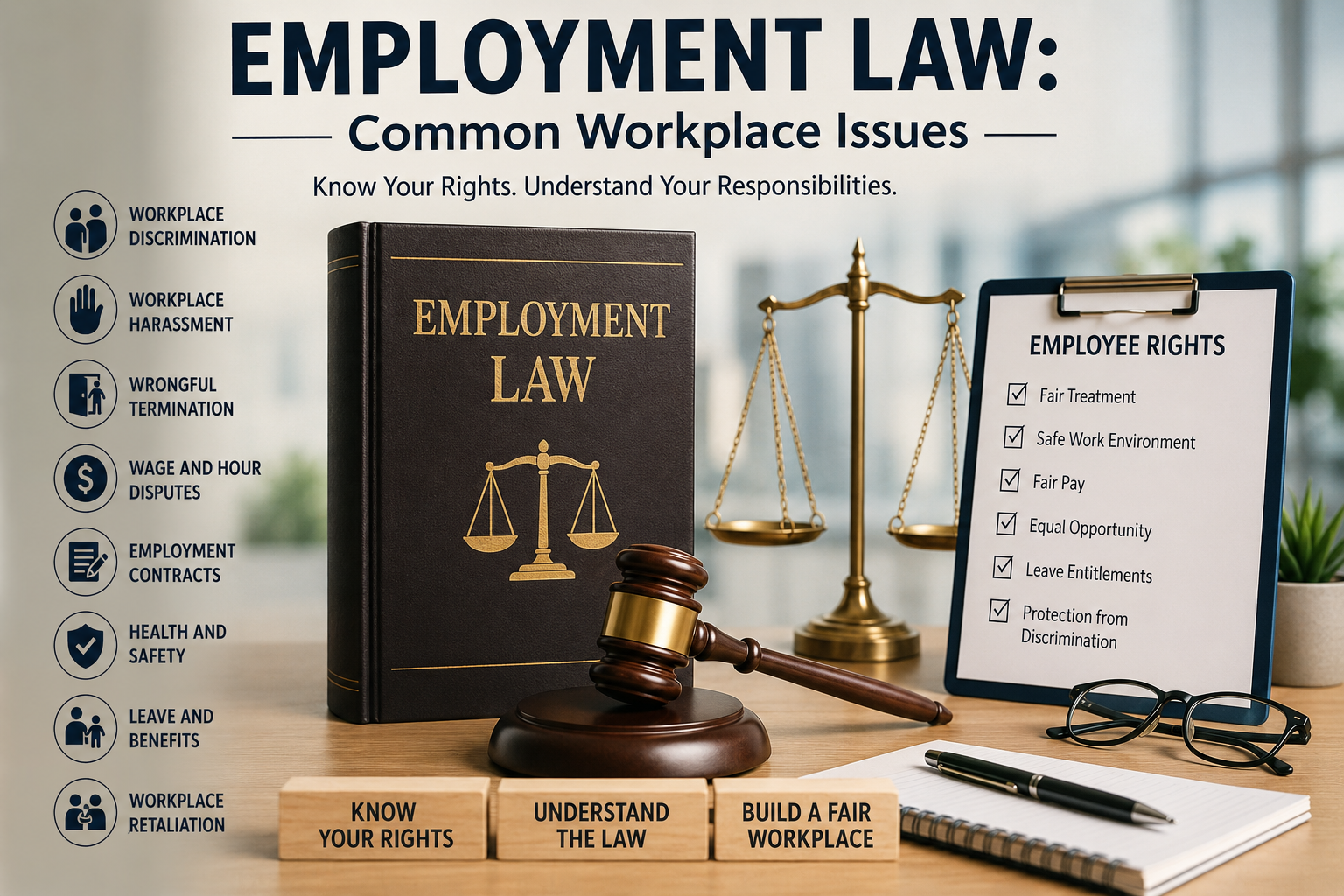
Employment Law: Common Workplace Issues
Employment Law: Common Workplace Issues
Introduction
Every workplace should be a place where employees feel respected, safe, and fairly treated. Unfortunately, that is not always the case. Many workers experience problems such as discrimination, harassment, unpaid wages, unfair dismissal, unsafe working conditions, or disputes over contracts. These issues can affect not only an employee’s career but also their mental health, financial stability, and overall quality of life.
This is where employment law becomes essential. Employment law is designed to protect both employees and employers by establishing clear rules about workplace rights and responsibilities. It helps create a balanced working environment where businesses can operate successfully while ensuring employees are treated fairly.
Whether you are starting your first job, managing a growing business, or simply want to understand your workplace rights, learning about employment law can help you avoid common legal problems. In this article, we will explore the most common workplace issues, explain how employment law addresses them, and provide practical advice for both employees and employers.
What Is Employment Law?
Employment law refers to the collection of laws, regulations, and legal principles that govern the relationship between employers and employees. It covers everything from hiring practices and employment contracts to wages, workplace safety, discrimination, leave policies, and termination procedures.
The main objective of employment law is to create fairness in the workplace. It ensures that employees receive equal treatment while giving employers clear guidelines for managing their workforce legally and ethically.
Although employment laws differ from country to country, most legal systems focus on similar goals:
- Protecting employees from unfair treatment.
- Preventing workplace discrimination.
- Ensuring fair wages and working hours.
- Promoting workplace health and safety.
- Defining employer and employee responsibilities.
- Providing legal remedies when workplace disputes arise.
Understanding these principles can help both parties maintain positive and productive working relationships.
1. Workplace Discrimination
One of the most common issues addressed by employment law is workplace discrimination. Discrimination occurs when an employee is treated unfairly because of personal characteristics rather than their abilities or performance.
These characteristics may include:
- Age
- Gender
- Race
- Religion
- Disability
- National origin
- Pregnancy
- Sexual orientation (where protected by law)
Discrimination can happen during recruitment, promotions, salary decisions, training opportunities, or termination.
For example, if two employees perform the same work but one receives lower pay solely because of gender, this could constitute unlawful discrimination.
Employers should establish equal opportunity policies, while employees should document incidents if they believe they have experienced unfair treatment.
2. Workplace Harassment
Harassment is another serious issue covered under employment law. Harassment includes unwanted behavior that creates an intimidating, hostile, or offensive work environment.
Examples include:
- Offensive jokes
- Bullying
- Verbal abuse
- Physical intimidation
- Sexual harassment
- Repeated inappropriate comments
Many employees hesitate to report harassment because they fear retaliation. However, employment law in many jurisdictions protects workers from retaliation when they report genuine concerns.
Employers should encourage respectful workplace behavior, provide confidential reporting systems, and investigate complaints promptly.
3. Wrongful Termination
Losing a job is stressful, but sometimes employees believe they were dismissed unfairly. Wrongful termination occurs when an employer ends employment in violation of applicable laws or contractual obligations.
Examples may include:
- Firing someone because they reported illegal activity.
- Dismissing an employee for discriminatory reasons.
- Terminating an employee for taking legally protected leave.
- Ignoring contractual notice requirements.
Employment law helps determine whether a termination followed legal procedures. Employees who believe they were wrongfully dismissed should review their employment contract, gather evidence, and seek professional legal advice if necessary.
4. Wage and Hour Disputes
Salary-related disputes are among the most frequent workplace complaints. Employment law establishes rules regarding minimum wage, overtime pay, payment schedules, and working hours.
Common issues include:
- Unpaid overtime
- Delayed salaries
- Incorrect wage calculations
- Illegal deductions
- Failure to provide required breaks
Employees should regularly review their pay slips and maintain records of working hours. Employers should use accurate payroll systems and ensure compliance with wage regulations.
Clear communication regarding compensation can prevent many disputes before they become legal issues.
5. Employment Contracts
Employment contracts provide clarity about the rights and obligations of both parties. A well-written contract reduces misunderstandings and legal disputes.
A typical employment contract may include:
- Job title
- Salary
- Working hours
- Benefits
- Leave entitlement
- Confidentiality clauses
- Notice periods
- Termination conditions
Employees should read contracts carefully before signing. If any clause appears unclear, they should seek clarification.
Employers benefit from having legally compliant contracts because they provide protection in case of disagreements.
6. Workplace Health and Safety
Every employee deserves a safe working environment. Employment law requires employers to take reasonable steps to reduce workplace hazards.
Safety measures may include:
- Regular risk assessments
- Safety training
- Protective equipment
- Emergency procedures
- Proper maintenance of equipment
- Reporting systems for accidents
Unsafe workplaces can result in injuries, financial losses, reduced productivity, and legal liability.
Employees should also follow safety guidelines and report dangerous conditions immediately.
7. Family and Medical Leave
Many countries provide legal protections allowing employees to take leave for important personal or family reasons.
Examples include:
- Maternity leave
- Paternity leave
- Adoption leave
- Medical leave
- Family caregiver leave
Employment law often prevents employers from dismissing employees simply because they take legally protected leave.
Both employers and employees should understand the applicable leave policies to avoid unnecessary disputes.
8. Employee Privacy
Technology has changed how businesses operate, but it has also raised concerns about employee privacy.
Employers may monitor company devices, email accounts, or internet usage under certain circumstances. However, employment law often places limits on monitoring to protect employee privacy.
Organizations should clearly explain:
- What information is monitored.
- Why monitoring occurs.
- How employee data is stored.
- Who can access collected information.
Transparency helps build trust while reducing legal risks.
9. Workplace Retaliation
Retaliation occurs when an employer punishes an employee for exercising legal rights.
Examples include:
- Reporting harassment.
- Filing a legal complaint.
- Participating in an investigation.
- Reporting unsafe working conditions.
- Acting as a witness.
Retaliation may involve demotions, reduced hours, negative evaluations, or termination.
Employment law generally protects employees from retaliation, encouraging workers to report problems without fear.
10. Flexible Working Arrangements
Remote work and flexible schedules have become increasingly common. While these arrangements provide convenience, they also create legal questions regarding working hours, overtime, performance expectations, and data security.
Employers should establish written remote work policies covering:
- Working hours
- Communication expectations
- Equipment responsibilities
- Cybersecurity
- Performance measurement
Employees should understand these policies before beginning remote work.
Best Practices for Employees
Employees can reduce workplace disputes by following several practical steps:
- Read employment contracts carefully.
- Keep copies of important workplace documents.
- Maintain records of work hours.
- Report concerns through proper channels.
- Communicate professionally.
- Understand workplace policies.
- Learn basic employment law rights.
Being informed helps employees make confident decisions when workplace issues arise.
Best Practices for Employers
Employers also play a major role in creating legally compliant workplaces.
Some effective practices include:
- Updating workplace policies regularly.
- Providing anti-harassment training.
- Maintaining accurate payroll records.
- Following fair recruitment procedures.
- Investigating complaints promptly.
- Offering equal employment opportunities.
- Consulting employment law professionals when necessary.
A proactive approach often prevents expensive legal disputes.
Why Understanding Employment Law Matters
Many workplace conflicts begin with misunderstandings rather than intentional misconduct. When employees understand their rights and employers understand their legal responsibilities, communication improves and disputes become easier to resolve.
Employment law is not just about lawsuits. It encourages fairness, accountability, transparency, and respect within organizations. Businesses that comply with employment law often experience stronger employee morale, higher productivity, lower turnover, and a better reputation.
Employees also benefit because they feel more secure knowing there are legal protections available if problems occur.
As workplaces continue to evolve through technology, remote work, and changing employment models, staying informed about employment law will remain increasingly important for everyone involved.
The Future of Employment Law in Modern Workplaces
The workplace is changing rapidly as technology, remote work, artificial intelligence (AI), and flexible employment models become more common. As a result, employment law continues to evolve to address new challenges and protect the rights of both employers and employees. Issues such as employee data privacy, remote work policies, digital workplace monitoring, gig economy employment, and AI-driven hiring decisions are becoming increasingly important. Employers must stay informed about legal updates to ensure their policies remain compliant with current regulations, while employees should regularly educate themselves about their workplace rights in an ever-changing work environment. By adapting to these changes and following the principles of employment law, organizations can build workplaces that are not only legally compliant but also fair, inclusive, and prepared for the future.
Conclusion
Workplace issues can affect anyone, regardless of industry or experience level. Problems such as discrimination, harassment, wage disputes, wrongful termination, unsafe working conditions, and contract disagreements can have significant personal and financial consequences.
Fortunately, employment law provides a framework for resolving these issues while protecting the rights of both employers and employees. Understanding the basics of employment law helps individuals recognize potential problems early, seek appropriate solutions, and contribute to a healthier workplace culture.
Whether you are an employee looking to understand your rights or an employer striving to maintain legal compliance, investing time in learning about employment law is one of the best ways to build a fair, productive, and respectful workplace. Staying informed today can prevent costly disputes tomorrow and create stronger professional relationships for everyone involved.
For more: click here