Water Education Center: Essential Tip for Every Home
Water Education Center: Essential Tip for Every Home
Water is one of the most valuable resources on Earth. Every family depends on clean and safe water for drinking, cooking, cleaning, gardening, and maintaining a healthy lifestyle. Despite its importance, many people take water for granted until they face issues like water shortages, contamination, or rising utility bills.
A Water Education Center plays a vital role in teaching individuals and communities how to protect, conserve, and use water responsibly. Whether you’re a homeowner, student, or environmental enthusiast, learning about water management can help you save money, protect your health, and preserve natural resources for future generations.
In this comprehensive guide, we’ll explore practical tips every home should know, explain the importance of a Water Education Center, and provide trusted resources for further learning.
What Is a Water Education Center?
A Water Education Center is an organization, educational facility, or online resource dedicated to increasing public awareness about water conservation, water quality, wastewater treatment, and sustainable water management.
These centers educate people about:
- Water conservation techniques
- Drinking water safety
- Water pollution prevention
- Rainwater harvesting
- Groundwater protection
- Efficient irrigation
- Climate change and water resources
Many Water Education Centers also offer workshops, educational programs, community events, and online learning materials for homeowners, schools, and businesses.
Learn more about water education from the U.S. Environmental Protection Agency:
https://www.epa.gov/watersense
Why Water Education Matters
Water education isn’t only about saving water—it helps people understand how their daily choices impact rivers, lakes, groundwater, and future generations.
Some major benefits include:
- Reducing monthly water bills
- Protecting drinking water quality
- Preventing water pollution
- Conserving natural resources
- Supporting sustainable communities
- Preparing for drought conditions
When families understand how water systems work, they’re more likely to adopt responsible habits that benefit both their household and the environment.
Essential Water Conservation Tips for Every Home
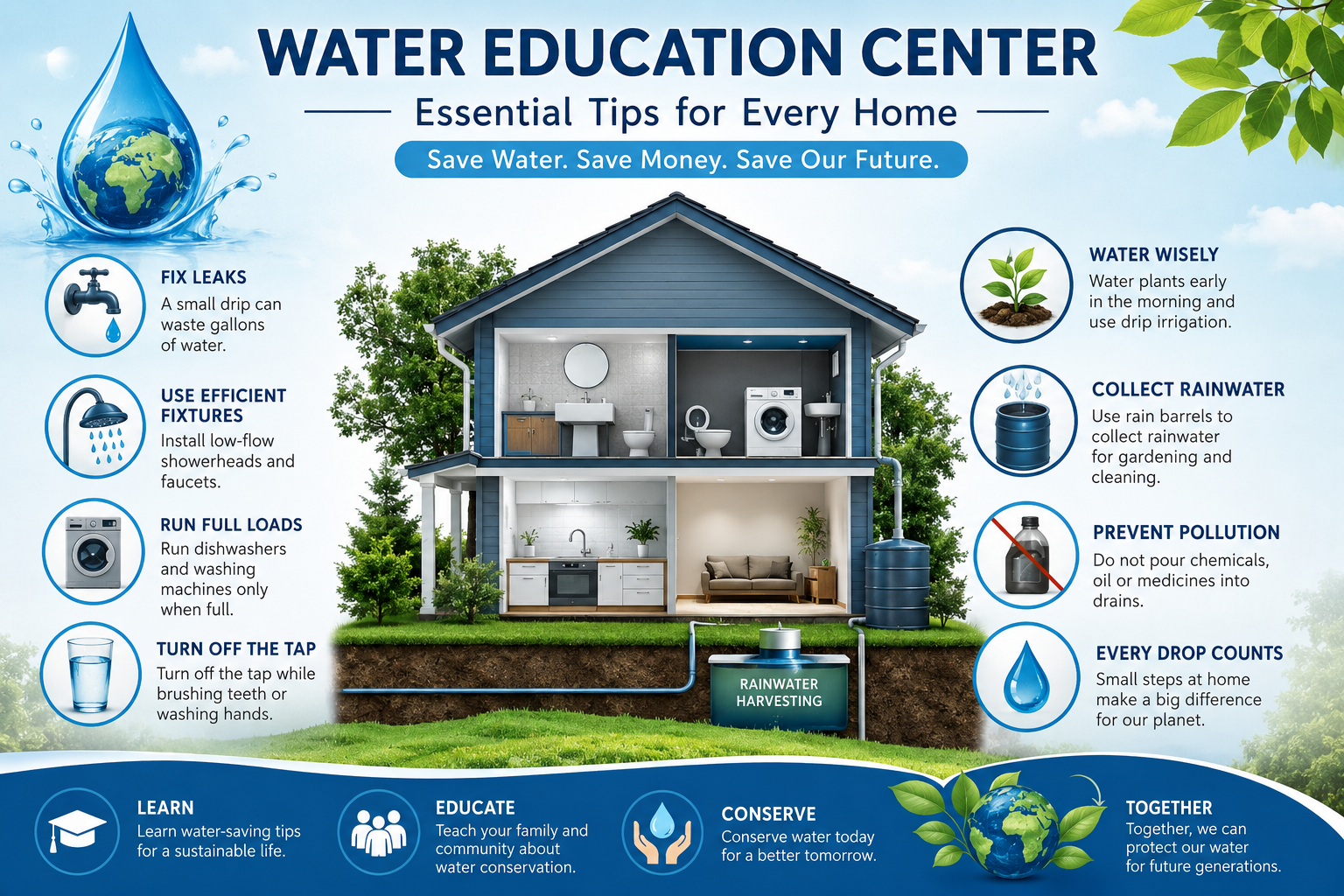
1. Fix Leaks Immediately
A dripping faucet may seem harmless, but over time it can waste thousands of gallons of water each year.
Common leak locations include:
- Kitchen faucets
- Bathroom sinks
- Toilets
- Outdoor hose connections
- Water heaters
Inspect your home regularly and repair leaks as soon as possible.
Leak detection guide:
https://www.epa.gov/watersense/fix-a-leak-week
2. Install Water-Efficient Fixtures
Modern plumbing fixtures are designed to use significantly less water without sacrificing performance.
Consider installing:
- Low-flow showerheads
- Water-saving faucets
- Dual-flush toilets
- Water-efficient washing machines
- High-efficiency dishwashers
WaterSense certified products:
https://www.epa.gov/watersense/products
3. Turn Off the Tap When Not in Use
One of the easiest habits to develop is turning off the faucet while:
- Brushing teeth
- Shaving
- Washing dishes
- Scrubbing vegetables
This simple action can save several gallons of water every day.
4. Use Appliances Efficiently
Run washing machines and dishwashers only when they are completely full.
This reduces:
- Water consumption
- Electricity usage
- Utility costs
Many modern appliances include eco-friendly modes that further reduce water usage.
5. Collect Rainwater
Rainwater harvesting is becoming increasingly popular among homeowners.
Collected rainwater can be used for:
- Gardening
- Washing vehicles
- Cleaning outdoor furniture
- Irrigation
Rainwater harvesting guide:
https://www.epa.gov/soakuptherain
Understanding Your Home’s Water Quality
Water quality affects your family’s health.
Common contaminants include:
- Lead
- Arsenic
- Bacteria
- Nitrates
- Chlorine by-products
- Sediment
A Water Education Center often teaches homeowners how to identify potential water quality issues and choose appropriate filtration systems.
Test Your Water Regularly
Private well owners should test water at least once every year.
Municipal water users can review their local Consumer Confidence Report.
Drinking Water Information:
https://www.epa.gov/ground-water-and-drinking-water
Choose the Right Water Filter
Not every filter removes every contaminant.
Popular filter types include:
Activated Carbon Filters
Best for:
- Chlorine
- Bad taste
- Odor
Reverse Osmosis Systems
Effective against:
- Heavy metals
- Nitrates
- Fluoride
- Dissolved solids
UV Purifiers
Useful for eliminating:
- Viruses
- Bacteria
- Microorganisms
Choosing the correct system depends on your local water conditions.
Keep Your Plumbing Healthy
Your plumbing system directly affects water quality.
Home maintenance tips include:
- Flush unused taps regularly.
- Replace old pipes when necessary.
- Insulate exposed pipes.
- Clean faucet aerators.
- Service your water heater annually.
Good plumbing maintenance prevents contamination and improves water efficiency.
Smart Outdoor Watering Tips
Outdoor watering accounts for a large percentage of residential water use.
Reduce waste by:
- Watering early in the morning.
- Using drip irrigation.
- Planting drought-resistant plants.
- Mulching around trees.
- Avoiding watering on windy days.
Create a Water-Efficient Garden
Native plants require less water than exotic species.
A sustainable garden includes:
- Mulch
- Native grasses
- Drip irrigation
- Compost
- Rain barrels
These methods reduce evaporation and improve soil health.
Teach Children About Water Conservation
Children develop lifelong habits through education.
Fun activities include:
- Tracking household water usage
- Water-saving challenges
- Science experiments
- Recycling projects
- Gardening
A Water Education Center often provides free educational materials specifically designed for schools and families.
Prevent Water Pollution at Home
Many household products eventually reach rivers and groundwater.
Never pour these into drains:
- Paint
- Motor oil
- Chemicals
- Pesticides
- Medicines
Dispose of hazardous waste through local collection programs.
Household hazardous waste information:
https://www.epa.gov/hw
Reduce Plastic Bottle Waste
Plastic bottles contribute significantly to environmental pollution.
Instead:
- Use reusable bottles.
- Install a home filtration system.
- Carry refillable containers.
- Support public refill stations.
This reduces waste while saving money.
Monitor Household Water Usage
Many utility companies now provide online water usage tracking.
Monitoring helps identify:
- Hidden leaks
- Seasonal changes
- Unusual consumption
- Opportunities for savings
Some smart water meters even send leak alerts directly to your smartphone.
Emergency Water Preparedness
Natural disasters may interrupt water supplies.
Every home should store emergency drinking water.
The CDC recommends keeping enough water for at least three days.
Emergency water storage guide:
https://www.cdc.gov/healthywater/emergency
Water Conservation During Drought
During drought conditions:
- Limit lawn watering.
- Wash cars less frequently.
- Reuse greywater where permitted.
- Install drought-resistant landscaping.
- Follow local water restrictions.
Responsible water use helps entire communities during shortages.
Understanding Your Water Bill
Most homeowners rarely examine their water bill.
Look for:
- Sudden increases
- Seasonal trends
- Meter readings
- Service charges
Unexpected spikes often indicate hidden leaks.
The Role of Technology in Water Conservation
Modern technology has transformed household water management.
Useful innovations include:
- Smart irrigation controllers
- Leak detection sensors
- Smart water meters
- Wi-Fi shutoff valves
- Water monitoring apps
These technologies help homeowners detect problems early and reduce unnecessary water consumption.
Sustainable Habits That Make a Difference
Small daily actions create lasting environmental benefits.
Examples include:
- Taking shorter showers.
- Washing fruits in a bowl instead of running water.
- Reusing cooking water for plants after cooling.
- Sweeping driveways instead of hosing them down.
- Keeping drinking water in the refrigerator instead of letting taps run.
These simple habits can save thousands of gallons annually.
Community Involvement
A Water Education Center encourages community participation through:
- Volunteer events
- River cleanups
- School programs
- Conservation campaigns
- Public workshops
When communities work together, water conservation efforts become far more effective.
Common Myths About Water Conservation
Myth 1: Water Is Unlimited
Freshwater is limited and must be protected.
Myth 2: Small Leaks Don’t Matter
Even a slow drip can waste thousands of gallons each year.
Myth 3: Bottled Water Is Always Safer
Many municipal water supplies meet strict safety standards and are regularly tested.
Myth 4: Water Conservation Is Expensive
Many water-saving habits cost nothing and immediately reduce utility bills.
How a Water Education Center Helps Homeowners
A Water Education Center serves as a trusted source of information and practical guidance for homeowners. Instead of relying on myths or outdated advice, families can learn evidence-based practices that improve water efficiency and protect health.
Many centers offer resources such as:
- Free educational guides
- Workshops on water conservation
- Demonstrations of water-saving technologies
- Information about local water quality
- Guidance on rainwater harvesting and irrigation
- Tips for reducing household water waste
By applying the knowledge shared through a Water Education Center, homeowners can make informed decisions that benefit both their families and the environment.
Conclusion
Water is more than just a household utility—it’s the foundation of life. Every drop we save today helps ensure a healthier and more sustainable future for generations to come. From fixing leaks and installing efficient fixtures to testing water quality and adopting eco-friendly habits, small changes can have a significant impact.
A Water Education Center empowers individuals with the knowledge and tools needed to make responsible choices about water use. Whether you’re looking to lower your utility bills, improve your home’s water quality, or contribute to environmental conservation, the lessons provided by a Water Education Center are invaluable.
By embracing water-smart practices and staying informed through trusted educational resources, every household can play an active role in protecting one of our planet’s most precious resources.
For more: click here