Sustainable Living: Eco-Friendly Ideas That Work
Sustainable Living: Eco-Friendly Ideas That Work
Introduction
In recent years, Sustainable Living has become more than just a popular trend—it is now a necessity. Climate change, pollution, and the rapid depletion of natural resources have encouraged millions of people around the world to rethink their lifestyles. Sustainable living focuses on reducing environmental impact while improving the quality of life for current and future generations.
Living sustainably does not require drastic lifestyle changes overnight. Instead, it involves making practical and eco-friendly choices that gradually become everyday habits. Whether it is reducing plastic waste, conserving water, saving energy, or choosing environmentally friendly products, every small step contributes to a healthier planet.
According to the United Nations, adopting sustainable practices is essential for achieving long-term environmental balance and ensuring that future generations have access to clean air, water, and natural resources.
Learn more:
- United Nations Sustainable Development Goals: https://sdgs.un.org/goals
- United States Environmental Protection Agency: https://www.epa.gov
What Is Sustainable Living?
Sustainable Living means making choices that reduce your impact on the environment while supporting social and economic well-being. The goal is to use natural resources responsibly so they remain available for future generations.
A sustainable lifestyle encourages people to consume less, waste less, and make environmentally conscious decisions in their daily routines.
The three main pillars of sustainable living include:
- Environmental Sustainability
- Social Sustainability
- Economic Sustainability
These three elements work together to create a balanced and healthy world.
Learn More:
https://www.un.org/sustainabledevelopment/
Why Sustainable Living Matters
Many environmental problems today are directly connected to human activities. Rising carbon emissions, excessive plastic waste, deforestation, and water pollution threaten ecosystems worldwide.
Choosing sustainable habits helps:
- Reduce greenhouse gas emissions
- Protect wildlife and biodiversity
- Save natural resources
- Improve public health
- Reduce household expenses
- Create cleaner communities
According to the World Wildlife Fund (WWF), humanity currently consumes natural resources faster than Earth can regenerate them.
Reference:
https://www.worldwildlife.org
Benefits of Sustainable Living
1. Protects the Environment
One of the biggest advantages of sustainable living is environmental protection. Using fewer disposable products and reducing energy consumption lowers pollution and conserves valuable resources.
Examples include:
- Recycling household waste
- Using reusable shopping bags
- Conserving electricity
- Planting trees
Learn More:
https://www.epa.gov/recycle
2. Saves Money
Many people believe eco-friendly products are expensive. While some sustainable products have a higher upfront cost, they often save money over time.
Examples:
- LED bulbs use less electricity.
- Solar panels reduce energy bills.
- Reusable bottles eliminate the need for disposable plastic bottles.
- Energy-efficient appliances consume less power.
Energy Saving Tips:
https://www.energy.gov
3. Improves Health
Sustainable living often encourages healthier habits.
Examples include:
- Walking instead of driving
- Eating fresh local foods
- Using natural cleaning products
- Improving indoor air quality
These practices reduce exposure to harmful chemicals while encouraging physical activity.
Reference:
https://www.who.int
4. Conserves Natural Resources
Natural resources such as clean water, forests, and fossil fuels are limited.
Simple actions can help conserve them:
- Turning off unused lights
- Fixing leaking taps
- Using refillable containers
- Reducing unnecessary purchases
Eco-Friendly Ideas That Actually Work
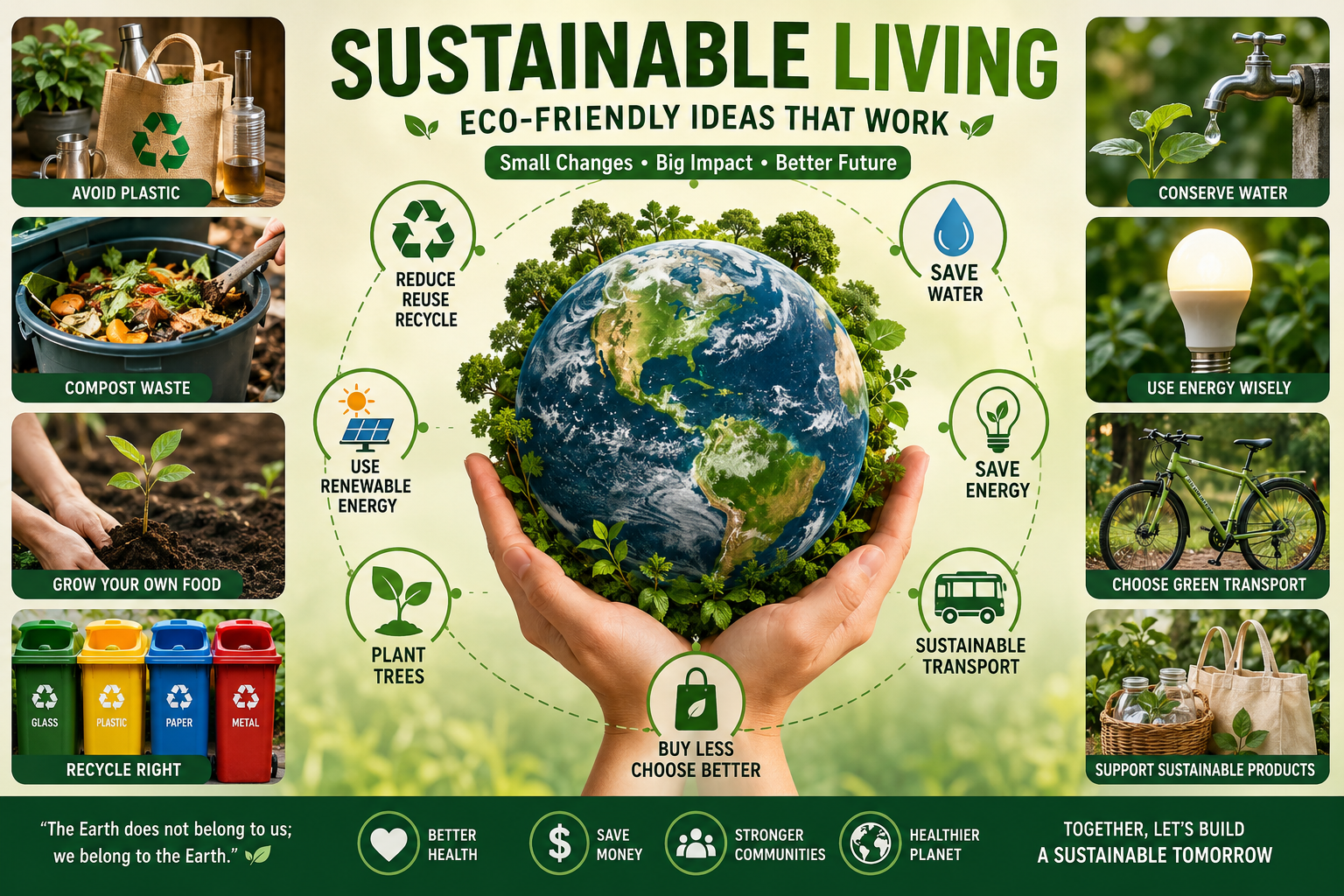
Reduce Single-Use Plastic
Plastic pollution is one of the biggest environmental challenges today.
Simple alternatives include:
- Stainless steel water bottles
- Cloth shopping bags
- Bamboo toothbrushes
- Reusable lunch boxes
- Glass food containers
These alternatives significantly reduce plastic waste over time.
Learn More:
https://www.unep.org
Start Recycling Properly
Recycling helps reduce landfill waste and conserves raw materials.
Common recyclable materials include:
- Paper
- Cardboard
- Aluminum cans
- Glass bottles
- Plastic containers (where accepted)
Before recycling:
- Rinse food containers.
- Separate materials.
- Follow your local recycling rules.
EPA Recycling Guide:
https://www.epa.gov/recycle
Save Water Every Day
Fresh water is becoming increasingly scarce in many regions.
Easy ways to conserve water include:
- Take shorter showers.
- Turn off taps while brushing teeth.
- Install water-saving showerheads.
- Collect rainwater for gardening.
- Repair leaking pipes immediately.
These simple habits can save thousands of liters annually.
Learn More:
https://www.unwater.org
Reduce Energy Consumption
Reducing electricity usage benefits both the environment and your monthly utility bills.
Helpful strategies:
- Switch to LED lighting.
- Turn off electronics when not in use.
- Use smart thermostats.
- Wash clothes in cold water.
- Unplug idle chargers.
Energy Efficiency Information:
https://www.energy.gov
Choose Sustainable Transportation
Transportation contributes significantly to global carbon emissions.
Greener alternatives include:
- Walking
- Cycling
- Public transportation
- Carpooling
- Electric vehicles
Even replacing a few weekly car trips with cycling or walking can reduce emissions.
Reference:
https://www.iea.org
Create a Sustainable Home
Your home offers many opportunities to adopt sustainable habits.
Ideas include:
- Install LED lights
- Improve insulation
- Use energy-efficient appliances
- Grow indoor plants
- Compost kitchen waste
- Install low-flow faucets
- Use eco-friendly cleaning products
Even small upgrades can make a significant difference over time.
Learn More:
https://www.energystar.gov
Buy Less, Choose Better
One of the simplest principles of Sustainable Living is mindful consumption.
Before buying something, ask yourself:
- Do I really need it?
- Can I repair my existing item?
- Can I buy second-hand?
- Is this product recyclable?
- Does it have minimal packaging?
Buying fewer but higher-quality products reduces waste and often saves money in the long run.
Reference:
https://www.greenpeace.org
Sustainable Food Choices
Food production has a significant impact on the environment. Agriculture, transportation, packaging, and food waste all contribute to greenhouse gas emissions. Making sustainable food choices is one of the easiest ways to support Sustainable Living while improving your health.
Eat More Plant-Based Foods
You do not have to become a vegetarian to make a difference. Simply adding more fruits, vegetables, legumes, nuts, and whole grains to your diet can reduce your environmental footprint.
Benefits include:
- Lower carbon emissions
- Reduced water usage
- Better heart health
- Improved digestion
- Lower food waste
Learn More:
- Food and Agriculture Organization (FAO): https://www.fao.org
Buy Local and Seasonal Produce
Purchasing locally grown fruits and vegetables supports local farmers while reducing transportation emissions. Seasonal produce is often fresher, healthier, and requires fewer resources to grow.
Benefits include:
- Fresher food
- Less packaging waste
- Reduced fuel consumption
- Support for local communities
Reduce Food Waste
Millions of tons of edible food are wasted every year. Food waste not only wastes money but also contributes to methane emissions in landfills.
Simple ways to reduce food waste include:
- Plan meals before shopping.
- Store food properly.
- Freeze leftovers.
- Compost fruit and vegetable scraps.
- Buy only what you need.
Reference:
- UNEP Food Waste Index Report: https://www.unep.org
Eco-Friendly Gardening
Gardening is another excellent way to practice Sustainable Living. Even if you have limited space, growing herbs, vegetables, or flowers can benefit both you and the environment.
Compost Kitchen Waste
Instead of throwing away fruit peels and vegetable scraps, turn them into nutrient-rich compost.
Benefits include:
- Reduces landfill waste
- Improves soil quality
- Reduces the need for chemical fertilizers
Learn More:
https://www.epa.gov/recycle/composting-home
Plant Native Species
Native plants require less water, fewer pesticides, and less maintenance because they are naturally adapted to local conditions.
They also support:
- Birds
- Bees
- Butterflies
- Other pollinators
Collect Rainwater
Installing a rain barrel can provide free water for your garden while reducing pressure on municipal water systems.
Switch to Renewable Energy
Renewable energy is becoming more affordable and accessible. Replacing fossil fuels with clean energy sources is one of the most effective ways to reduce carbon emissions.
Common renewable energy sources include:
- Solar power
- Wind energy
- Hydropower
- Geothermal energy
Benefits include:
- Lower electricity bills
- Reduced carbon footprint
- Cleaner air
- Greater energy independence
Learn More:
- International Energy Agency: https://www.iea.org
- U.S. Department of Energy: https://www.energy.gov
Sustainable Fashion
The fashion industry is one of the world’s largest polluters. Fast fashion encourages excessive consumption, creating huge amounts of waste.
Buy Quality Instead of Quantity
Purchasing durable clothing reduces waste and saves money over time.
Support Ethical Brands
Look for companies that use:
- Organic cotton
- Recycled materials
- Fair labor practices
- Eco-friendly packaging
Donate or Recycle Clothing
Instead of throwing away unwanted clothes:
- Donate them.
- Sell them second-hand.
- Recycle textiles through local programs.
Learn More:
- Fashion Revolution: https://www.fashionrevolution.org
Choose Eco-Friendly Household Products
Many everyday household items contain chemicals that can harm both people and the environment.
Better alternatives include:
- Natural cleaning products
- Refillable soap containers
- Bamboo toothbrushes
- Reusable cloth towels
- Glass storage containers
- Reusable coffee cups
These simple switches reduce waste while creating a healthier home.
Practice a Zero-Waste Lifestyle
Zero waste means reducing the amount of trash sent to landfills by rethinking consumption habits.
The famous 5Rs of zero waste are:
- Refuse what you do not need.
- Reduce what you use.
- Reuse products whenever possible.
- Recycle correctly.
- Rot (compost organic waste).
Even following a few of these principles can make a noticeable difference.
Learn More:
https://www.zerowasteinternational.org
Green Technology and Smart Living
Technology can also support Sustainable Living.
Examples include:
- Smart thermostats
- Smart irrigation systems
- Energy-monitoring apps
- Solar-powered chargers
- Electric vehicles
- Smart LED lighting
These innovations help households reduce energy consumption without sacrificing comfort.
Common Myths About Sustainable Living
Myth 1: Sustainable Living Is Expensive
Reality: Many sustainable habits actually save money over time, such as reducing energy use, repairing items, and buying reusable products.
Myth 2: One Person Cannot Make a Difference
Reality: Small actions become powerful when millions of people adopt them.
Myth 3: Sustainable Living Is Difficult
Reality: Most eco-friendly habits are simple and become routine with practice.
Myth 4: Recycling Alone Is Enough
Reality: Recycling is important, but reducing consumption and reusing products have an even greater environmental impact.
Challenges of Sustainable Living
Although Sustainable Living has many benefits, people may face some challenges:
- Higher upfront costs for certain eco-friendly products
- Limited access to recycling facilities
- Lack of awareness
- Convenience of disposable products
- Limited public transportation in some areas
Fortunately, these challenges can often be overcome through education, planning, and gradual lifestyle changes.
Practical Tips for Beginners
If you are new to sustainable living, start with small, realistic goals.
Here are ten easy ideas:
- Carry a reusable water bottle.
- Use cloth shopping bags.
- Turn off lights when leaving a room.
- Buy local food.
- Walk for short trips.
- Avoid food waste.
- Use reusable coffee cups.
- Repair items instead of replacing them.
- Recycle responsibly.
- Plant a tree or start a small garden.
Remember, consistency matters more than perfection.
The Future of Sustainable Living
The future looks promising as governments, businesses, and individuals continue investing in sustainability.
Emerging trends include:
- Renewable energy expansion
- Green architecture
- Electric transportation
- Circular economy practices
- Sustainable packaging
- Eco-friendly technology
- Carbon-neutral businesses
As innovation continues, sustainable living will become easier and more affordable for everyone.
Frequently Asked Questions (FAQs)
What is Sustainable Living?
Sustainable Living is a lifestyle that focuses on reducing environmental impact by conserving resources, minimizing waste, and making eco-friendly choices.
Why is Sustainable Living important?
It helps protect natural resources, reduce pollution, fight climate change, and create a healthier future for coming generations.
How can beginners start Sustainable Living?
Start with simple habits like reducing plastic use, recycling, saving water, conserving electricity, and buying reusable products.
Does Sustainable Living save money?
Yes. Many sustainable habits lower utility bills, reduce unnecessary purchases, and encourage long-lasting products.
Is Sustainable Living only about protecting nature?
No. It also supports healthier communities, economic stability, ethical business practices, and responsible consumption.
Conclusion
Sustainable Living is not about being perfect—it is about making better choices every day. Every reusable bag, every recycled bottle, every energy-efficient appliance, and every mindful purchase contributes to a cleaner, healthier planet.
The journey toward sustainability begins with small actions. Whether you choose to reduce plastic waste, conserve water, adopt renewable energy, support ethical brands, or grow your own food, each decision has a positive impact. Collectively, these efforts can help reduce pollution, conserve natural resources, and combat climate change.
Ultimately, sustainable living benefits everyone. It protects the environment, improves personal well-being, supports local communities, and ensures that future generations inherit a healthier world. By embracing eco-friendly ideas that truly work, you become part of a global movement dedicated to building a more sustainable and resilient future.
For more: click here