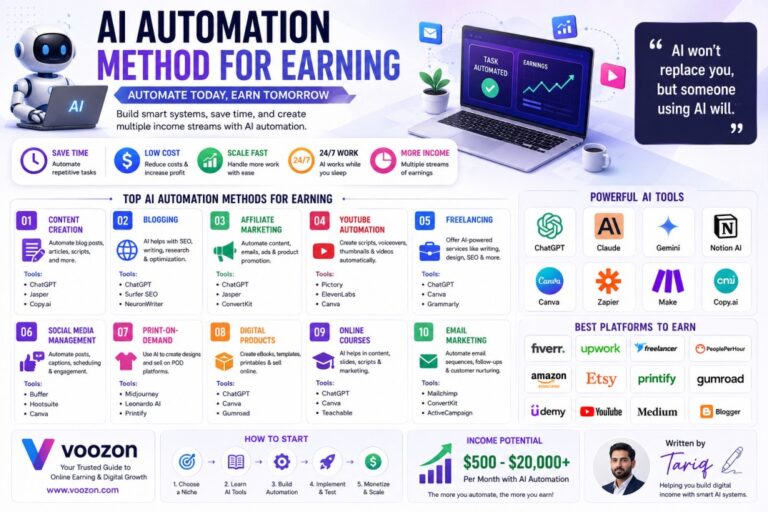
Affiliate Marketing for Beginners Step by Step
Affiliate Marketing for Beginners Step by Step

Introduction
If you have ever searched for ways to make money online, you have probably come across affiliate marketing. The good thing about affiliate marketing is that you do not need to create your own product, manage inventory, or handle customer deliveries. Instead, you recommend products or services from other companies and earn a commission when someone makes a qualifying purchase through your affiliate link.
For beginners, affiliate marketing can look confusing at first. There are affiliate networks, tracking links, commissions, websites, blogs, YouTube videos, social media, SEO, and many other terms to understand. But once you break everything into simple steps, the process becomes much easier.
This Affiliate Marketing for Beginners Step by Step guide will explain how affiliate marketing works, how to choose a profitable niche, where to find affiliate programs, how to create useful content, and how to get your first visitors and commissions.
Affiliate disclosure: This article may contain affiliate links. If you purchase something through an affiliate link, the publisher may earn a commission at no additional cost to you.
What Is Affiliate Marketing?
Affiliate marketing is a performance-based business model. You promote another company’s product or service using a special tracking link. If someone clicks your link and completes an eligible action, such as making a purchase, you may receive a commission.
For example, imagine you have a website about home office equipment. You write an article about the best keyboards for working from home and recommend several products. Your affiliate links take readers to the retailer’s website. If a reader purchases through your qualifying link, you may earn a commission.
One well-known example is the Amazon Associates Program, which allows content creators, publishers, bloggers, and influencers to monetize traffic by recommending products available through Amazon. (Amazon Associates)
The basic process is simple:
Choose a product → Get your affiliate link → Create useful content → Attract visitors → Generate qualifying sales → Earn commissions
Step 1: Choose a Profitable Niche
The first step is choosing a niche. A niche is a specific topic or market that your website, YouTube channel, or social media account will focus on.
Instead of choosing a very broad topic such as “technology,” you could focus on something more specific, such as:
- AI tools for small businesses
- Home office equipment
- Fitness products
- Personal finance software
- Online learning platforms
- Website hosting
- Blogging tools
- Travel accessories
A good niche should have audience demand, products to promote, and enough content opportunities.
Do not choose a niche only because you think it has high commissions. You should also understand the audience and be able to create genuinely useful content around the subject.
Step 2: Research Your Audience
Once you have selected a niche, think about the people you want to reach.
Ask yourself simple questions:
What problems do they have? What products are they searching for? What questions do they ask before buying? What would make their decision easier?
For example, if your niche is AI tools, your audience may search for things like “best AI writing tools,” “AI tools for students,” “best AI tools for small business,” or “free AI tools for beginners.”
These questions can become future blog posts, videos, comparison articles, and product reviews.
Step 3: Find Affiliate Programs
Now you need products or services to promote. You can find affiliate programs directly on company websites or through affiliate networks.
For example, Amazon Associates is useful if you want to recommend physical products. Shopify’s Affiliate Program allows approved affiliates to refer new merchants to Shopify and earn commissions on qualifying referrals. (Shopify)
Another option is impact.com, a partnership platform used by brands and publishers to manage affiliate relationships, tracking, and payments. (impact.com)
Before joining any program, always read its terms. Check commission rates, cookie or attribution rules, payment requirements, eligible countries, and promotional restrictions.
Step 4: Create Your Website or Content Platform
You need somewhere to publish your recommendations. A website is one of the strongest options because you can build organic search traffic over time.
For example, you could create a website focused entirely on your chosen niche. You can then publish:
- Product reviews
- Comparison articles
- Tutorials
- Buying guides
- “Best products” articles
- How-to guides
- Case studies
- Frequently asked questions
You can also use YouTube, social media, email newsletters, or a combination of platforms.
The important thing is not simply placing affiliate links everywhere. Your content should actually help people make better decisions.
Step 5: Create Helpful Content
This is where many beginners make a mistake.
They create an article that says, “Buy this product because it is amazing,” and then add an affiliate link. That approach usually does not provide much value.
Instead, create content that answers the reader’s real question.
For example, rather than writing:
“Buy the Best Laptop Here”
write:
“Best Laptops for Remote Work: Features, Pros, Cons, and Buying Guide”
Explain what makes each product useful, who it is suitable for, its limitations, and what buyers should consider before purchasing.
If you have personally used a product, explain your experience honestly. If you have not tested it yourself, avoid pretending that you have.
Step 6: Use SEO to Get Free Traffic
Search engine optimization, commonly called SEO, can help your articles appear when people search Google and other search engines.
Start by researching keywords related to your niche. Look for phrases that show buying intent, such as:
best AI tools for business
best laptop for students
best website hosting for beginners
Shopify alternatives
best office chair for long hours
Then create a useful article around the searcher’s actual intent.
Use your main keyword naturally in the title, introduction, headings, and relevant sections. Do not repeatedly insert the keyword just to make it appear more often. Search engines are designed to understand topics, while readers simply want useful answers.
Step 7: Add Affiliate Links Naturally
Once your content is ready, place affiliate links where they make sense.
For example, after explaining why a particular product may be useful, you can provide a button or text link such as “Check the latest price”.
Do not turn every sentence into a sales pitch. Too many links can make an article feel like an advertisement instead of a helpful guide.
Your goal should be to help the reader first and earn a commission second.
Step 8: Be Transparent About Affiliate Links
Affiliate disclosure is important, especially when targeting audiences in countries such as the United States.
The U.S. Federal Trade Commission says affiliate relationships should be disclosed clearly and conspicuously so readers understand that the publisher may receive compensation. The FTC also recommends placing the disclosure close to the recommendation or affiliate link. (Federal Trade Commission)
A simple disclosure can say:
“We may earn a commission if you purchase through links on this page, at no additional cost to you.”
You should also make sure your product claims are truthful and can be supported. The FTC’s advertising guidance emphasizes that endorsements should not be deceptive or misleading. (Federal Trade Commission)
Step 9: Promote Your Content
Publishing an article does not guarantee that people will find it.
You can promote your content through SEO, YouTube, Pinterest, Facebook, Instagram, newsletters, online communities, and other platforms where your target audience is active.
For example, if you publish a detailed article about AI tools, you could create a short YouTube video explaining three useful tools and direct interested viewers to your full guide.
The key is to avoid spam. Helpful content builds trust, while repeatedly dropping affiliate links can damage your reputation.
Step 10: Track Your Results
Affiliate marketing becomes much easier when you understand your numbers.
Monitor things such as:
Visitors: How many people are reaching your content?
Clicks: How many visitors click your affiliate links?
Conversions: How many people actually purchase or complete the required action?
Commission: How much revenue are your links generating?
Suppose 1,000 people visit your article and 100 click an affiliate link. If five of those visitors make qualifying purchases, you can analyze what worked and improve the article.
Do not become discouraged if your first article does not generate sales. Affiliate marketing usually requires testing, patience, and consistent content creation.
Common Affiliate Marketing Mistakes Beginners Should Avoid
One of the biggest mistakes is promoting products simply because they offer high commissions. A product with a large commission is useless if nobody wants it or if your audience does not trust your recommendation.
Another mistake is copying other affiliate websites. Instead, try to provide something different—better explanations, clearer comparisons, personal experience, original research, or a simpler buying guide.
You should also avoid making unrealistic income promises. Affiliate marketing is not a guaranteed way to get rich quickly. Some people make significant income, while others earn very little. Your results depend on factors such as niche selection, traffic, content quality, audience trust, conversion rates, and the affiliate programs you use.
How Long Does Affiliate Marketing Take to Make Money?
There is no fixed timeline.
Some beginners may generate their first commission relatively quickly, while others may spend months building traffic and authority before seeing meaningful results.
If you are starting from zero, focus on building a useful website or content platform rather than obsessing over your first sale.
Think of affiliate marketing as a long-term project. One helpful article may generate a few clicks today, but dozens of useful articles can create a much larger traffic base over time.
Final Thoughts
Affiliate marketing can be a practical way for beginners to build an online income stream, but it should not be treated as a shortcut to instant money.
The process is straightforward: choose a niche, understand your audience, find suitable affiliate programs, create genuinely useful content, promote that content, and track your results.
Start small. Choose one niche instead of trying to promote everything. Publish content that answers real questions, recommend products honestly, and clearly disclose your affiliate relationships.
For more: click here