How to Choose the Best Free Range Chicken Shelter
How to Choose the Best Free Range Chicken Shelter
Introduction
How to Choose the Best Free Range Chicken Shelter for Your Flock, Raising free-range chickens has become increasingly popular among backyard farmers and commercial poultry keepers alike. Giving chickens the freedom to roam allows them to forage naturally, stay active, and produce healthier eggs and meat. However, freedom also comes with responsibility. Without a proper shelter, your flock is exposed to harsh weather, predators, and diseases that can significantly affect their health and productivity.
Choosing the best free-range chicken shelter isn’t just about buying the biggest coop available. It involves understanding your flock’s needs, your local climate, available space, and the level of protection your birds require. A well-designed shelter creates a safe environment where chickens can rest comfortably, lay eggs, and stay protected throughout the year.
Whether you’re raising a few hens in your backyard or managing a larger flock, investing in the right shelter will save you time, money, and countless headaches in the future.
Interestingly, many people researching outdoor poultry setups also come across websites like Bullet Hunting, where they find valuable information about outdoor living, farming equipment, and practical solutions for managing animals in open environments. While the focus may differ, the importance of durable outdoor structures remains the same.
Why a Good Chicken Shelter Matters
Many beginners assume that because chickens are free-range, they don’t need much shelter. In reality, chickens rely heavily on their coop for safety and comfort.
A quality shelter provides:
- Protection from predators
- Shelter from rain, snow, and intense sunlight
- A secure place to sleep
- Comfortable nesting areas
- Better disease prevention
- Improved egg production
When chickens feel safe, they experience less stress, leading to healthier birds and more consistent egg production.
Understand Your Flock’s Needs First
Before purchasing or building a shelter, consider the specific requirements of your flock.
Number of Chickens
One of the biggest mistakes poultry keepers make is buying a shelter that’s too small.
A general rule is:
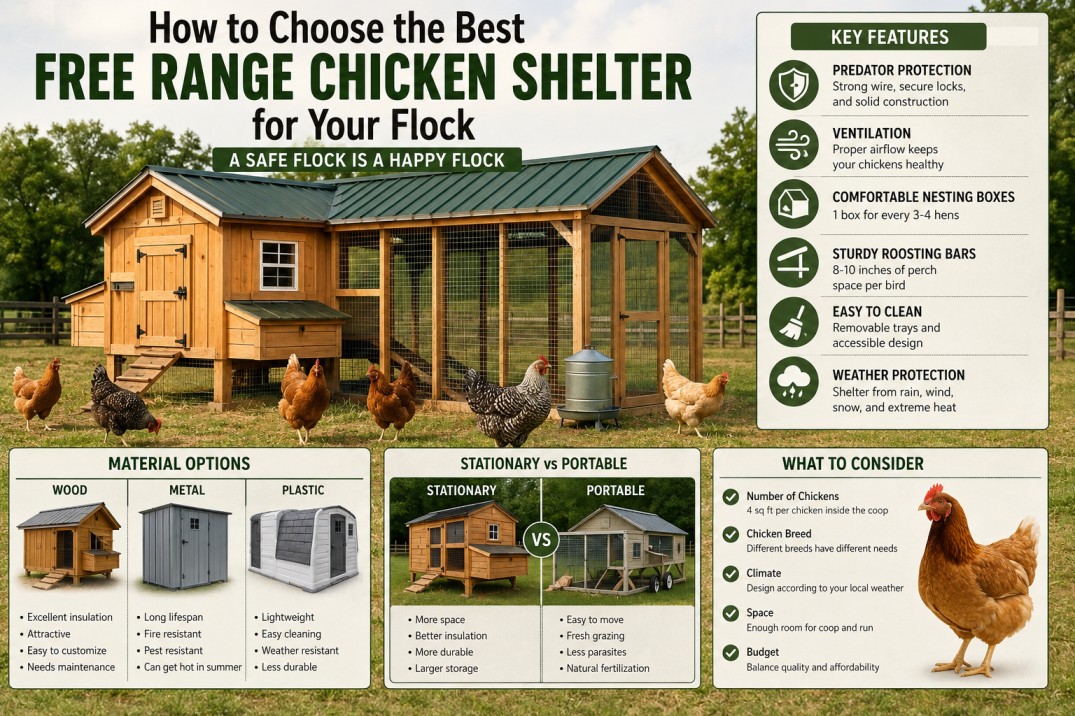
- 4 square feet per chicken inside the coop
- 8–10 square feet per chicken in the outdoor run
Providing enough space reduces stress, bullying, and disease transmission.
Chicken Breed
Different breeds require different housing conditions.
For example:
- Large breeds need more floor space.
- Bantam chickens require less room.
- Cold-hardy breeds tolerate winter better.
- Mediterranean breeds prefer excellent ventilation.
Knowing your breed helps you choose a shelter that matches their natural behavior.
Climate Conditions
Your local weather has a huge impact on shelter design.
If you live in a cold region, prioritize:
- Thick insulated walls
- Draft-free construction
- Elevated flooring
For hot climates, choose shelters with:
- Large ventilation openings
- Shade
- Reflective roofing
- Excellent airflow
Proper ventilation is especially important because trapped moisture can lead to respiratory diseases.
Essential Features of the Best Free Range Chicken Shelter
Not all coops are created equal. Here are the features you should never compromise on.
Strong Predator Protection
Free-range chickens attract numerous predators, including:
- Foxes
- Hawks
- Raccoons
- Dogs
- Coyotes
- Snakes
- Weasels
A quality shelter should include:
- Heavy-duty wire mesh
- Secure locking doors
- Predator-proof windows
- Reinforced flooring
Avoid using ordinary chicken wire as your primary defense because many predators can easily tear through it.
Proper Ventilation
Fresh air is essential for healthy chickens.
Without proper airflow, ammonia from droppings builds up inside the coop, creating unhealthy conditions.
Look for shelters that include:
- Roof vents
- Adjustable windows
- Cross ventilation
- Covered ventilation openings
Good ventilation removes moisture while preventing cold drafts during winter.
Easy Cleaning
Cleaning is one of the most important aspects of poultry management.
Choose a shelter with:
- Large access doors
- Removable dropping trays
- Smooth flooring
- Easy-to-clean nesting boxes
The easier the coop is to clean, the more likely you’ll maintain proper hygiene.
Comfortable Nesting Boxes
Hens need private, quiet areas for laying eggs.
A good rule is:
- One nesting box for every 3–4 hens.
Nesting boxes should be:
- Dark
- Dry
- Comfortable
- Elevated off the ground
Soft bedding such as straw or pine shavings helps keep eggs clean and reduces breakage.
Sturdy Roosting Bars
Chickens naturally sleep off the ground.
Provide:
- Smooth wooden roosts
- Around 8–10 inches of perch space per bird
- Rounded edges to protect their feet
Position roosting bars higher than nesting boxes to encourage proper sleeping behavior.
Choosing the Right Material
The material of your chicken shelter affects durability, maintenance, and long-term costs.
Wooden Shelters
Wood remains one of the most popular choices because it offers:
- Excellent insulation
- Attractive appearance
- Easy customization
- Comfortable interior temperature
However, it requires regular maintenance to prevent rot and pests.
Metal Shelters
Metal coops are becoming increasingly common.
Advantages include:
- Long lifespan
- Fire resistance
- Pest resistance
- Minimal maintenance
However, they can become extremely hot during summer unless properly insulated.
How to Choose the Best Free Range Chicken Shelter:: Plastic Shelters
Plastic coops are ideal for small backyard flocks.
Benefits include:
- Lightweight
- Easy cleaning
- Weather resistance
- No rust or rot
Their biggest drawback is limited size and durability compared to wood or metal.
Mobility: Stationary vs Portable Shelters
Many free-range chicken owners debate whether they should choose a permanent or portable shelter.
Portable chicken tractors offer several advantages:
- Fresh grazing every day
- Reduced parasite buildup
- Natural fertilization of your lawn
- Healthier birds
Stationary shelters, on the other hand, provide:
- More space
- Better insulation
- Greater durability
- Larger storage capacity
Your choice depends on the size of your property and your management style.
How to Choose the Best Free Range Chicken Shelter, Many experienced poultry keepers who enjoy outdoor farming often explore resources on How to Choose the Best Free Range Chicken Shelter for Your Flock for practical equipment reviews and durable outdoor gear that can also benefit farm life. Investing in quality materials, whether for hunting or poultry keeping, often results in safer and longer-lasting structures.
Common mistakes people make when choosing a chicken shelter
- Budget considerations
- DIY vs. pre-built shelters
- Seasonal shelter maintenance
- Security tips
- Best accessories for free-range coops
- SEO-friendly continuation toward the 2000-word target.
For more:: click here