Prescription Nausea Medications: Types, Uses & Side Effects
Prescription Nausea Medications: Types, Uses & Side Effects
Nausea is one of the most common symptoms people experience. It can happen because of a stomach virus, food poisoning, pregnancy, motion sickness, migraines, chemotherapy, or even certain medications. While mild nausea often goes away on its own, persistent or severe nausea may require medical treatment. That’s where prescription nausea medications come into play.
Prescription medications for nausea are designed to reduce or prevent the sensation of wanting to vomit. Unlike over-the-counter remedies, these medicines are prescribed by healthcare providers based on the underlying cause of nausea, a person’s medical history, age, and any other medications they may be taking.
This guide explains the different types of prescription nausea medications, how they work, their common uses, possible side effects, safety precautions, and when you should seek medical attention.
What Are Prescription Nausea Medications?
Prescription nausea medications are drugs that help prevent or relieve nausea and vomiting. Healthcare providers often prescribe them when symptoms are severe, long-lasting, or related to medical treatments such as chemotherapy or surgery.
Different medications target different pathways in the brain and digestive system that trigger nausea. Because nausea has many possible causes, there isn’t one medication that works best for everyone.
For general information about nausea, visit:
MedlinePlus
https://medlineplus.gov/nauseaandvomiting.html
Common Causes of Nausea
Before prescribing medication, doctors first determine why someone is experiencing nausea.
Some of the most common causes include:
- Viral stomach infections
- Food poisoning
- Pregnancy (morning sickness)
- Motion sickness
- Migraine headaches
- Gastroenteritis
- Acid reflux (GERD)
- Side effects of medications
- Chemotherapy
- Radiation therapy
- Surgery and anesthesia
- Inner ear disorders
- Gallbladder disease
- Pancreatitis
- Kidney disease
Treating the underlying condition is often just as important as relieving the nausea itself.
More information:
Mayo Clinic
https://www.mayoclinic.org
When Do Doctors Prescribe Nausea Medications?
Doctors usually prescribe medication when nausea is:
- Prevents eating or drinking
- Causes dehydration
- Continues for several days
- Occurs after surgery
- Happens during chemotherapy
- Is related to migraines
- Results from gastrointestinal disorders
- Is severe during pregnancy
A medical evaluation helps determine which medication is safest and most effective.
Types of Prescription Nausea Medications
There are several categories of medications used to treat nausea. Each works differently depending on the cause of symptoms.
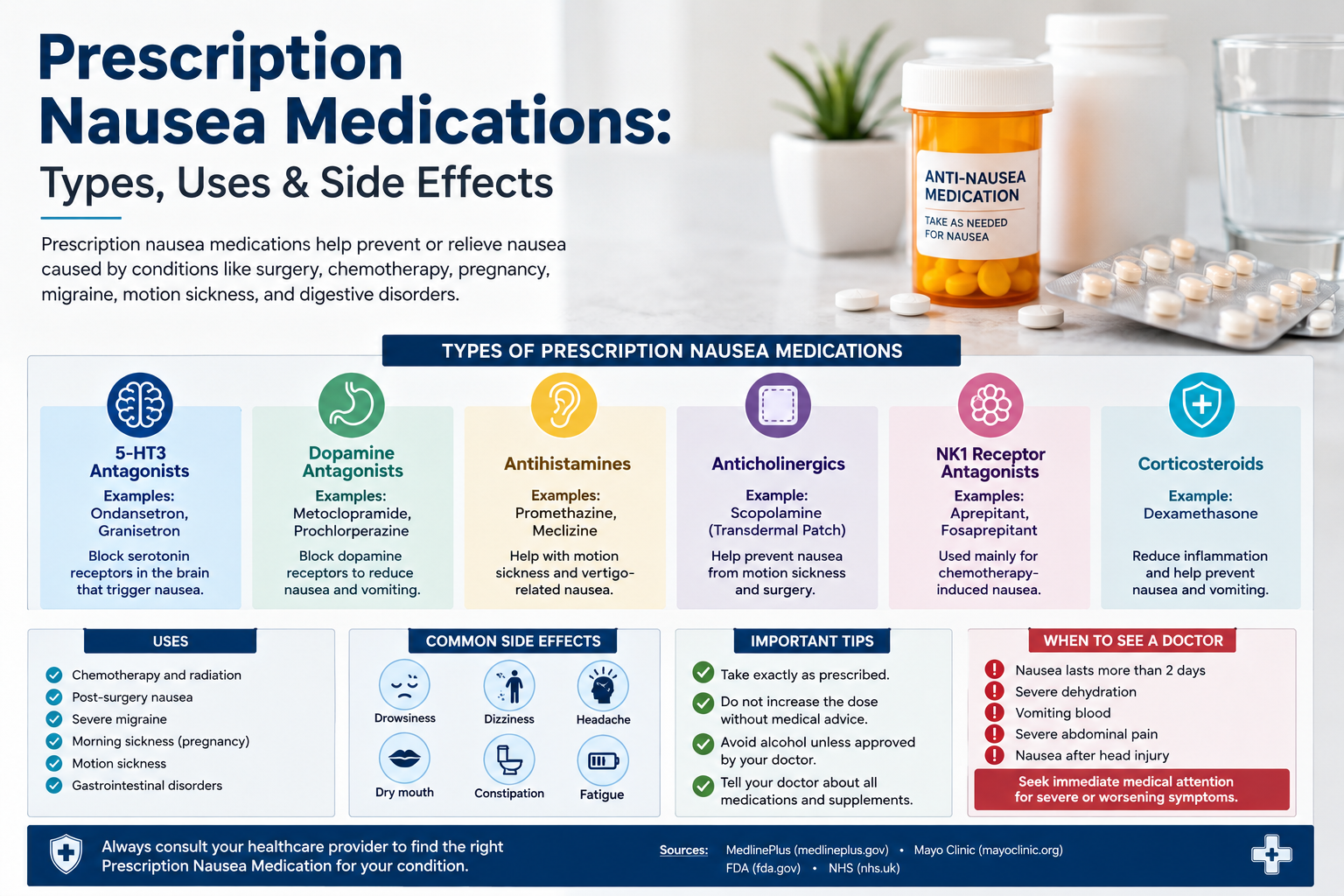
1. Serotonin (5-HT 3) Receptor Antagonists
These medications block serotonin receptors that trigger nausea and vomiting.
One of the best-known medications is ondansetron.
Doctors commonly prescribe it for:
- Chemotherapy-related nausea
- Radiation therapy
- Post-surgical nausea
- Severe gastroenteritis
Possible side effects include:
- Headache
- Constipation
- Dizziness
- Fatigue
Drug information:
https://medlineplus.gov/druginfo/meds/a601209.html
2. Dopamine Antagonists
These medications block dopamine receptors involved in the vomiting reflex.
Common examples include:
- Metoclopramide
- Prochlorperazine
Doctors may prescribe them for:
- Gastroparesis
- Migraine-associated nausea
- Gastrointestinal disorders
- Persistent vomiting
Possible side effects include:
- Drowsiness
- Restlessness
- Muscle stiffness
- Fatigue
3. Antihistamines
Certain antihistamines help prevent nausea caused by motion sickness and balance disorders.
Examples include:
- Promethazine
- Meclizine
These medicines are especially helpful for:
- Motion sickness
- Vertigo
- Inner ear conditions
Common side effects include:
- Sleepiness
- Dry mouth
- Blurred vision
4. Anticholinergic Medications
These medications reduce signals between the inner ear and the brain.
The best-known example is the scopolamine patch.
Doctors often recommend it before:
- Cruises
- Air travel
- Long road trips
- Surgical procedures
It is usually applied behind the ear several hours before travel.
More information:
5. Neurokinin-1 (NK1) Receptor Antagonists
These medications are primarily used for chemotherapy-related nausea.
Examples include:
- Aprepitant
- Fosaprepitant
They are usually combined with other anti-nausea medications for better effectiveness.
6. Corticosteroids
Certain steroids such as dexamethasone can reduce nausea related to chemotherapy and surgery.
Doctors typically prescribe these for short-term use because long-term use may increase the risk of side effects.
How Prescription Nausea Medications Work
Although these medications belong to different drug classes, they all work by interrupting the body’s nausea signals.
Some medications work in the following ways:
- Brain
- Inner ear
- Digestive tract
- Central nervous system
Others reduce inflammation or block chemical messengers that stimulate vomiting.
Because every cause of nausea is different, doctors choose medications based on individual needs.
Common Side Effects
Like all prescription drugs, prescription nausea medications may cause side effects.
Common ones include:
- Drowsiness
- Constipation
- Dry mouth
- Headache
- Dizziness
- Blurred vision
- Fatigue
Less common but serious side effects include:
- Irregular heartbeat
- Allergic reactions
- Muscle spasms
- Confusion
- Severe dizziness
Seek immediate medical care if severe reactions occur.
Drug Interactions
Some nausea medications may interact with:
- Antidepressants
- Pain medications
- Sleeping pills
- Blood pressure medications
- Seizure medications
- Alcohol
Always tell your healthcare provider about every medication and supplement you take.
Drug interaction checker:
https://www.drugs.com/drug_interactions.html
Prescription Nausea Medications During Pregnancy
Morning sickness affects many pregnant women.
Doctors generally recommend:
- Dietary changes
- Hydration
- Vitamin B6
- Lifestyle adjustments
If symptoms become severe, healthcare providers may prescribe medication after carefully weighing the benefits and risks.
Never start any prescription medication during pregnancy without consulting your healthcare provider.
Pregnancy guidance:
Prescription Nausea Medications for Chemotherapy
Cancer treatments frequently cause nausea and vomiting.
Doctors often combine several medications, including:
- Ondansetron
- Aprepitant
- Dexamethasone
Combination therapy provides better symptom control than using one medication alone.
Cancer treatment information:
Managing Nausea at Home
Medication isn’t always the only solution.
Helpful home strategies include:
Eat Small Meals
Large meals may worsen nausea.
Stay Hydrated
Drink:
- Water
- Electrolyte drinks
- Clear broth
Avoid Strong Odors
Certain smells can trigger nausea.
Eat Bland Foods
Examples include:
- Toast
- Rice
- Crackers
- Applesauce
- Bananas
Ginger
Some people find ginger helpful for mild nausea.
Always ask your healthcare provider before combining herbal remedies with prescription medications.
When Should You Contact a Doctor?
Seek medical care if nausea :
- Lasts longer than two days in adults
- Causes dehydration
- Includes severe abdominal pain
- Occurs after a head injury
- Includes vomiting blood
- Is accompanied by chest pain
- Causes confusion
- Prevents drinking fluids
Emergency symptoms require immediate evaluation.
Emergency care information:
Tips for Taking Prescription Nausea Medications Safely
To get the best results:
- Follow your prescription exactly.
- Never increase the dose without medical advice.
- Avoid alcohol unless your healthcare provider says it’s safe.
- Store medications according to the label instructions.
- Keep all medicines away from children.
- Tell your doctor if side effects become severe.
Good communication with your healthcare provider helps ensure safe treatment.
Frequently Asked Questions
Are Prescription Nausea Are medications better than over-the-counter medicines?
Not necessarily. Prescription medications are usually reserved for more severe or specific causes of nausea. Your healthcare provider will recommend the most appropriate option based on your symptoms.
Can these medications cause drowsiness?
Yes. Some, particularly antihistamines and dopamine antagonists, can cause sleepiness. If you feel drowsy after taking one, avoid driving or operating heavy machinery until you know how it affects you.
Can I take prescription nausea medications every day?
Only if your healthcare provider instructs you to do so. Long-term use of certain medications may increase the risk of side effects or complications.
What if my nausea doesn’t improve?
If your symptoms persist despite treatment, or if they worsen, contact your healthcare provider. Ongoing nausea may indicate an underlying condition that needs further evaluation.
Final Thoughts
Prescription nausea medications play an important role in treating moderate to severe nausea caused by surgery, chemotherapy, gastrointestinal disorders, migraines, pregnancy-related complications, and many other medical conditions. Because these medications work in different ways, the right choice depends on the underlying cause of your symptoms, your overall health, and any other medicines you may be taking.
While these medications can provide significant relief, they should always be used under the guidance of a qualified healthcare professional. Combining the appropriate medication with healthy eating habits, adequate hydration, and treatment of the underlying condition often leads to the best outcomes.
If your nausea is persistent, severe, or accompanied by concerning symptoms such as dehydration, severe pain, or vomiting blood, seek medical attention promptly. Early diagnosis and proper treatment can help prevent complications and improve your quality of life.
For additional trustworthy information, consult resources from MedlinePlus, the U.S. Food and Drug Administration (FDA), the National Cancer Institute (NCI), the American College of Obstetricians and Gynecologists (ACOG), and the Mayo Clinic.
For more: click here