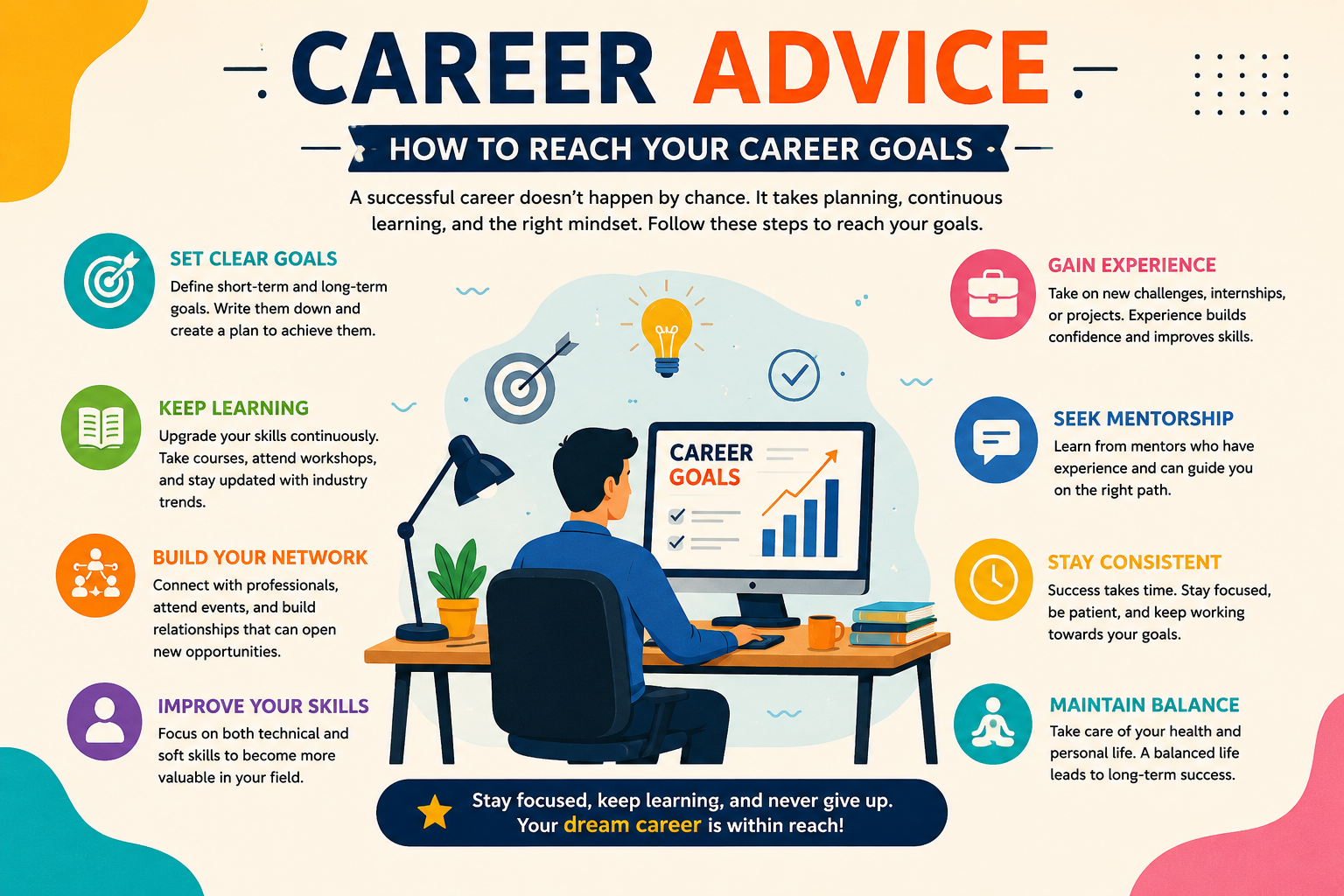
Career Advice: How to Reach Your Career Goals
Career Advice: How to Reach Your Career Goals
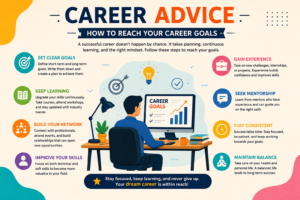
Introduction
Everyone dreams of having a successful and fulfilling career, but very few people have a clear roadmap to achieve it. Whether you are a student, a fresh graduate, or an experienced professional looking for growth, reaching your career goals requires planning, dedication, and continuous learning. The job market is changing faster than ever because of technology, artificial intelligence, and evolving workplace expectations. This means that relying on old strategies is no longer enough.
The good news is that anyone can build a successful career by following the right approach. Setting realistic goals, improving skills, networking with professionals, and staying adaptable are all essential steps toward long-term success.
In this article, we’ll share practical Career Advice that can help you identify your goals, overcome challenges, and create a career path that aligns with your ambitions. Along the way, you’ll also find trusted resources that can help you learn more about each topic.
Why Career Planning Matters
Many people begin working without thinking about where they want to be in five or ten years. As a result, they often feel stuck in jobs that don’t match their interests or potential.
Career planning gives you direction. It helps you:
- Understand your strengths and weaknesses
- Choose the right education or certifications
- Set achievable milestones
- Improve your earning potential
- Stay motivated during challenges
According to the U.S. Bureau of Labor Statistics, employment trends continue to evolve as industries adopt new technologies, making continuous learning more important than ever.
Learn more:
https://www.bls.gov
Start by Defining Your Career Goals
One of the best pieces of Career Advice is to know exactly what you want.
Ask yourself:
- What kind of work excites me?
- Which industry do I enjoy?
- What lifestyle do I want?
- How much income do I hope to earn?
- Where do I see myself in five years?
Write your goals down and divide them into:
Short-Term Goals
Examples include:
- Learning a new software
- Completing an online course
- Getting your first internship
- Improving communication skills
Long-Term Goals
Examples include:
- Becoming a manager
- Starting your own business
- Becoming an industry expert
- Working for a global company
When goals are written clearly, they become easier to achieve.
Know Your Strengths and Weaknesses
Successful professionals understand themselves before chasing opportunities.
Create a list of:
Strengths
- Leadership
- Problem-solving
- Creativity
- Communication
- Technical skills
Weaknesses
- Public speaking
- Time management
- Lack of confidence
- Limited experience
Improving weaknesses while maximizing strengths creates a balanced professional profile.
Develop In-Demand Skills
Today’s employers care about skills just as much as degrees.
Some of the most valuable skills include:
Technical Skills
- Data Analysis
- Programming
- Digital Marketing
- Graphic Design
- Artificial Intelligence
- Cybersecurity
Soft Skills
- Communication
- Leadership
- Teamwork
- Emotional Intelligence
- Critical Thinking
- Time Management
A combination of technical and soft skills makes you more competitive.
Helpful learning platforms:
Coursera:
https://www.coursera.org
edX:
https://www.edx.org
LinkedIn Learning:
https://www.linkedin.com/learning
Google Career Certificates:
https://grow.google/certificates
Keep Learning Continuously
The world changes quickly.
A skill that is valuable today may become outdated in a few years.
Continuous learning allows you to stay relevant.
Ways to learn include:
- Online courses
- Workshops
- Industry conferences
- Professional certifications
- Reading books
- Listening to podcasts
Even spending 30 minutes daily on learning can create a huge advantage over time.
Build a Strong Resume
Your resume is often the first impression employers have of you.
A strong resume should include:
- Professional summary
- Skills
- Work experience
- Education
- Certifications
- Achievements
Instead of writing:
“Responsible for sales.”
Write:
“Increased monthly sales by 25% within six months.”
Numbers make your achievements more convincing.
For resume tips:
https://www.indeed.com/career-advice/resumes-cover-letters
Create a Professional LinkedIn Profile
LinkedIn is one of the most powerful career platforms.
A professional profile should include:
- Professional photo
- Strong headline
- Detailed About section
- Skills
- Experience
- Certifications
- Recommendations
Recruiters frequently search LinkedIn when hiring candidates.
Create your profile:
Build Your Network
Networking opens doors that resumes cannot.
Many jobs are filled through professional connections rather than public job postings.
Ways to network:
- Attend conferences
- Join LinkedIn groups
- Participate in webinars
- Connect with industry professionals
- Volunteer at events
Networking isn’t about asking for jobs.
It’s about building genuine professional relationships.
Find a Mentor
One of the most valuable pieces of Career Advice is to find someone who has already achieved what you want.
A mentor can:
- Guide your decisions
- Share industry knowledge
- Help avoid common mistakes
- Introduce you to valuable contacts
Many successful professionals credit mentors for accelerating their careers.
Stay Consistent and Never Stop Growing
One of the most valuable pieces of career advice is to stay consistent in your efforts. Success rarely comes overnight, and even the most accomplished professionals started with small steps. Focus on making steady progress instead of expecting immediate results. Keep learning new skills, seek feedback, and be open to new opportunities that challenge you. Every experience, whether positive or negative, teaches you something valuable that contributes to your professional growth. By staying committed to your goals and maintaining a growth mindset, you’ll be better prepared to overcome obstacles and achieve long-term career success.
Improve Your Communication Skills
No matter how talented you are, poor communication can slow your growth.
Improve:
- Writing
- Public speaking
- Listening
- Presentation skills
- Negotiation
Communication affects:
- Interviews
- Promotions
- Leadership
- Client relationships
Toastmasters International is an excellent place to improve speaking skills.
Learn Time Management
Successful professionals know how to manage time effectively.
Helpful strategies include:
- Prioritize important tasks
- Use a digital calendar
- Set deadlines
- Break large projects into smaller tasks
- Avoid multitasking
Popular productivity techniques:
- Pomodoro Technique
- Eisenhower Matrix
- Time Blocking
Stay Updated with Industry Trends
Industries evolve constantly.
Follow:
- Industry blogs
- Professional organizations
- News websites
- Podcasts
- Research reports
Staying informed allows you to anticipate changes rather than react to them.
Google Trends can help identify emerging topics.
Don’t Fear Career Changes
Many people stay in careers they dislike because they fear change.
However, changing careers is becoming increasingly common.
If you’re considering a career change:
- Identify transferable skills
- Learn new technologies
- Build a portfolio
- Gain certifications
- Start networking in the new industry
Career transitions may seem difficult initially, but they often lead to greater satisfaction.
Prepare for Job Interviews
Interviews are opportunities to demonstrate your value.
Before every interview:
- Research the company
- Understand the job description
- Practice common interview questions
- Prepare examples of achievements
- Dress professionally
- Arrive on time
Practice behavioral interview questions using the STAR method:
- Situation
- Task
- Action
- Result
Build Your Personal Brand
Your reputation matters.
Your personal brand reflects:
- Your expertise
- Professionalism
- Online presence
- Communication style
- Values
Ways to build a strong personal brand:
- Publish LinkedIn posts
- Share industry insights
- Create a portfolio website
- Write articles
- Participate in discussions
Consistency builds credibility.
Develop Leadership Skills
Leadership isn’t limited to managers.
Anyone can demonstrate leadership by:
- Taking initiative
- Solving problems
- Helping teammates
- Accepting responsibility
- Making thoughtful decisions
Leadership increases promotion opportunities.
Maintain Work-Life Balance
Career success should not come at the expense of health.
Maintain balance by:
- Taking breaks
- Exercising regularly
- Getting enough sleep
- Spending time with family
- Managing stress
Healthy professionals perform better over the long term.
The World Health Organization provides resources on workplace well-being:
Learn Financial Management
Financial stability supports career growth.
Important habits include:
- Budgeting
- Saving
- Investing
- Emergency funds
- Retirement planning
Understanding personal finance reduces stress and provides flexibility when making career decisions.
Learn more:
Embrace Technology
Technology is reshaping every industry.
Learn tools related to:
- Artificial Intelligence
- Automation
- Cloud Computing
- Data Analytics
- Project Management
Even non-technical professionals benefit from understanding modern workplace technologies.
Stay Positive During Setbacks
Every successful person experiences rejection.
You may face:
- Failed interviews
- Job loss
- Promotion delays
- Career uncertainty
Instead of giving up:
- Analyze what happened
- Improve your skills
- Seek feedback
- Keep applying
- Stay consistent
Persistence often separates successful professionals from everyone else.
Common Career Mistakes to Avoid
Avoid these common mistakes:
- Not setting career goals
- Ignoring networking
- Refusing to learn new skills
- Poor time management
- Staying in a toxic workplace too long
- Avoiding feedback
- Neglecting your personal brand
Recognizing these mistakes early can save years of frustration.
Best Career Advice for Long-Term Success
If you remember only a few lessons from this article, make them these:
- Set clear career goals.
- Keep learning throughout your life.
- Build meaningful professional relationships.
- Stay adaptable to change.
- Improve both technical and soft skills.
- Maintain a positive mindset.
- Take calculated risks when opportunities arise.
- Never stop investing in yourself.
Following this Career Advice consistently can significantly improve your chances of building a rewarding and successful career.
Conclusion
Success doesn’t happen overnight. Every successful professional starts somewhere, often with uncertainty, mistakes, and challenges. What sets them apart is their willingness to learn, adapt, and keep moving forward.
The most effective Career Advice isn’t about finding shortcuts—it’s about building habits that support long-term growth. Define your goals, invest in your skills, expand your network, embrace lifelong learning, and remain resilient when obstacles arise. Every small step you take today brings you closer to the career you envision tomorrow.
Remember that your career is a journey, not a destination. Stay curious, keep improving, and never stop believing in your ability to achieve your professional goals.
For more: click here