What Is Bullet Hunting? A Complete Guide
What Is Bullet Hunting? A Complete Guide
Introduction
What Is Bullet Hunting? A Complete Guide, If you have recently come across the term Bullet Hunting, you might be wondering what it actually means. Is it related to hunting animals? Does it involve collecting bullets? Or is it a shooting sport? The truth is that Bullet Hunting can refer to several activities depending on the context, but it is most commonly associated with using firearms and ammunition for hunting wildlife or practicing responsible shooting techniques.
For beginners, entering the world of Bullet Hunting can feel overwhelming. There are different types of firearms, various bullet calibers, hunting laws, safety rules, and essential equipment to understand before getting started. Without proper knowledge, it’s easy to make mistakes that could affect both your safety and your hunting experience.
This beginner’s guide explains everything you need to know about Bullet Hunting, including how it works, the equipment you’ll need, safety guidelines, legal considerations, and helpful tips for becoming a responsible hunter. Whether you’re interested in hunting as a hobby or simply want to learn more about the subject, this guide will provide a solid foundation.
What Is Bullet Hunting?
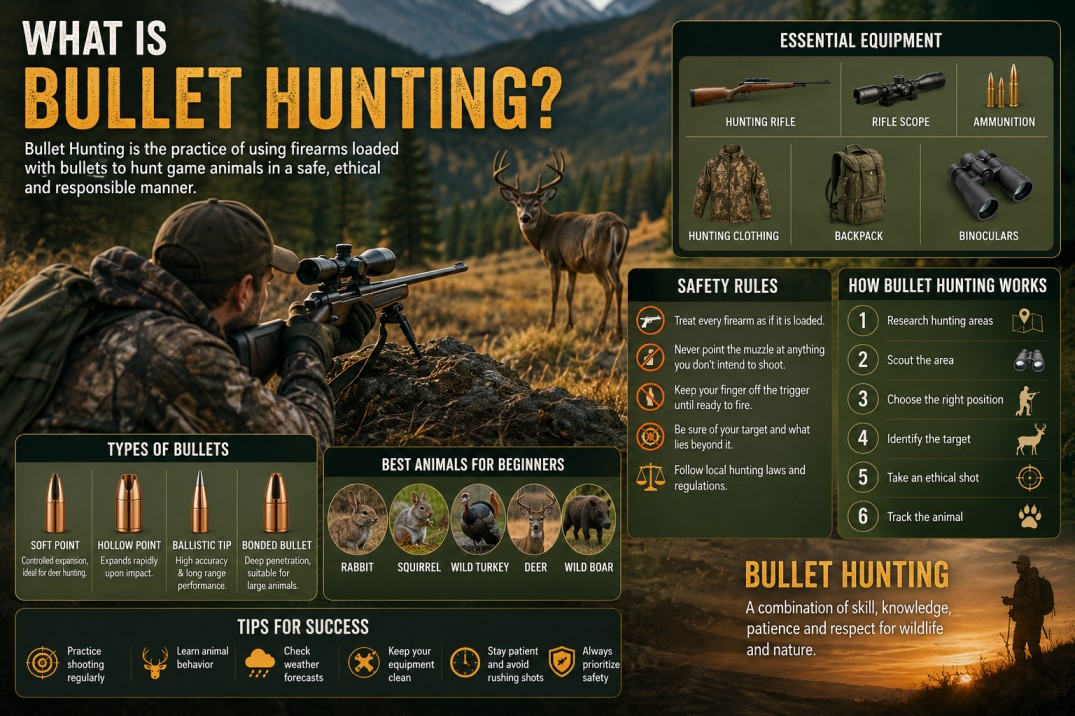
Bullet Hunting is the practice of using firearms loaded with bullets to hunt game animals or participate in hunting-related activities. Unlike archery hunting, which relies on bows and arrows, Bullet Hunting involves rifles, shotguns, or handguns that fire bullets or slugs designed for ethical and effective harvesting of animals.
The primary goal of Bullet Hunting is to make a clean, humane, and accurate shot that minimizes suffering while providing food, wildlife management, or recreational hunting opportunities.
Many people also use the phrase Bullet Hunting when discussing:
- Hunting with rifles
- Choosing the right hunting ammunition
- Learning shooting accuracy
- Tracking game after firing
- Collecting spent bullets for research or practice
Today, Bullet Hunting has become a popular outdoor activity in many countries where hunting is legally regulated.
The History of Bullet Hunting
Hunting has existed since the beginning of human civilization. Early humans relied on spears, bows, and primitive weapons to survive. As firearms evolved during the 15th and 16th centuries, hunters gradually shifted toward guns because they offered greater accuracy and longer shooting distances.
Modern Bullet Hunting became increasingly popular during the 19th and 20th centuries as rifles improved in precision and ammunition technology advanced.
Today, Bullet Hunting combines traditional hunting skills with modern technology, allowing hunters to make ethical shots while following strict conservation laws.
Why Do People Practice Bullet Hunting?
People participate in Bullet Hunting for many different reasons.
Food Harvesting
Many hunters prefer harvesting their own meat because it is natural, organic, and free from commercial processing.
Wildlife Management
Controlled hunting helps wildlife agencies maintain healthy animal populations and prevent overpopulation.
Outdoor Adventure
Bullet Hunting allows people to explore forests, mountains, and wilderness while enjoying nature.
Skill Development
Hunters continuously improve skills such as:
- Accuracy
- Patience
- Observation
- Tracking
- Decision-making
Family Tradition
In many regions, Bullet Hunting is a tradition passed down from generation to generation.
Essential Equipment for Bullet Hunting
Before starting Bullet Hunting, you’ll need the proper equipment.
1. Hunting Rifle
A hunting rifle is the most common firearm used in Bullet Hunting.
Popular calibers include:
- .243 Winchester
- .270 Winchester
- .308 Winchester
- .30-06 Springfield
- 6.5 Creedmoor
Each caliber serves different hunting purposes depending on the size of the game.
2. Ammunition
Choosing the right bullet is one of the most important parts of Bullet Hunting.
Common bullet types include:
Soft Point Bullets
Designed for controlled expansion and commonly used for deer hunting.
Hollow Point Bullets
Expand rapidly upon impact.
Ballistic Tip Bullets
Offer excellent long-range performance and improved accuracy.
Bonded Bullets
Provide deep penetration for larger animals.
3. Scope
A quality rifle scope helps improve shooting accuracy.
Good scopes include features like:
- Adjustable magnification
- Waterproof construction
- Fog resistance
- Clear optics
4. Hunting Clothing
Appropriate clothing keeps hunters comfortable and concealed.
Important clothing includes:
- Camouflage jacket
- Waterproof boots
- Gloves
- Hat
- Thermal layers
5. Backpack
A hunting backpack carries:
- Water
- Food
- First aid kit
- Ammunition
- Knife
- Flashlight
- GPS
6. Binoculars
Binoculars help locate animals without unnecessary movement.
How Bullet Hunting Works
Bullet Hunting follows a series of careful steps.
Step 1: Research Hunting Areas
Hunters first select legal hunting zones and obtain required permits.
Step 2: Scout the Area
Before hunting season begins, experienced hunters observe:
- Animal trails
- Feeding locations
- Water sources
- Bedding areas
Step 3: Choose the Right Position
Hunters select locations with:
- Good visibility
- Safe shooting angles
- Proper wind direction
Step 4: Identify the Target
Never shoot without positively identifying the animal.
Step 5: Take an Ethical Shot
Wait until the animal is positioned for a clean shot.
Step 6: Track the Animal
After firing, carefully follow any signs, such as footprints or blood, if necessary and in accordance with local regulations.
Bullet Hunting Safety Tips
Safety is the most important part of Bullet Hunting.
Always remember these rules:
- Treat every firearm as if it is loaded.
- Never point the muzzle at anything you don’t intend to shoot.
- Keep your finger off the trigger until ready to fire.
- Be sure of your target and what lies beyond it.
- Wear eye and hearing protection when practicing.
- Store firearms and ammunition securely.
- Follow local hunting laws and regulations.
- Never hunt under the influence of alcohol or drugs.
These rules help prevent accidents and ensure a responsible hunting experience.
Best Animals for Beginner Hunters
Depending on your location and legal regulations, beginners often start with:
- Rabbits
- Squirrels
- Wild turkey
- Deer
- Wild boar (where permitted)
Always check your local hunting regulations before pursuing any species.
Choosing the Right Bullet
Selecting the correct ammunition is essential for successful Bullet Hunting.
Factors to consider include:
Animal Size
Larger animals require bullets designed for deeper penetration.
Shooting Distance
Long-range shots benefit from bullets with higher ballistic performance.
Rifle Compatibility
Use only ammunition that matches your firearm’s specifications.
Local Regulations
Some regions restrict certain ammunition types.
Bullet Hunting Ethics
Responsible hunters respect wildlife and nature.
Good hunting ethics include:
- Taking only legal animals.
- Avoiding unnecessary suffering.
- Respecting private property.
- Following seasonal restrictions.
- Using harvested meat responsibly whenever appropriate.
- Leaving the environment clean.
Ethical behavior protects both wildlife and the reputation of hunters.
Common Mistakes Beginners Make
Many new hunters make avoidable mistakes.
These include:
Skipping Practice
Practice at the shooting range before hunting.
Buying the Wrong Rifle
Choose a firearm suitable for your experience level and intended game.
Ignoring Wind
Wind can affect bullet trajectory.
Moving Too Much
Animals detect movement quickly.
Poor Shot Placement
Accuracy matters more than power.
Forgetting Safety
Never ignore firearm safety procedures.
Advantages of Bullet Hunting
There are many benefits to learning Bullet Hunting.
- Effective for harvesting game.
- Suitable for various hunting environments.
- Encourages outdoor activity.
- Builds patience and discipline.
- Supports wildlife management where regulated.
- Provides valuable shooting experience.
- Can become a lifelong hobby.
Challenges of Bullet Hunting
Like any outdoor activity, Bullet Hunting has its challenges.
- Weather conditions
- Difficult terrain
- Physical endurance
- Equipment costs
- Learning firearm safety
- Understanding hunting regulations
- Developing shooting accuracy
These challenges become easier with proper training and experience.
Legal Considerations
Every country and region has different hunting laws.
Before starting Bullet Hunting, make sure you:
- Obtain the necessary hunting license.
- Follow firearm regulations.
- Respect hunting seasons.
- Hunt only in permitted areas.
- Follow bag limits and conservation rules.
- Complete any required hunter education courses.
Ignoring these regulations can lead to serious legal consequences.
Tips for Successful Bullet Hunting
If you’re new to Bullet Hunting, these tips can improve your chances of success:
- Practice shooting regularly.
- Learn animal behavior.
- Study maps before your trip.
- Check weather forecasts.
- Keep your equipment clean.
- Stay patient and avoid rushing shots.
- Wear appropriate camouflage where suitable.
- Always prioritize safety.
- Continue learning from experienced hunters.
Experience is one of the greatest teachers in hunting.
Frequently Asked Questions
Is Bullet Hunting suitable for beginners?
Yes. With proper education, safety training, legal compliance, and supervision where appropriate, beginners can learn Bullet Hunting responsibly.
Do I need expensive equipment?
No. Many hunters begin with reliable, moderately priced rifles and essential gear.
Is Bullet Hunting legal everywhere?
No. Hunting laws vary widely by country, state, and region. Always verify local regulations before hunting.
How often should I practice?
Regular target practice improves accuracy and confidence. Consistent training is more beneficial than occasional practice.
What is the most important skill in Bullet Hunting?
Safety is the most important skill. Responsible firearm handling should always come before accuracy or hunting success.
Conclusion
Bullet Hunting is more than simply using a firearm to hunt game. It is a combination of knowledge, preparation, responsibility, patience, and respect for wildlife and the environment. For beginners, learning the fundamentals—from choosing the right firearm and ammunition to understanding safety rules and local hunting regulations—is essential for a safe and rewarding experience.
As you gain experience, you’ll discover that successful Bullet Hunting depends less on expensive equipment and more on careful planning, ethical decision-making, and continuous practice. By focusing on safety, improving your shooting skills, respecting wildlife, and following all applicable laws, you can enjoy this outdoor activity responsibly while contributing to conservation efforts where hunting is legally managed.
Whether your goal is to connect with nature, develop marksmanship, or continue a family tradition, approaching Bullet Hunting with the right mindset and proper education will help you build confidence and enjoy the experience for years to come.
For more: click here