Bullet Hunting FAQs & Answered
Bullet Hunting FAQs & Answered
Bullet Hunting FAQs & Answered, Whether you’re preparing for your very first hunting trip or you’ve spent years exploring the outdoors, questions about hunting never completely disappear. Every season brings new experiences, changing regulations, improved equipment, and different wildlife conditions. That’s why hunters of every skill level continue learning throughout their journey. Asking questions isn’t a sign of inexperience—it’s part of becoming a safer, more ethical, and more successful hunter.
One topic that generates plenty of curiosity is Bullet Hunting. Beginners often wonder which caliber to choose, how to improve accuracy, what safety rules matter most, and how to hunt responsibly. Even experienced hunters frequently look for updated information about ammunition, firearm maintenance, hunting ethics, and best practices for different game species.
The good news is that many of the most common questions have straightforward answers. Understanding the fundamentals of Bullet Hunting not only improves confidence in the field but also helps ensure every hunt is conducted safely, legally, and ethically.
This guide answers some of the most frequently asked questions about Bullet Hunting, providing practical advice for beginners and valuable reminders for seasoned hunters alike.
What Is Bullet Hunting?
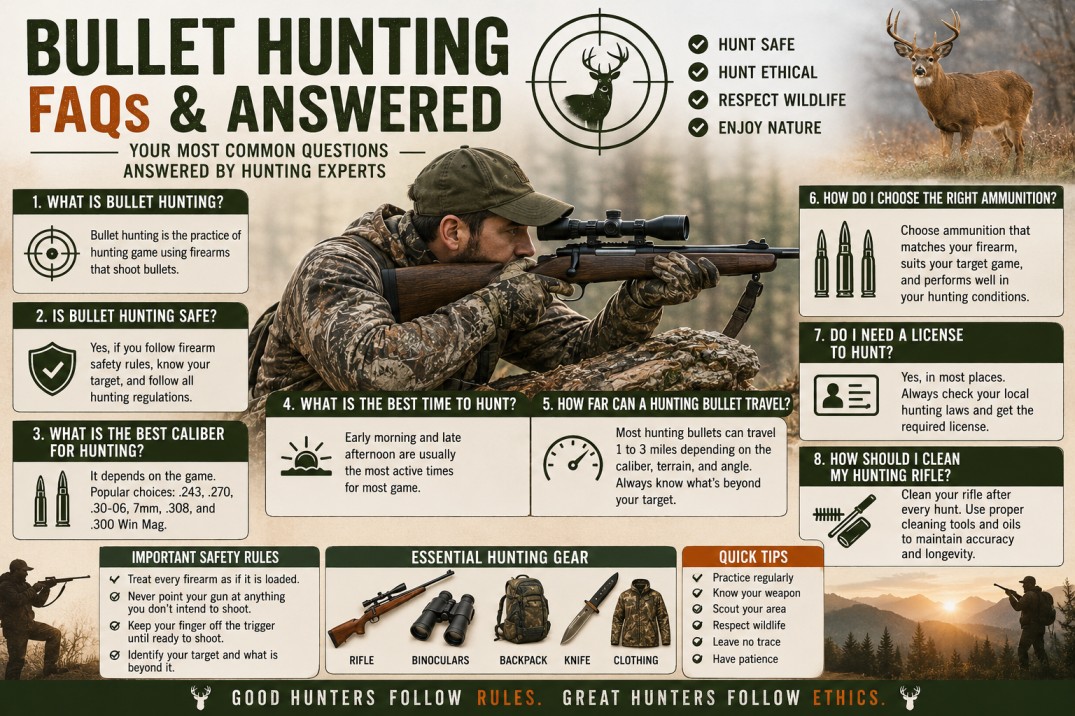
Bullet Hunting refers to hunting game animals with firearms that use metallic cartridges containing bullets. Unlike archery or muzzleloader hunting, bullet hunting typically involves modern rifles or handguns designed for specific hunting purposes.
The choice of firearm and ammunition depends on several factors, including:
- The type of game being hunted
- Local hunting regulations
- Hunting distance
- Terrain
- Personal experience
Many hunters prefer Bullet Hunting because it offers excellent accuracy, reliability, and effectiveness when practiced responsibly.
Is Bullet Hunting Suitable for Beginners?
Yes, beginners can enjoy Bullet Hunting, but proper education should always come first.
Before entering the field, new hunters should complete a hunter education course where required and spend time learning:
- Firearm safety
- Shooting fundamentals
- Wildlife identification
- Hunting regulations
- Ethical hunting practices
Practicing regularly at a shooting range helps beginners become comfortable with their firearm before attempting a real hunt.
Starting with experienced mentors can also make the learning process safer and more enjoyable.
What Firearm Is Best for Bullet Hunting?
There is no single firearm that’s best for everyone.
The ideal choice depends on:
Type of Game
Different animals require different levels of bullet performance. Small game, medium-sized game, and large game each require suitable firearms and ammunition.
Bullet Hunting FAQs & Answered:: Hunting Environment
Dense forests often involve shorter shooting distances, while open fields or mountain terrain may require longer-range accuracy.
Comfort and Fit
A properly fitted firearm improves control, comfort, and shooting accuracy.
Hunters should select equipment they can handle confidently rather than choosing the most powerful option available.
Bullet Hunting FAQs & Answered:: How Important Is Firearm Safety?
Firearm safety is the most important aspect of Bullet Hunting.
Every responsible hunter follows four basic rules:
- Always treat every firearm as if it is loaded.
- Keep the muzzle pointed in a safe direction.
- Keep your finger off the trigger until ready to shoot.
- Identify your target and what lies beyond it.
These simple habits prevent most hunting accidents and protect everyone in the field.
How Often Should I Practice Shooting?
Accuracy improves through consistent practice.
Rather than shooting hundreds of rounds once a year, many experienced hunters recommend practicing throughout the year.
Training sessions should include:
- Benchrest shooting
- Standing position
- Kneeling position
- Sitting position
- Prone shooting
- Field shooting with natural supports
Practicing under different weather conditions also prepares hunters for real-world situations.
What Distance Should Beginners Shoot?
Most beginners should begin practicing at shorter distances before attempting long-range shots.
Starting around 50 to 100 yards allows hunters to focus on:
- Proper breathing
- Trigger control
- Sight alignment
- Consistent shooting form
As confidence grows, shooting distances can gradually increase while maintaining accuracy.
Does Wind Affect Bullet Hunting?
Absolutely.
Wind is one of the biggest environmental factors influencing bullet accuracy.
Strong crosswinds can move a bullet several inches away from its intended target, especially at longer distances.
Hunters should learn to evaluate:
- Wind direction
- Wind speed
- Terrain
- Distance to the target
Reading wind conditions is an important skill that develops with experience.
What Is the Best Time of Day to Hunt?
The answer depends on the species being hunted.
Many game animals are most active during:
Early Morning
Cool temperatures encourage feeding and movement shortly after sunrise.
Late Afternoon
Wildlife often becomes active again before sunset.
Midday hunting can still be productive under certain weather conditions, but activity levels are generally lower for many species.
What Clothing Should Hunters Wear?
Comfort and safety both matter.
Most hunters wear:
- Weather-appropriate camouflage
- Waterproof boots
- Durable gloves
- Layered clothing
- Blaze orange where legally required
Proper clothing improves comfort during long hours outdoors while increasing visibility to other hunters.
How Do I Choose the Right Ammunition?
Choosing ammunition depends on several important factors.
Hunters should consider:
- Firearm caliber
- Bullet weight
- Bullet design
- Hunting distance
- Intended game species
Quality hunting ammunition designed specifically for ethical harvesting generally provides the best overall performance.
Always use ammunition recommended by the firearm manufacturer.
How Should Firearms Be Transported?
Safe transportation is essential.
During travel:
- Keep firearms unloaded.
- Store them inside protective cases.
- Secure ammunition separately when appropriate.
- Follow all local transportation laws.
Whether traveling by vehicle, ATV, or boat, responsible transportation reduces unnecessary risks.
Can Bullet Hunting Help Wildlife Conservation?
Yes.
Responsible hunting plays an important role in wildlife management.
In many regions, hunting license fees and conservation programs help fund:
- Habitat restoration
- Wildlife research
- Conservation education
- Population monitoring
- Public land maintenance
Ethical hunters contribute directly to long-term wildlife sustainability by following regulations and respecting harvest limits.
What Equipment Should Every Hunter Carry?
Besides a firearm, essential equipment includes:
- First-aid kit
- Water
- Navigation device
- Flashlight
- Knife
- Extra ammunition
- Communication device
- Emergency whistle
- Weather-appropriate clothing
Being properly prepared helps hunters handle unexpected situations safely.
Is Hunting Alone Safe?
Solo hunting can be enjoyable, but it requires additional preparation.
Before leaving home:
- Inform someone of your hunting location.
- Share your expected return time.
- Carry reliable communication equipment.
- Bring emergency supplies.
Good planning significantly improves safety during solo Bullet Hunting trips.
What Is Ethical Bullet Hunting?
Ethical Bullet Hunting focuses on respect—for wildlife, other hunters, private property, and the environment.
Ethical hunters:
- Take only safe shots.
- Follow hunting regulations.
- Recover harvested animals whenever possible.
- Respect landowners.
- Leave natural areas clean.
- Continue improving their hunting skills.
Ethics help ensure hunting remains sustainable and respected for future generations.
For more:: click here