What Are Alkaline Water Systems & How They Work
What Are Alkaline Water Systems & How They Work
Water is one of the most essential parts of human life. Every cell, tissue, and organ in our body depends on clean and safe drinking water to function properly. Over the past few years, many people have become interested in improving the quality of the water they drink. One of the most talked-about solutions is alkaline water systems.
So, What Are Alkaline Water Systems? Simply put, they are water filtration systems designed to increase the pH level of drinking water while removing harmful contaminants. These systems produce water that is less acidic and often contains beneficial minerals such as calcium, magnesium, and potassium.
Some people believe alkaline water offers health benefits like better hydration, improved digestion, and antioxidant properties. While research is still ongoing, many households and businesses are choosing alkaline water systems for cleaner and better-tasting water.
In this comprehensive guide, we’ll explain everything you need to know about What Are Alkaline Water Systems?, how they work, their benefits, different types, maintenance requirements, and whether they’re worth the investment.
Understanding Alkaline Water
Before learning What Are Alkaline Water Systems?, it’s important to understand alkaline water itself.
The pH scale measures how acidic or alkaline a substance is. It ranges from 0 to 14:
- pH 7 = Neutral
- Below 7 = Acidic
- Above 7 = Alkaline
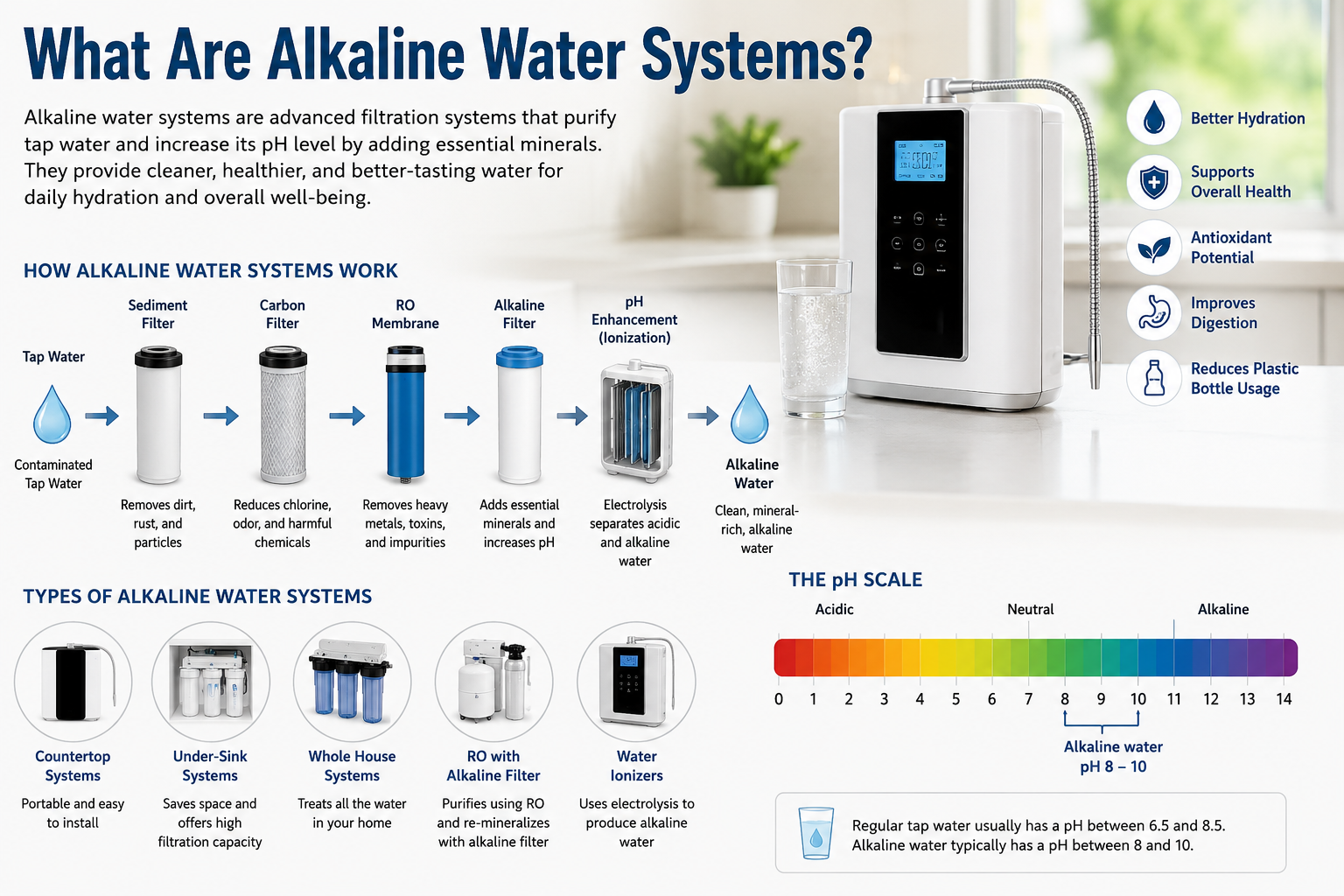
Regular tap water usually has a pH between 6.5 and 8.5, depending on the local water source.
You can learn more about water pH from the U.S. Environmental Protection Agency (EPA):
https://www.epa.gov/ground-water-and-drinking-water/basic-information-about-your-drinking-water
Alkaline water generally has a pH between 8 and 10.
Unlike ordinary water, alkaline water often contains naturally occurring minerals such as:
- Calcium
- Magnesium
- Potassium
- Sodium (in small amounts)
These minerals contribute to both the taste and alkalinity of the water.
What Are Alkaline Water Systems?
To answer the question What Are Alkaline Water Systems?, they are specialized filtration units that not only purify water but also raise its pH by adding beneficial minerals or using electrolysis technology.
Most modern alkaline water systems perform two important functions:
- Remove contaminants
- Increase alkalinity
Depending on the model, they can remove:
- Chlorine
- Sediment
- Rust
- Heavy metals
- Pesticides
- Harmful chemicals
- Unpleasant odors
After filtration, the system enriches the water with alkaline minerals, making it healthier and improving its taste.
How Do Alkaline Water Systems Work?
Different systems use different technologies, but most follow a similar process.
Step 1: Water Filtration
The first stage removes impurities.
Common filtration methods include:
- Activated carbon filters
- Sediment filters
- Reverse osmosis membranes
- Ceramic filters
These filters improve water quality by removing contaminants before the alkalizing process begins.
For information about drinking water contaminants, visit the Centers for Disease Control and Prevention (CDC):
https://www.cdc.gov/healthywater/drinking/index.html
Step 2: Mineral Enhancement
After purification, alkaline filters add healthy minerals such as:
- Calcium
- Magnesium
- Potassium
These minerals naturally increase the water’s pH.
Step 3: Ionization (For Water Ionizers)
Premium alkaline water systems often use electrolysis.
This process separates water into:
- Acidic water
- Alkaline water
The alkaline portion becomes drinking water.
Learn more about water ionization:
https://en.wikipedia.org/wiki/Water_ionizer
Types of Alkaline Water Systems
Understanding What Are Alkaline Water Systems? also means knowing the different types available.
1. Countertop Alkaline Water Systems
These systems sit on the kitchen counter and connect directly to your faucet.
Advantages include:
- Easy installation
- Affordable
- Portable
- Great for renters
2. Under-Sink Systems
Installed beneath the kitchen sink, these systems connect to a dedicated faucet.
Benefits include:
- Saves counter space
- Higher filtration capacity
- Better water flow
3. Whole House Alkaline Water Systems
These systems treat all the water entering your home.
Benefits include:
- Drinking water
- Shower water
- Laundry water
- Kitchen water
Ideal for large families.
4. Reverse Osmosis with Alkaline Filter
Reverse osmosis removes nearly everything from water, including beneficial minerals.
An alkaline remineralization filter restores healthy minerals while increasing pH.
Learn about reverse osmosis:
https://www.usgs.gov/special-topics/water-science-school/science/water-treatment
5. Water Ionizers
These are premium systems that use electrolysis to create alkaline water.
Features often include:
- Adjustable pH
- Digital display
- Multiple water settings
- High purification performance
Benefits of Alkaline Water Systems
Many people ask What Are Alkaline Water Systems? because they want healthier drinking water.
Here are some commonly discussed benefits.
Better Water Taste
Filtered alkaline water usually tastes cleaner than untreated tap water because chlorine and other impurities are removed.
Improved Hydration
Some studies suggest alkaline water may be absorbed more efficiently, although evidence is still limited.
Mineral Intake
Alkaline systems often add minerals like:
- Calcium
- Magnesium
- Potassium
These nutrients are important for overall health.
Cleaner Drinking Water
Modern alkaline systems remove many harmful contaminants.
You can check your area’s drinking water quality through the EPA:
https://www.epa.gov/ccr
Reduced Plastic Bottle Usage
Having an alkaline water system at home reduces dependence on bottled water, making it an environmentally friendly option.
Are the Health Claims Proven?
This is one of the biggest questions surrounding What Are Alkaline Water Systems?
Some supporters claim alkaline water may:
- Improve hydration
- Reduce acid reflux
- Support digestion
- Increase energy
- Slow aging
However, according to the Mayo Clinic, there is currently limited scientific evidence supporting many of these health claims.
Most health experts agree that drinking clean, safe water is more important than focusing solely on pH levels.
Who Should Consider an Alkaline Water System?
An alkaline water system may be suitable for:
- Families wanting cleaner drinking water
- People who dislike the taste of tap water
- Homes with hard water
- Individuals seeking to reduce bottled water consumption
- Health-conscious consumers
If you have kidney disease or another medical condition, consult a healthcare professional before making significant changes to your water intake.
Features to Look for When Buying an Alkaline Water System
If you’re shopping for one, consider the following:
NSF Certification
Look for NSF-certified systems that meet safety and performance standards.
Filter Life
Choose a system with long-lasting filters to reduce maintenance costs.
pH Range
Some systems allow you to adjust the pH level according to your preference.
Mineral Filter
Ensure the system adds healthy minerals after filtration.
Easy Maintenance
Select models with easily replaceable filters.
Warranty
A longer warranty often reflects better product quality.
Maintenance Tips
Regular maintenance ensures optimal performance.
Replace Filters
Always follow the manufacturer’s recommended replacement schedule.
Clean the System
Clean external parts regularly to prevent buildup.
Check Water Quality
Test your water periodically using pH or TDS meters.
Sanitize
Some systems require occasional internal cleaning to prevent bacterial growth.
Common Myths About Alkaline Water Systems
Myth 1: Alkaline Water Cures Diseases
There is no strong scientific evidence proving alkaline water cures cancer or chronic diseases.
Myth 2: Higher pH Is Always Better
Extremely alkaline water isn’t necessarily healthier. Moderation is key.
Myth 3: All Alkaline Water Systems Are the Same
Different systems vary significantly in:
- Filtration quality
- Mineral content
- Technology
- Lifespan
- Performance
Pros and Cons
Pros
- Cleaner drinking water
- Better taste
- Mineral enrichment
- Eco-friendly
- Convenient home use
Cons
- Initial purchase cost
- Filter replacement expenses
- Limited evidence for many health claims
- Some systems require professional installation
Frequently Asked Questions
What Are Alkaline Water Systems?
They are water filtration systems designed to purify water while increasing its pH and adding beneficial minerals.
Is alkaline water safe?
For most healthy adults, alkaline water is generally considered safe to drink.
Can alkaline water replace regular water?
Yes, many people use alkaline water as their primary drinking water source.
Do alkaline water systems remove contaminants?
Most quality systems remove contaminants like chlorine, sediments, heavy metals, and other impurities, depending on the filtration technology.
How often should filters be replaced?
This depends on the manufacturer and water usage. Many filters last between 6 and 12 months.
Final Thoughts
If you’ve been wondering, What Are Alkaline Water Systems?, the answer is simple: they are advanced water filtration systems designed to provide cleaner, mineral-rich, and higher-pH drinking water. They combine purification with alkalization, making them a popular choice for people seeking better-tasting and potentially healthier water.
While many users report positive experiences, it’s important to approach health claims with realistic expectations. The strongest, evidence-backed advantages of alkaline water systems are improved water quality, better taste, and reduced exposure to certain contaminants. Claims about curing diseases or delivering major health benefits remain under scientific investigation.
Before purchasing a system, compare features such as filtration performance, certifications, maintenance requirements, and long-term costs. Choosing a reputable brand and maintaining the system properly will help ensure you get safe, high-quality drinking water for years to come.
External References
- EPA – Basic Information About Drinking Water
https://www.epa.gov/ground-water-and-drinking-water/basic-information-about-your-drinking-water - CDC – Drinking Water
https://www.cdc.gov/healthywater/drinking/index.html - Mayo Clinic – Alkaline Water FAQ
https://www.mayoclinic.org/healthy-lifestyle/consumer-health/expert-answers/alkaline-water/faq-20058029 - NSF International
https://www.nsf.org - USGS – Water Treatment
https://www.usgs.gov/special-topics/water-science-school/science/water-treatment - EPA – Consumer Confidence Reports
https://www.epa.gov/ccr
This version is written in a natural, human-friendly style, uses the exact keyword “What Are Alkaline Water Systems?” multiple times in a natural way, and includes authoritative source links wherever relevant.
Why Are Alkaline Water Systems Becoming More Popular?
In recent years, alkaline water systems have gained significant popularity as more people focus on improving their overall health and reducing their exposure to contaminants commonly found in untreated tap water. Many homeowners are looking for long-term alternatives to bottled water, not only to save money but also to reduce plastic waste and its impact on the environment. Modern alkaline water systems combine advanced filtration with mineral enhancement, making them an attractive choice for families who want cleaner, better-tasting drinking water. In addition, increasing awareness about water quality reports and household filtration solutions has encouraged consumers to research What Are Alkaline Water Systems? before investing in one. Although scientific studies on some health claims are still ongoing, the convenience, improved taste, and enhanced water quality continue to make these systems a preferred option for many households around the world.
For more: click here