How to Test Water Quality at Home
How to Test Water Quality at Home
Introduction
How to Test Water Quality at Home, Water is one of the most essential resources for life, yet many people rarely think about its quality until they notice an unusual taste, smell, or color. Whether your drinking water comes from a municipal supply or a private well, understanding How to Test Water Quality at Home is an important step toward protecting your family’s health. Clean water is essential for drinking, cooking, bathing, and countless everyday activities, making regular water quality checks a smart habit for every household.
Although local water authorities monitor public water systems, water can still pick up contaminants as it travels through aging pipes or household plumbing. In homes with private wells, regular testing becomes even more important because the homeowner is responsible for monitoring water safety. Testing your water at home helps identify potential issues before they become serious problems and provides peace of mind that the water your family drinks is safe.
Many homeowners believe that clear water automatically means clean water. However, numerous contaminants are invisible, odorless, and tasteless. Minerals, bacteria, heavy metals, pesticides, chlorine, and other impurities cannot always be detected without proper testing. Fortunately, modern testing methods make it easier than ever to evaluate water quality from the comfort of your home.
Once you understand How to Test Water Quality at Home, the next step is ensuring that your water remains consistently clean. This is where wellness water filtration systems play a valuable role. These advanced filtration systems help improve water quality by reducing common contaminants, enhancing taste, and providing reliable access to cleaner drinking water every day.
In this comprehensive guide, we’ll explain How to Test Water Quality at Home, discuss common signs of poor water quality, explore different testing methods, and show how wellness water filtration systems can help maintain healthier water for your household.
How to Test Water Quality at Home:: by Checking the Appearance of Water
One of the easiest ways to begin learning How to Test Water Quality at Home is through a simple visual inspection.
Although appearance alone cannot confirm water safety, it often provides helpful clues.
Look for:
- Cloudiness
- Floating particles
- Rust-colored water
- Yellow or brown discoloration
- Unusual sediment
Clear water generally appears more appealing, but remember that many harmful contaminants remain invisible.
Visual inspection should always be considered the first step rather than the only method of evaluating water quality.
How to Test Water Quality at Home by Smelling Your Water
Our sense of smell can often detect problems before laboratory testing.
When learning How to Test Water Quality at Home, pay attention to unusual odors such as:
- Chlorine smell
- Rotten egg odor
- Metallic smell
- Musty scent
- Chemical odor
Each odor may indicate different water quality concerns.
For example, a sulfur smell often suggests naturally occurring hydrogen sulfide, while a strong chlorine odor may result from municipal disinfection.
Any persistent unusual smell deserves further investigation.
How to Test Water Quality at Home by Evaluating the Taste
Taste is another useful indicator.
Healthy drinking water should taste fresh and clean.
If you notice:
- Bitter taste
- Metallic flavor
- Salty water
- Chemical aftertaste
- Earthy taste
it may indicate minerals or contaminants affecting water quality.
Never rely on taste alone to determine whether water is safe, but unusual flavors often signal that additional testing is needed.
Understanding these sensory indicators is part of learning How to Test Water Quality at Home.
How to Test Water Quality at Home Using DIY Water Test Kits
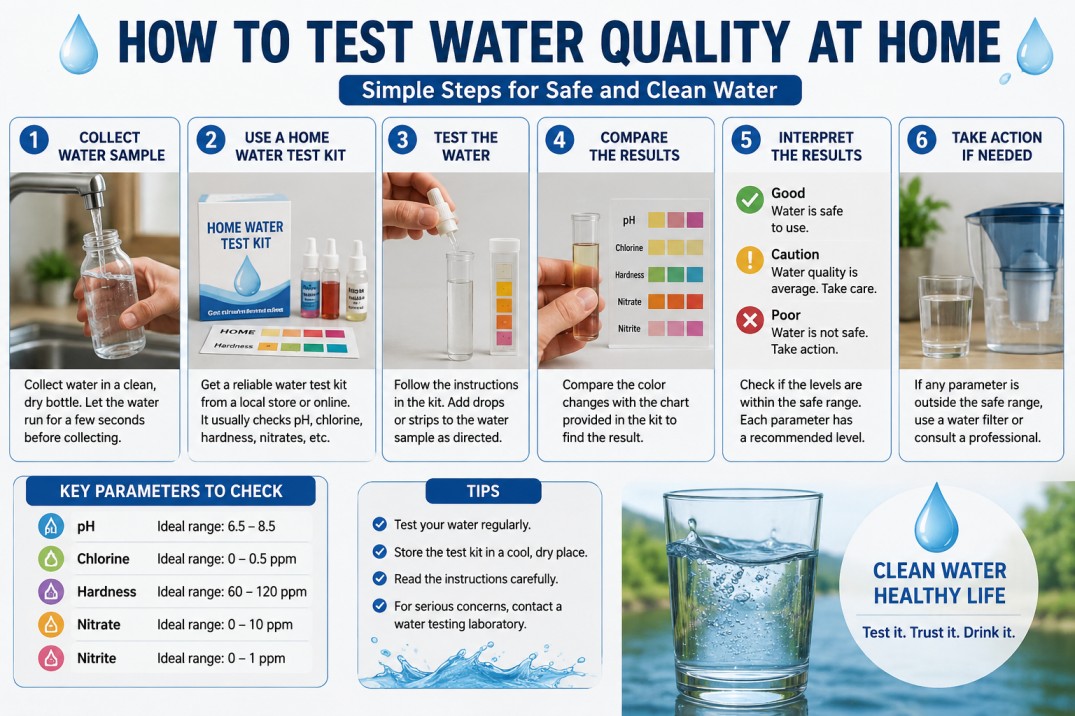
One of the most popular methods for How to Test Water Quality at Home involves using home water testing kits.
These kits are widely available and easy to use.
Most test kits check for:
- pH level
- Water hardness
- Chlorine
- Nitrates
- Nitrites
- Iron
- Copper
- Lead (in some kits)
Results are usually available within minutes.
DIY testing provides homeowners with valuable information while serving as an excellent first step before professional testing if necessary.
How to Test Water Quality at Home with Digital Water Meters
Technology has made water testing even more convenient.
Digital water meters measure several important indicators, including:
- Total Dissolved Solids (TDS)
- Conductivity
- Temperature
- Sometimes pH
These handheld devices provide quick readings and are especially useful for monitoring changes over time.
Although they don’t identify every contaminant, they offer a helpful overview of water quality.
Using digital meters is another practical approach to How to Test Water Quality at Home.
How to Test Water Quality at Home by Understanding pH Levels
The pH level measures how acidic or alkaline water is.
Most healthy drinking water falls within a balanced pH range.
Water that is too acidic may:
- Corrode plumbing
- Increase metal contamination
- Damage fixtures
Highly alkaline water may affect taste and leave mineral deposits.
Testing pH is one of the most important parts of understanding How to Test Water Quality at Home because it directly affects water quality and plumbing performance.
How to Test Water Quality at Home for Hard Water
Hard water contains elevated levels of calcium and magnesium.
Although hard water is generally safe to drink, it may create household problems.
Signs include:
- White mineral buildup
- Soap scum
- Reduced appliance efficiency
- Dry skin
- Stiff laundry
Home hardness tests help determine whether treatment or filtration may improve water quality.
Knowing water hardness is another valuable aspect of How to Test Water Quality at Home.
How to Test Water Quality at Home by Testing for Chlorine
Municipal water supplies often use chlorine to disinfect drinking water.
While chlorine protects against harmful bacteria, excessive amounts may affect:
- Taste
- Smell
- Cooking
- Beverage quality
Simple chlorine test strips provide quick measurements.
Many homeowners who notice strong chlorine levels later choose wellness water filtration systems to improve water taste and quality.
How to Test Water Quality at Home with Professional Laboratory Testing
Home testing kits provide useful screening, but laboratory analysis offers the most comprehensive results.
Professional testing can identify:
- Bacteria
- Heavy metals
- Pesticides
- Industrial chemicals
- Microorganisms
- Volatile organic compounds (VOCs)
Laboratory testing is especially recommended for:
- Private well owners
- Homes with infants
- Older plumbing systems
- Water quality concerns after flooding
Combining home monitoring with occasional laboratory testing provides the most complete understanding of How to Test Water Quality at Home.
How to Test Water Quality at Home Using Wellness Water Filtration Systems
Testing water identifies problems—but maintaining water quality requires ongoing treatment.
This is where wellness water filtration systems become extremely valuable.
These systems help improve household water by reducing many common impurities while providing cleaner, fresher drinking water every day.
Benefits include:
- Improved taste
- Better odor control
- Reduced chlorine
- Cleaner drinking water
- Convenient daily use
- Long-term reliability
Many families install wellness water filtration systems after learning more about How to Test Water Quality at Home because testing often reveals opportunities to improve overall water quality.
How to Test Water Quality at Home After Installing a Filtration System
Water testing should not stop after installing a filtration system.
Periodic testing helps verify that the system continues to perform effectively.
Routine monitoring allows homeowners to:
- Track water quality improvements
- Identify when filters need replacement
- Monitor seasonal changes
- Confirm consistent filtration performance
Regular testing ensures your wellness water filtration systems continue delivering high-quality drinking water.
How to Test Water Quality at Home Throughout the Year
Water quality may change with the seasons.
Heavy rainfall, flooding, drought, construction work, or changes in municipal treatment can affect water quality.
Experts often recommend testing:
- At least once a year for municipal water users
- More frequently for private wells
- After plumbing repairs
- Following floods
- When unusual odors or tastes appear
Seasonal monitoring makes How to Test Water Quality at Home an ongoing part of responsible home maintenance.
How to Test Water Quality at Home for Families with Children and Pets
Young children and pets may be more sensitive to certain contaminants.
Because they consume water relative to their body size more frequently, maintaining clean water becomes even more important.
Regular testing helps provide confidence that every member of the household has access to safer drinking water.
Combined with wellness water filtration systems, routine monitoring supports healthier hydration for the entire family.
How to Test Water Quality at Home and Know When to Replace Filters
Even the best filtration systems require maintenance.
Replacing filters according to manufacturer recommendations helps ensure:
- Consistent filtration
- Better taste
- Improved water quality
- Reliable system performance
Ignoring filter replacement schedules may reduce effectiveness over time.
Testing water periodically confirms whether filters continue working properly.
This maintenance routine complements everything you’ve learned about How to Test Water Quality at Home.
How to Test Water Quality at Home: Common Mistakes to Avoid
When testing water, avoid these common mistakes:
- Using expired test kits
- Ignoring manufacturer instructions
- Collecting contaminated samples
- Testing only once
- Assuming clear water is always safe
- Forgetting to replace filters
Following proper procedures produces more accurate and dependable results.
Avoiding these errors improves your understanding of How to Test Water Quality at Home.
Conclusion: How to Test Water Quality at Home for Long-Term Health and Peace of Mind
Understanding How to Test Water Quality at Home is one of the most effective ways to protect your family’s health and ensure that the water you use every day is clean, fresh, and safe. While appearance, smell, and taste can provide helpful clues, they should always be supported by proper testing methods such as DIY water test kits, digital meters, or professional laboratory analysis. Regular monitoring allows homeowners to detect potential issues early and make informed decisions about improving water quality.
Testing your water is only the first step. Maintaining consistently clean water requires reliable filtration, routine maintenance, and timely filter replacement. This is where wellness water filtration systems offer lasting value. By helping reduce common contaminants, improving taste and odor, and providing dependable daily filtration, these systems support healthier hydration for the entire household.
Whether you rely on municipal water or a private well, making water quality testing a regular part of your home maintenance routine can prevent future problems and provide confidence in the safety of your drinking water. Combining regular testing with wellness water filtration systems creates a proactive approach that promotes better health, greater convenience, and long-term peace of mind.
Ultimately, learning How to Test Water Quality at Home empowers homeowners to take control of their water quality, protect their loved ones, and enjoy cleaner, better-tasting water every single day.
for more: click here