Digital Marketing Plan for Business: Complete guide
Digital Marketing Plan for Business: Complete guide
In today’s competitive world, having a great product or service is no longer enough. Businesses need a strong online presence to reach potential customers, increase sales, and build long-term relationships. This is where a Digital Marketing Plan for Business becomes essential.
Whether you own a small startup, an online store, or a well-established company, creating a proper digital marketing strategy can help you achieve your business goals faster. Instead of randomly posting on social media or running ads without direction, a well-planned strategy ensures every marketing effort contributes to your business growth.
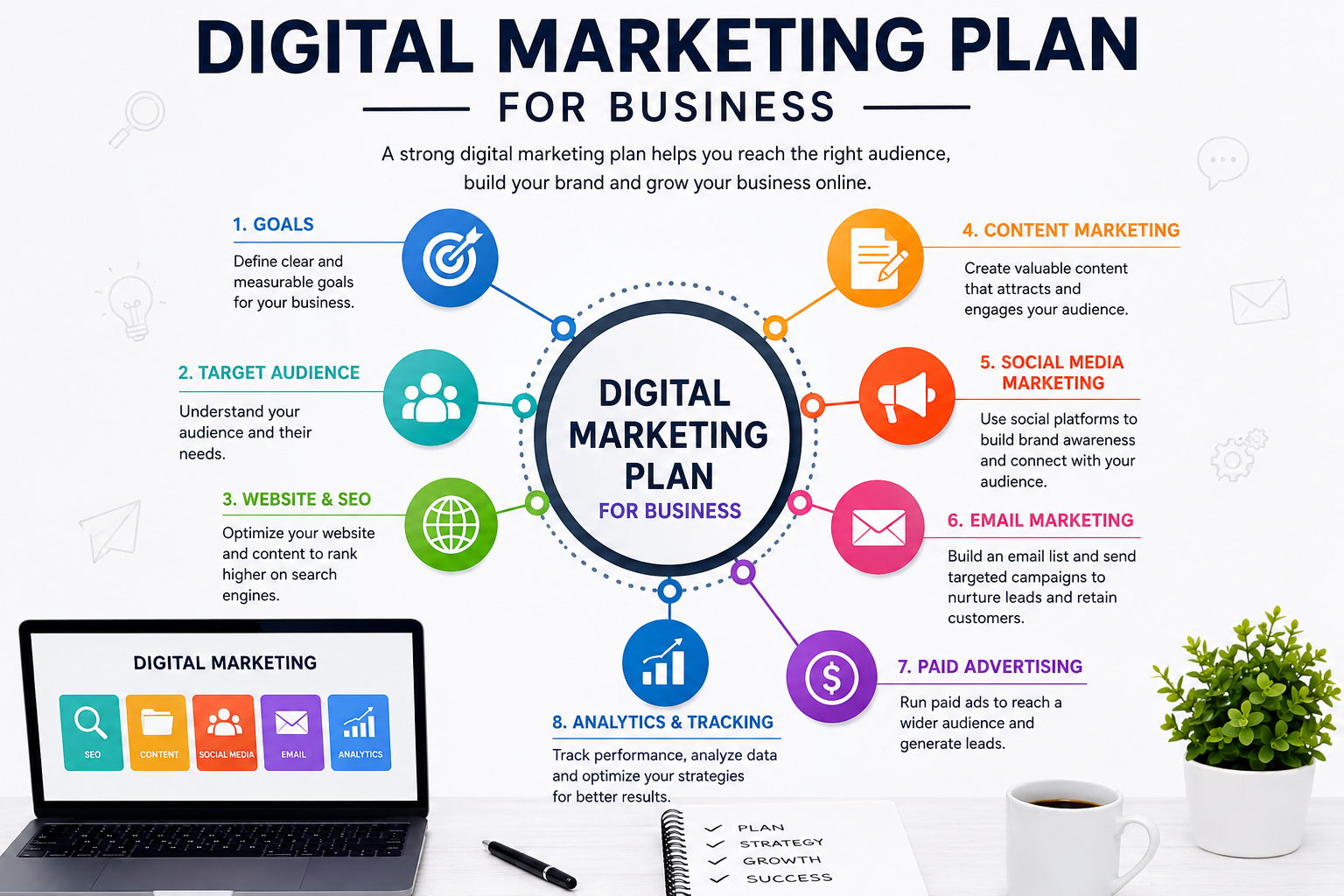
In this article, we’ll explain everything you need to know about creating a successful Digital Marketing Plan for Business, including its benefits, key components, tools, and practical tips.
What is a Digital Marketing Plan for Business?
A Digital Marketing Plan for Business is a structured roadmap that outlines how a business will use digital channels to promote its products or services. These channels may include:
- Search Engine Optimization (SEO)
- Content Marketing
- Social Media Marketing
- Email Marketing
- Pay-Per-Click (PPC) Advertising
- Video Marketing
- Influencer Marketing
The main purpose of a digital marketing plan is to attract the right audience, generate leads, increase conversions, and build brand awareness while staying within budget.
Learn more about digital marketing from Google Digital Garage:
https://learndigital.withgoogle.com/digitalgarage
Why Every Business Needs a Digital Marketing Plan
Many businesses fail because they market without a clear strategy. A proper plan provides direction and helps avoid wasting time and money.
Here are some major benefits:
1. Clear Business Goals
A marketing plan helps define realistic objectives such as:
- Increasing website traffic
- Growing social media followers
- Generating qualified leads
- Improving online sales
- Building customer loyalty
Having measurable goals makes it easier to track progress.
2. Better Understanding of Your Audience
Before promoting any product, you need to understand your target customers.
Ask questions like:
- Who are they?
- What problems do they face?
- What platforms do they use?
- What type of content do they enjoy?
- What influences their buying decisions?
Knowing your audience allows you to create more relevant marketing campaigns.
3. Improved Budget Management
Without planning, businesses often overspend on ineffective advertisements.
A Digital Marketing Plan for Business helps allocate your marketing budget wisely by focusing on channels that deliver the best return on investment (ROI).
4. Strong Brand Awareness
Consistent digital marketing increases brand recognition.
When people repeatedly see your business through Google searches, Facebook posts, YouTube videos, or email newsletters, they begin to trust your brand.
Steps to Create a Successful Digital Marketing Plan for Business
Creating an effective plan doesn’t have to be complicated. Follow these practical steps.
Step 1: Define Your Business Goals
Your goals should follow the SMART framework:
- Specific
- Measurable
- Achievable
- Relevant
- Time-bound
Examples include:
- Increase website traffic by 40% in six months.
- Generate 200 new leads every month.
- Improve conversion rate by 15%.
Step 2: Identify Your Target Audience
Understanding your customers is one of the most important parts of any Digital Marketing Plan for Business.
Consider:
- Age
- Gender
- Income
- Location
- Interests
- Online behavior
- Purchasing habits
Creating customer personas helps personalize your marketing efforts.
Step 3: Analyze Your Competitors
Competitor research reveals what works in your industry.
Look at:
- Their website
- SEO strategy
- Blog content
- Social media activity
- Paid advertisements
- Customer reviews
Useful SEO competitor research tool:
Step 4: Build a Professional Website
Your website acts as your digital storefront.
A good website should have:
- Fast loading speed
- Mobile-friendly design
- Secure HTTPS connection
- Clear navigation
- Contact information
- Easy checkout process
- High-quality content
Google PageSpeed Insights can help improve website performance:
Step 5: Invest in Search Engine Optimization (SEO)
SEO helps your website rank higher on Google without paying for every visitor.
A strong SEO strategy includes:
Keyword Research
Find keywords your audience searches for.
Popular keyword research tools:
On-Page SEO
Optimize:
- Title tags
- Meta descriptions
- Headings
- Images
- Internal links
- URL structure
Technical SEO
Improve:
- Website speed
- Mobile responsiveness
- Crawlability
- Site security
Content SEO
Publish valuable content that answers customer questions.
High-quality articles attract organic traffic over time.
Step 6: Create Valuable Content
Content remains one of the strongest digital marketing tools.
Popular content types include:
- Blog posts
- Videos
- Case studies
- Infographics
- Tutorials
- Podcasts
- E-books
Helpful content builds trust before customers even make a purchase.
Learn content marketing from HubSpot:
Step 7: Use Social Media Marketing
Social media allows businesses to connect directly with customers.
Popular platforms include:
- TikTok
- X (Twitter)
Each platform serves different audiences, so choose the ones that match your business goals.
Meta Business resources:
https://www.facebook.com/business
Step 8: Email Marketing
Email remains one of the highest ROI marketing channels.
Effective email campaigns include:
- Welcome emails
- Promotional offers
- Product updates
- Educational newsletters
- Customer feedback requests
Email marketing helps build long-term customer relationships.
Mailchimp Email Marketing Guide:
https://mailchimp.com/resources/
Step 9: Run Paid Advertising
Paid advertising helps businesses reach customers quickly.
Popular advertising platforms include:
- Google Ads
- Facebook Ads
- Instagram Ads
- LinkedIn Ads
- YouTube Ads
Google Ads official website:
Step 10: Track Your Performance
Marketing without measurement is simply guessing.
Monitor important metrics like:
- Website visitors
- Conversion rate
- Bounce rate
- Cost per click
- Return on investment
- Social media engagement
Google Analytics helps monitor website performance.
Official website:
Best Digital Marketing Tools for Businesses
Several tools can simplify your digital marketing efforts.
Google Analytics
Tracks visitor behavior and website performance.
Google Search Console
Monitors search performance and indexing.
https://search.google.com/search-console
Canva
Create professional graphics without advanced design skills.
HubSpot
Offers CRM, email marketing, and automation tools.
Buffer
Manage and schedule social media posts.
Common Mistakes to Avoid
Many businesses make these common mistakes:
- Ignoring SEO
- Posting inconsistent content
- Targeting everyone instead of a specific audience
- Not tracking marketing performance
- Neglecting mobile users
- Using poor-quality visuals
- Copying competitors without a strategy
- Giving up too early
Avoiding these mistakes can significantly improve your results.
Future Trends in Digital Marketing
Digital marketing continues to evolve.
Some important trends include:
- Artificial Intelligence (AI)
- Voice Search Optimization
- Video Marketing
- Short-form videos
- Personalization
- Marketing Automation
- Influencer Marketing
- Interactive Content
Businesses that adapt to these trends will remain competitive.
Final Thoughts
A well-designed Digital Marketing Plan for Business is no longer optional—it’s essential for success in today’s digital world. Whether you’re launching a startup or expanding an established company, having a structured strategy helps you attract customers, increase brand awareness, and achieve long-term growth.
Start by defining your goals, understanding your audience, creating valuable content, optimizing your website for SEO, using social media effectively, and tracking your performance. Remember, digital marketing is a continuous process. Regular testing, learning, and improving will help your business stay ahead of the competition.
Instead of chasing every new trend, focus on delivering value to your audience. When your marketing genuinely helps people solve problems, success naturally follows.
Frequently Asked Questions (FAQs)
What is a Digital Marketing Plan for Business?
A Digital Marketing Plan for Business is a strategic document that outlines how a business will use digital channels like SEO, social media, content marketing, email marketing, and paid advertising to achieve its marketing goals.
Why is digital marketing important for businesses?
Digital marketing helps businesses reach a larger audience, generate leads, improve customer engagement, increase sales, and build brand awareness at a lower cost than many traditional marketing methods.
Which digital marketing strategy works best?
The best strategy depends on your business goals, but combining SEO, content marketing, social media, email marketing, and paid advertising usually delivers the strongest long-term results.
How often should a digital marketing plan be updated?
It’s recommended to review and update your digital marketing plan every 3 to 6 months, or whenever there are significant changes in your business, industry, or customer behavior.
Importance of a Digital Marketing Plan for Business
A well-structured Digital Marketing Plan for Business is the foundation of long-term online success. It helps businesses identify their target audience, choose the right marketing channels, and allocate their budget effectively. Instead of relying on guesswork, a strategic plan ensures that every marketing activity supports specific business goals, whether it’s increasing website traffic, generating qualified leads, or improving sales. By combining strategies such as Search Engine Optimization (SEO), content marketing, social media marketing, email campaigns, and paid advertising, businesses can strengthen their online presence and stay ahead of competitors. Moreover, regularly monitoring performance through analytics allows companies to make data-driven decisions and continuously improve their marketing efforts for better results.
For more: click here