Tap Water vs Filtered Water: Which Is Better?
Tap Water vs Filtered Water: Which Is Better?
Tap Water vs Filtered Water: Which Is Better?, Water is one of the most essential resources for human life. Every cell in our body depends on it to function properly, making hydration a key part of maintaining good health. Yet one question continues to spark debate among homeowners, health-conscious individuals, and environmental advocates alike: Is tap water or filtered water the better choice?
The answer isn’t always straightforward. In many regions, tap water is treated to meet strict safety standards and is perfectly safe to drink. In other areas, concerns about contaminants, aging pipelines, taste, odor, or mineral content encourage people to seek alternative solutions. This is where wellness water filtration systems have become increasingly popular, offering households an additional layer of purification and peace of mind.
Choosing between tap water and filtered water isn’t simply about taste. It involves understanding water quality, health considerations, environmental impact, long-term costs, and your family’s unique needs. While some people are perfectly satisfied drinking water directly from the faucet, others prefer filtered water because of its improved flavor and reduced impurities.
In this guide, we’ll explore the differences between tap water and filtered water, examine their advantages and disadvantages, and explain how wellness water filtration systems can help improve your home’s drinking water quality.
Tap Water vs Filtered Water: Which Is Better?:: Understanding Tap Water
Tap water is the water supplied directly to homes through municipal water systems. Before reaching your faucet, it typically undergoes several treatment processes designed to remove harmful bacteria, viruses, sediment, and other contaminants.
Most public water treatment facilities use multiple purification methods, including:
- Coagulation and flocculation
- Sedimentation
- Filtration
- Disinfection
These steps help make water safe for everyday use, including drinking, cooking, bathing, and cleaning.
Government agencies in many countries regularly monitor public water supplies to ensure they meet established safety standards. However, the quality of tap water can still vary depending on local infrastructure, source water, and environmental conditions.
What Is Filtered Water?
Filtered water is tap water—or sometimes well water—that has passed through an additional filtration system designed to remove specific impurities.
Modern filtration systems can reduce or remove:
- Chlorine
- Sediment
- Rust
- Lead
- Certain heavy metals
- Some pesticides
- Volatile organic compounds (VOCs)
- Unpleasant odors
- Bad taste
The effectiveness of filtered water depends on the type of filtration technology being used.
Many homeowners choose wellness water filtration systems because they provide cleaner-tasting water while reducing unwanted contaminants that may remain after municipal treatment.
Tap Water vs Filtered Water: Which Is Better?:: Why Water Quality Matters
Water affects nearly every aspect of daily life.
It’s used for:
- Drinking
- Cooking
- Making coffee and tea
- Washing fruits and vegetables
- Preparing infant formula
- Brushing teeth
Poor water quality can influence both taste and confidence. Even when tap water meets safety standards, chlorine, dissolved minerals, or aging household plumbing may affect how the water smells or tastes.
Improving water quality often encourages people to drink more water, helping support better hydration and overall wellness.
Pros of Drinking Tap Water
Tap water offers several advantages that make it a practical choice for millions of households.
Affordable
One of tap water’s biggest benefits is its low cost.
Compared to bottled water, Tap Water vs Filtered Water: Which Is Better? municipal tap water is significantly more economical, making it an accessible source of hydration for most families.
Convenient
Tap water is available almost instantly from household faucets.
There’s no need to purchase, transport, or store heavy water bottles.
Government Oversight
Public water systems are generally subject to regular testing and monitoring.
Water suppliers must comply with established safety regulations designed to protect public health.
Contains Beneficial Minerals
Depending on the local water source, tap water may naturally contain beneficial minerals such as:
- Calcium
- Magnesium
- Potassium
These minerals contribute to both flavor and nutritional value.
Potential Drawbacks of Tap Water
Although tap water is generally considered safe in many areas, it isn’t without limitations.
Chlorine Taste and Odor
Municipal systems commonly use chlorine or chloramine for disinfection.
While effective at killing harmful microorganisms, these disinfectants sometimes leave behind noticeable tastes or odors.
Aging Infrastructure
Older plumbing systems may introduce contaminants after water leaves the treatment plant.
In some homes, aging pipes can contribute:
- Lead
- Copper
- Rust
- Sediment
This is one reason many homeowners install wellness water filtration systems to improve water quality inside the home.
Hard Water
Some regions have naturally hard water containing elevated levels of calcium and magnesium.
Although hard water isn’t usually harmful to drink, it may:
- Leave mineral deposits
- Reduce soap efficiency
- Affect appliance performance
- Change water taste
Benefits of Filtered Water
Filtered water has become increasingly popular because it addresses many common concerns associated with tap water.
Improved Taste
One of the first differences people notice is flavor.
Removing chlorine and certain impurities often creates a fresher, cleaner taste.
Many individuals naturally drink more water when it tastes better.
Better Odor
Filtration can reduce unpleasant smells caused by chlorine or organic compounds.
This makes drinking water more enjoyable while also improving beverages like coffee and tea.
Reduced Contaminants
Different filters target different substances.
Depending on the system, filtration may reduce:
- Sediment
- Heavy metals
- Chlorine
- Certain chemicals
- Microplastics
- Rust particles
Choosing high-quality wellness water filtration systems helps maximize purification while maintaining healthy minerals when appropriate.
Better Cooking Results
Filtered water can improve the flavor of:
- Coffee
- Tea
- Soups
- Pasta
- Rice
- Baby formula
Many home chefs notice subtle improvements when cooking with cleaner-tasting water.
Types of Water Filtration Systems
Not all filtration systems work the same way.
Understanding the available options helps homeowners choose the best solution for their needs.
Activated Carbon Filters
These are among the most common household filters.
They effectively reduce:
- Chlorine
- Bad taste
- Odors
- Some organic chemicals
Reverse Osmosis Systems
Reverse osmosis forces water through a specialized membrane that removes many dissolved contaminants.
These systems provide highly purified drinking water but may also remove some naturally occurring minerals.
Whole-House Filtration
Whole-house wellness water filtration systems treat water as it enters the home.
This means filtered water is available for:
- Drinking
- Showering
- Laundry
- Dishwashing
- Cooking
These systems are especially beneficial for households concerned about overall water quality.
Under-Sink Filters
Installed beneath the kitchen sink, these systems provide filtered water directly from a dedicated faucet.
They offer an excellent balance between performance, convenience, and cost.
Is Filtered Water Healthier?
For many households, filtered water provides additional peace of mind, especially in areas with older plumbing or known water quality concerns.
While municipal tap water is often safe to drink, filtration can reduce certain impurities and improve taste, making it easier to stay properly hydrated.
Ultimately, whether filtered water is “healthier” depends on the quality of your local water supply and the type of filtration system you use.
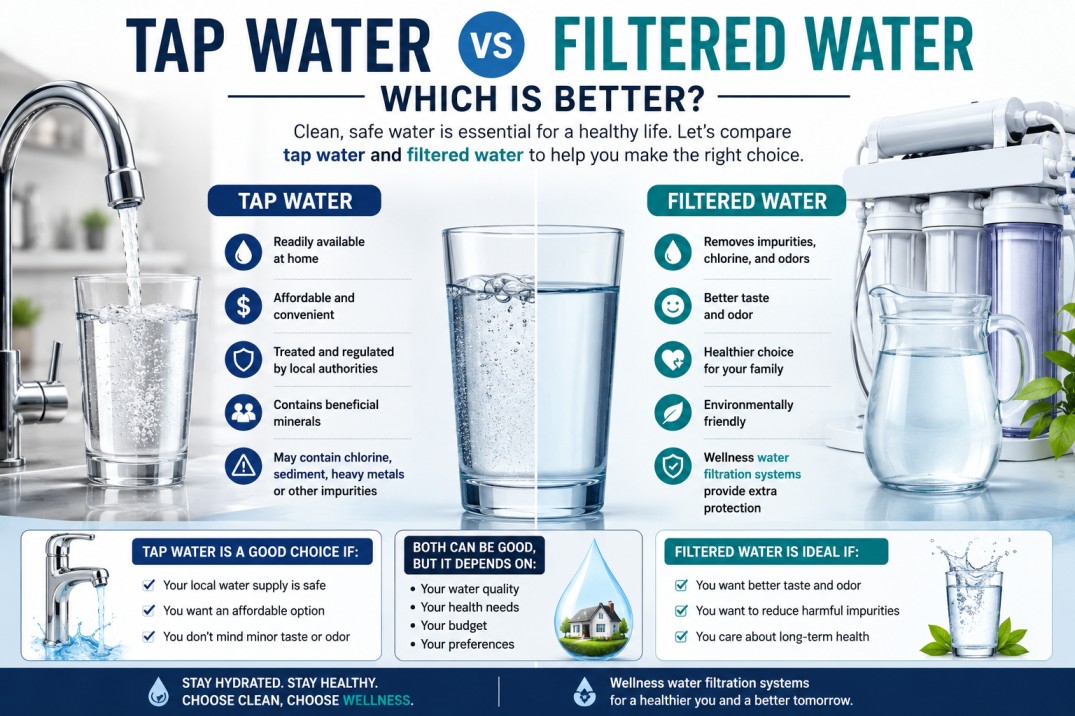
Tap Water vs. Filtered Water: A Side-by-Side Comparison
Choosing between tap water and filtered water often comes down to your priorities. Some people value convenience and affordability, while others focus on taste and additional purification.
| Feature | Tap Water | Filtered Water |
|---|---|---|
| Cost | Very affordable | Higher initial investment, low ongoing cost |
| Taste | May vary by location | Usually cleaner and fresher |
| Odor | May contain chlorine smell | Often odor-free |
| Convenience | Available from any faucet | Depends on the filtration system |
| Contaminant Reduction | Meets local treatment standards | Can remove additional impurities |
| Environmental Impact | Very low | Low, especially compared to bottled water |
Neither option is automatically better for everyone. The right choice depends on your home’s water quality, personal preferences, and whether you want an extra layer of filtration.
The Cost of Tap Water vs. Filtered Water
Budget is an important consideration when deciding how to get your drinking water.
Tap Water Costs
Municipal tap water is one of the least expensive sources of drinking water available. Most households pay only a small amount per gallon through their monthly utility bill.
Because no additional equipment is required, tap water remains the most economical choice for many families.
Filtered Water Costs
Filtered water involves some upfront expenses depending on the type of filtration system you choose.
Costs may include:
- Initial purchase of the filtration unit
- Filter replacements
- Routine maintenance
- Professional installation for larger systems
Although the initial investment may seem higher, many homeowners find that wellness water filtration systems save money over time by reducing their reliance on bottled water.
Environmental Impact
Environmental responsibility has become an important factor when choosing drinking water.
Tap Water
Tap water has one of the smallest environmental footprints because it doesn’t require disposable plastic bottles or additional packaging.
Municipal systems efficiently distribute water to homes using existing infrastructure.
Filtered Water
Filtered water also offers environmental benefits, particularly when compared to bottled water.
Reusable bottles combined with wellness water filtration systems help reduce:
- Plastic waste
- Transportation emissions
- Packaging materials
- Landfill pollution
For environmentally conscious households, home filtration is often considered a more sustainable long-term solution.
Is Bottled Water Better Than Filtered Water?
Many people assume bottled water is cleaner or healthier than filtered water, but that’s not always true.
In many cases, bottled water comes from municipal water supplies before undergoing additional treatment.
While bottled water can be convenient during travel or emergencies, it also has several drawbacks:
- Higher cost
- Plastic waste
- Storage requirements
- Environmental impact
A quality home filtration system often provides similar or better drinking water quality at a much lower long-term cost.
How to Choose the Right Wellness Water Filtration Systems
Not every household requires the same filtration solution.
Before purchasing a system, consider the following factors.
Know Your Water Source
The first step is understanding where your water comes from.
You may receive water from:
- A municipal water supply
- A private well
- Community water systems
Different water sources have different filtration needs.
Test Your Water
A professional water test can identify potential concerns such as:
- Hardness
- Lead
- Iron
- Nitrates
- Sediment
- pH levels
- Chlorine
Knowing your water quality helps you choose the most effective wellness water filtration systems for your home.
Consider Your Household Size
Large families typically consume more drinking water than smaller households.
Choose a filtration system capable of meeting your daily demand without reducing water pressure or requiring constant maintenance.
Evaluate Maintenance Requirements
Every filtration system requires some level of upkeep.
Before purchasing, consider:
- Filter replacement frequency
- Maintenance costs
- Ease of installation
- Availability of replacement parts
Regular maintenance ensures the system continues providing clean, high-quality water.
Common Myths About Filtered Water
Many misconceptions surround home water filtration. Let’s clear up a few of the most common myths.
Myth 1: Tap Water Is Always Unsafe
In many communities, tap water is safe and carefully monitored.
However, individual household plumbing or local conditions may influence water quality after treatment.
Myth 2: All Water Filters Work the Same
Different filtration technologies remove different contaminants.
A filter designed to improve taste may not remove heavy metals, while reverse osmosis systems remove a much broader range of substances.
Choosing the right wellness water filtration systems depends on your specific water quality concerns.
Myth 3: Filtered Water Has No Minerals
Some filtration methods remove certain minerals, while others retain many naturally occurring beneficial minerals.
The result depends entirely on the type of filtration system being used.
Tips for Improving Your Drinking Water
Whether you drink tap water or filtered water, these simple habits can improve your overall experience.
- Clean reusable water bottles regularly.
- Replace filters according to manufacturer recommendations.
- Flush stagnant water after long periods of non-use.
- Store drinking water in clean containers.
- Schedule periodic water quality testing if using well water.
Good maintenance helps ensure consistently safe, fresh-tasting water.
Frequently Asked Questions
Is filtered water safer than tap water?
Both can be safe. Filtered water provides an extra level of purification that may reduce additional contaminants, improve taste, and remove odors depending on the filtration system.
How often should water filters be replaced?
Replacement schedules vary by manufacturer and usage. Most filters need replacement every few months, while larger systems may have longer service intervals.
Do wellness water filtration systems remove chlorine?
Many systems, especially activated carbon filters, effectively reduce chlorine and improve the taste and smell of drinking water.
Can filtered water help appliances?
Yes. Certain filtration systems reduce sediment and mineral buildup, which may improve the lifespan and efficiency of household appliances.
Is filtered water better for cooking?
Many people notice improved flavor in beverages and meals prepared with filtered water because unwanted tastes and odors have been reduced.
conclusion
When comparing tap water and filtered water, there isn’t a universal answer that fits every household. Tap water remains an affordable, reliable, and carefully regulated source of drinking water in many areas. However, local water conditions, aging plumbing, and personal preferences often lead homeowners to seek additional purification.
Investing in high-quality wellness water filtration systems can improve taste, reduce certain contaminants, and provide greater confidence in the water your family drinks every day. Whether you choose a simple under-sink filter or a whole-house filtration system, the goal is the same: clean, refreshing water that supports your family’s health and lifestyle.
The best decision starts with understanding your local water quality, identifying your household’s needs, and selecting a filtration solution that offers long-term value. By making an informed choice, you can enjoy better-tasting water, reduce reliance on bottled water, and contribute to a more sustainable future—all while ensuring that every glass you pour is one you can trust.
For more: Click here