Lead in Drinking Water: You Need to Know
Lead in Drinking Water: You Need to Know
Lead in Drinking Water: You Need to Know, Water is something we all depend on every single day. Whether it’s for drinking, cooking, making coffee, or bathing, clean water plays a vital role in maintaining our health. Unfortunately, many people assume that if water looks clear, it must be safe. The truth is far more concerning. One of the biggest hidden dangers in household water is lead contamination.
Lead in drinking water often goes unnoticed because it has no color, smell, or taste. Yet even small amounts can pose serious health risks, especially for children, pregnant women, and older adults. Understanding how lead enters drinking water, the health effects it can cause, and the steps you can take to protect your family is more important than ever.
In this comprehensive guide, we’ll explain everything you need to know about lead in drinking water and how wellness water filtration systems can help provide cleaner, safer water for your home.
Lead in Drinking Water:You Need to Know About Where Lead Comes From
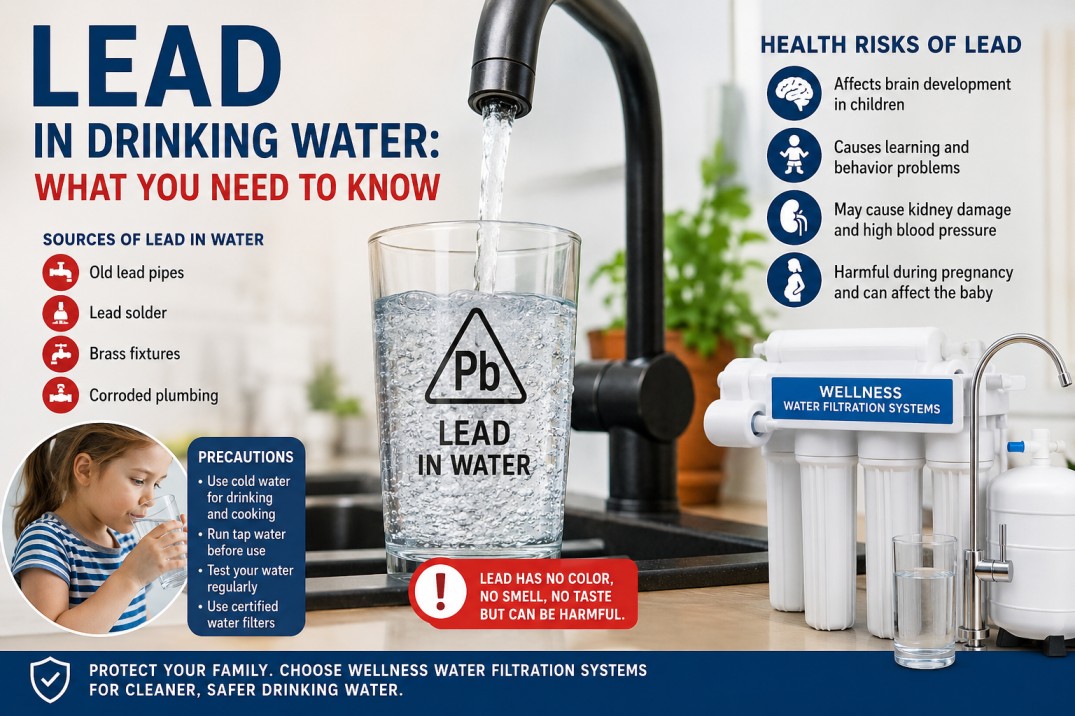
Lead rarely exists naturally in drinking water supplies. Lead in Drinking Water: You Need to Know Instead, it typically enters water after it leaves the treatment plant and travels through aging infrastructure.
Many older homes built before the 1980s contain lead pipes, lead solder, or brass plumbing fixtures that may contain lead. As water moves through these materials, small amounts of lead can dissolve into the water, particularly if the water is acidic or remains stagnant in the pipes for several hours.
Common sources include:
- Old lead service lines
- Lead plumbing fixtures
- Lead-based solder connecting copper pipes
- Corroded household plumbing
- Aging municipal water systems
Even communities with excellent water treatment facilities can experience lead contamination if the home’s plumbing contains lead materials.
Lead in Drinking Water:You Need to Know About Health Risks
Lead is a toxic metal that can affect nearly every organ in the body. Unlike many contaminants, lead builds up gradually over time. This means even low-level exposure can become dangerous after months or years.
Children are especially vulnerable because their developing brains absorb lead more easily than adults. Even minimal exposure can interfere with learning, behavior, and overall development.
Potential health effects include:
For Children
- Learning disabilities
- Lower IQ
- Behavioral problems
- Delayed growth
- Hearing issues
- Speech delays
For Adults
- High blood pressure
- Kidney damage
- Memory problems
- Joint pain
- Fertility complications
- Nervous system disorders
During Pregnancy
Pregnant women exposed to lead may increase the risk of:
- Premature birth
- Low birth weight
- Developmental issues in babies
- Pregnancy complications
Since there is no completely safe level of lead exposure, prevention remains the best solution.
Lead in Drinking Water:You Need to Know About Testing Your Water
Because lead cannot be seen, smelled, or tasted, laboratory testing is the only reliable way to determine whether your water contains lead.
Many local health departments provide testing kits or recommend certified laboratories. Home testing kits can offer a preliminary indication, but professional laboratory testing provides more accurate results.
You should consider testing if:
- Your home was built before 1986.
- You have old plumbing.
- Your community has aging water infrastructure.
- You’re expecting a baby.
- You have young children.
- Your water has been sitting in pipes overnight.
Regular testing gives you peace of mind and helps identify problems before they affect your family’s health.
Lead in Drinking Water:You Need to Know About Everyday Exposure
Many people believe drinking water is the only source of lead exposure, but that’s not always true.
Lead can also be found in:
- Old paint
- Household dust
- Imported pottery
- Some cosmetics
- Certain spices
- Contaminated soil
However, drinking water often contributes significantly to overall lead exposure because water is consumed daily and used for cooking.
Hot beverages, soups, infant formula, pasta, and rice can all absorb lead if prepared with contaminated water.
Lead in Drinking Water: You Need to Know About Children and Infants
Children absorb approximately four to five times more lead than adults. Their brains and nervous systems are still developing, making them especially sensitive to even very low concentrations.
Infants who consume formula mixed with contaminated water face an even greater risk.
Parents should:
- Use cold water for drinking and cooking.
- Flush taps before using water.
- Test household water regularly.
- Install certified filtration systems.
- Replace old plumbing whenever possible.
Protecting children from lead exposure during their earliest years can have lifelong health benefits.
Lead in Drinking Water: What You Need to Know About Safe Water Practices
Even if your water has not tested positive for lead, adopting safer habits can reduce potential exposure.
Helpful practices include:
Run the Tap
If water has been sitting in pipes for several hours, let it run for one to two minutes before drinking.
Always Use Cold Water
Hot water dissolves lead more quickly than cold water.
Never cook or prepare baby formula using hot tap water.
Clean Faucet Aerators
Small particles can accumulate inside faucet screens.
Cleaning them regularly reduces sediment buildup.
Replace Old Plumbing
Whenever possible, replace lead-containing pipes and plumbing fixtures with safer alternatives.
Lead in Drinking Water: You Need to Know About Wellness Water Filtration Systems
One of the most effective ways to reduce lead exposure at home is by installing wellness water filtration systems designed specifically to remove harmful contaminants.
Unlike standard filters that mainly improve taste or odor, advanced wellness water filtration systems are engineered to reduce heavy metals, including lead.
High-quality filtration systems may include technologies such as:
- Activated carbon filtration
- Reverse osmosis
- Multi-stage filtration
- Ion exchange
- Specialized lead-removal media
When choosing a filtration system, always verify that it has been independently certified for lead reduction.
A properly maintained filtration system provides an extra layer of protection between your family and potentially contaminated water.
Lead in Drinking Water: You Need to Know About Choosing the Right Wellness Water Filtration Systems
Not every water filter removes lead effectively.
When shopping for wellness water filtration systems, consider several important factors.
Certification
Choose systems certified to reduce lead according to recognized safety standards.
Filter Capacity
Some filters last only a few months, while others can purify thousands of gallons before replacement.
Installation Type
Options include:
- Faucet-mounted filters
- Under-sink systems
- Countertop units
- Whole-house filtration systems
- Reverse osmosis systems
Maintenance
Regular filter replacement is essential. Even the best filtration system cannot remove contaminants effectively once its filter becomes exhausted.
Investing in quality wellness water filtration systems can provide long-term confidence in your home’s drinking water.
Lead in Drinking Water: You Need to Know About Long-Term Prevention
Removing lead from drinking water is not simply about installing a filter. It also involves long-term prevention strategies.
Homeowners should:
- Replace lead service lines.
- Upgrade aging plumbing.
- Test water annually.
- Maintain filtration systems.
- Stay informed about local water quality reports.
Communities also play an important role by investing in infrastructure improvements and corrosion control programs.
When both homeowners and local governments work together, lead exposure can be significantly reduced.
Lead in Drinking Water: What You Need to Know About Common Myths
Several myths continue to create confusion about lead contamination.
Myth 1: Clear Water Is Safe
Lead cannot be seen, smelled, or tasted.
Myth 2: Boiling Water Removes Lead
Boiling does not remove lead. In fact, it may increase lead concentration because water evaporates while the lead remains.
Myth 3: New Homes Never Have Lead
Although newer homes are generally safer, certain plumbing fixtures may still contain trace amounts of lead.
Myth 4: Water Treatment Plants Remove All Lead
Lead usually enters water after treatment, inside the plumbing system itself.
Understanding these myths helps homeowners make better decisions about water safety.
Lead in Drinking Water: What You Need to Know About Protecting Your Family Every Day
Protecting your family doesn’t require complicated steps. Small habits practiced consistently can greatly reduce exposure.
Simple daily actions include:
- Drinking filtered water.
- Replacing filters on schedule.
- Using cold water for cooking.
- Flushing taps after long periods of inactivity.
- Testing water periodically.
- Educating children about safe water habits.
Combining these practices with reliable wellness water filtration systems creates multiple layers of protection.
Lead in Drinking Water: What You Need to Know for a Healthier Future
Lead contamination is a hidden problem, but it doesn’t have to become a hidden health crisis in your home. By understanding where lead comes from, recognizing its health risks, testing your water, and taking preventive action, you can dramatically reduce your family’s exposure.
Investing in dependable wellness water filtration systems is one of the most practical steps homeowners can take toward cleaner, healthier drinking water. While no single solution replaces proper plumbing maintenance and regular water testing, a quality filtration system adds an important safeguard against harmful contaminants.
Every glass of water should support your family’s well-being—not put it at risk. Staying informed, testing regularly, and choosing effective filtration solutions can help ensure that your household enjoys safe, clean drinking water for years to come.
When it comes to lead in drinking water, awareness truly is the first step toward prevention. The sooner you act, the better protected your family will be today and in the future.
For more info: visit here