Immigration Basics: Types, Process, and Requirements
Immigration Basics: Types, Process, and Requirements
Introduction
Moving to another country is one of the biggest decisions a person can make. Whether you want to study, work, reunite with your family, or start a new life, understanding Immigration Basics is the first step toward achieving your goal.
Many people think immigration is a complicated process filled with confusing paperwork and legal terms. While every country has its own immigration laws, learning the basic concepts makes the entire journey much easier. By understanding the different types of immigration, the application process, eligibility requirements, and common mistakes, you can prepare yourself for a smoother experience.
In this guide, we’ll explain Immigration Basics in simple language so beginners can easily understand how immigration works and what they should expect before applying.
What Is Immigration?
Immigration is the process of moving from one country to another with the intention of living there temporarily or permanently. A person who enters another country to live, work, or study is known as an immigrant.
Governments regulate immigration through laws and policies that determine:
- Who can enter the country
- How long they can stay
- What rights they have
- Whether they can become permanent residents or citizens
Each country has different immigration rules, but the basic principles remain similar.
To learn more about immigration terminology, visit:
International Organization for Migration (IOM)
Why Do People Immigrate?
People choose immigration for many different reasons.
Some of the most common reasons include:
Better Job Opportunities
Many skilled workers move abroad to earn higher salaries and improve their quality of life.
Higher Education
Students often immigrate to attend internationally recognized universities and colleges.
Family Reunification
Many countries allow citizens and permanent residents to sponsor close family members.
Safety and Protection
People escaping war, violence, or persecution may seek asylum or refugee protection.
Better Lifestyle
Some individuals move for healthcare, education, business opportunities, or a more stable economy.
These reasons form the foundation of Immigration Basics, helping applicants determine which immigration pathway best matches their situation.
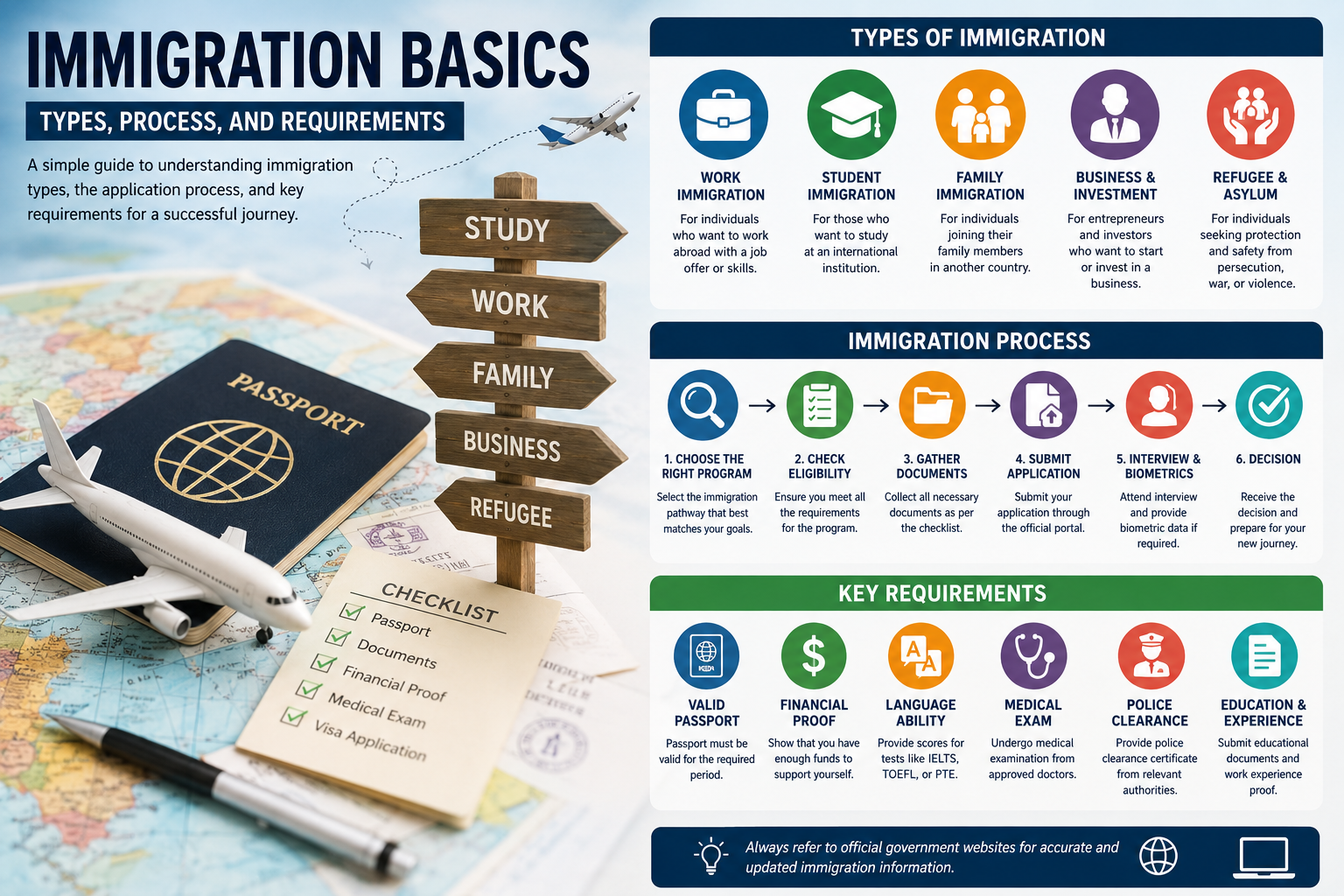
Types of Immigration
Understanding different immigration categories is an essential part of Immigration Basics.
1. Work Immigration
Work immigration allows individuals to move abroad after receiving a job offer or meeting skilled worker requirements.
Examples include:
- Skilled Worker Visa
- Temporary Work Permit
- Employer-Sponsored Visa
- Seasonal Worker Visa
Popular destinations include the United States, Canada, Australia, Germany, and the United Kingdom.
Official resources:
2. Student Immigration
International students move abroad to complete higher education.
Student visas usually require:
- Admission letter
- Financial proof
- Passport
- Health insurance (in many countries)
- Visa interview (where applicable)
After graduation, some countries allow graduates to apply for work permits.
Useful resources:
3. Family Immigration
Family-based immigration helps families stay together.
Eligible relatives often include:
- Spouse
- Parents
- Children
- Fiancé or fiancée (depending on country)
Eligibility depends on national immigration laws.
Learn more:
4. Business and Investment Immigration
Entrepreneurs and investors can qualify for immigration by investing in businesses or creating employment.
Some programs require:
- Minimum investment
- Business experience
- Financial documentation
- Job creation
Several countries offer investor and entrepreneur visa programs.
5. Refugee and Asylum Immigration
Individuals fleeing persecution because of religion, race, nationality, political opinion, or membership in a particular social group may qualify for refugee or asylum protection.
Official information:
Immigration Process Step by Step
One of the most important parts of Immigration Basics is understanding the immigration process.
Step 1: Choose the Right Immigration Program
Research which program matches your goals.
Ask yourself:
- Do you want to study?
- Do you have a job offer?
- Are you joining family?
- Are you investing?
Selecting the correct pathway increases your chances of approval.
Step 2: Check Eligibility
Every immigration program has eligibility requirements.
These may include:
- Education
- Age
- Work experience
- Language skills
- Financial resources
- Health requirements
- Criminal background checks
Step 3: Gather Required Documents
Common documents include:
- Passport
- Birth certificate
- Educational certificates
- Employment records
- Police clearance certificate
- Medical examination report
- Proof of funds
- Passport-size photographs
Missing documents can delay your application.
Step 4: Submit Your Application
Applications may be submitted:
- Online
- Through government portals
- Via visa application centers
- Through embassies or consulates
Always apply through official government websites.
Step 5: Attend Biometrics or Interview
Some countries require:
- Fingerprints
- Digital photograph
- Personal interview
The immigration officer may ask about:
- Purpose of travel
- Financial status
- Employment
- Family
- Future plans
Step 6: Wait for Processing
Processing times vary depending on:
- Country
- Visa type
- Number of applications
- Security checks
Many governments provide online tools to check processing times.
Step 7: Receive the Decision
Possible outcomes include:
- Approved
- Additional documents requested
- Refused
If refused, some countries allow appeals or reapplications depending on the reason.
Immigration Requirements
Every country has unique rules, but most require:
Valid Passport
A passport should remain valid for the required period after travel.
Financial Proof
Applicants often need evidence they can support themselves.
Examples include:
- Bank statements
- Salary slips
- Sponsorship letters
- Tax documents
Language Ability
Some countries require language tests.
Popular exams include:
- IELTS
- TOEFL
- PTE
- CELPIP
Official sites:
Medical Examination
Applicants may undergo medical exams conducted by approved physicians.
Police Clearance Certificate
Many immigration programs require proof that applicants have no serious criminal record.
Common Immigration Challenges
Understanding common challenges is another important part of Immigration Basics.
Applicants often face:
- Incomplete applications
- Missing documents
- Financial issues
- Language barriers
- Long processing times
- Visa refusals
Careful preparation can reduce these risks.
Common Mistakes to Avoid
Many applicants make avoidable mistakes such as:
- Providing incorrect information
- Missing deadlines
- Submitting fake documents
- Ignoring eligibility requirements
- Applying under the wrong visa category
- Not reading official government instructions
Always rely on official immigration guidance rather than rumors or unverified social media posts.
Tips for a Successful Immigration Journey
A successful immigration application starts with careful planning.
Here are some helpful tips:
- Research official immigration websites.
- Keep digital and printed copies of documents.
- Prepare financial records in advance.
- Improve your English or the required language.
- Stay updated on immigration policy changes.
- Apply early whenever possible.
- Be honest in every part of your application.
These simple practices can significantly improve your immigration experience.
Benefits of Immigration
Successful immigration can provide many opportunities, including:
- Better career growth
- Access to quality education
- Improved healthcare
- Higher earning potential
- Family reunification
- Cultural experiences
- Pathway to permanent residence
- Citizenship opportunities in some countries
Frequently Asked Questions (FAQs)
What are Immigration Basics?
Immigration Basics refer to the fundamental knowledge about immigration, including visa types, eligibility, application procedures, required documents, and legal requirements.
What documents are usually required?
Common documents include:
- Passport
- Educational certificates
- Employment records
- Bank statements
- Medical reports
- Police clearance certificate
Requirements vary by country and visa type.
How long does immigration take?
Processing times depend on the country, visa category, background checks, and application volume. Some applications are processed within weeks, while others may take several months or longer.
Can immigration applications be rejected?
Yes. Applications may be refused for reasons such as incomplete documentation, ineligibility, insufficient financial proof, or inaccurate information. Reading official guidance carefully before applying can help reduce these risks.
Where can I find official immigration information?
Use official government immigration websites whenever possible, such as:
Conclusion
Learning Immigration Basics is the first and most important step for anyone planning to move abroad. Whether your goal is education, employment, family reunification, business, or permanent settlement, understanding the different immigration types, requirements, and application process can help you make informed decisions and avoid unnecessary delays.
Immigration laws continue to evolve, so always verify the latest requirements through official government sources before submitting your application. With proper preparation, accurate documentation, and a clear understanding of the process, you can begin your immigration journey with greater confidence and improve your chances of success.
For more: click here