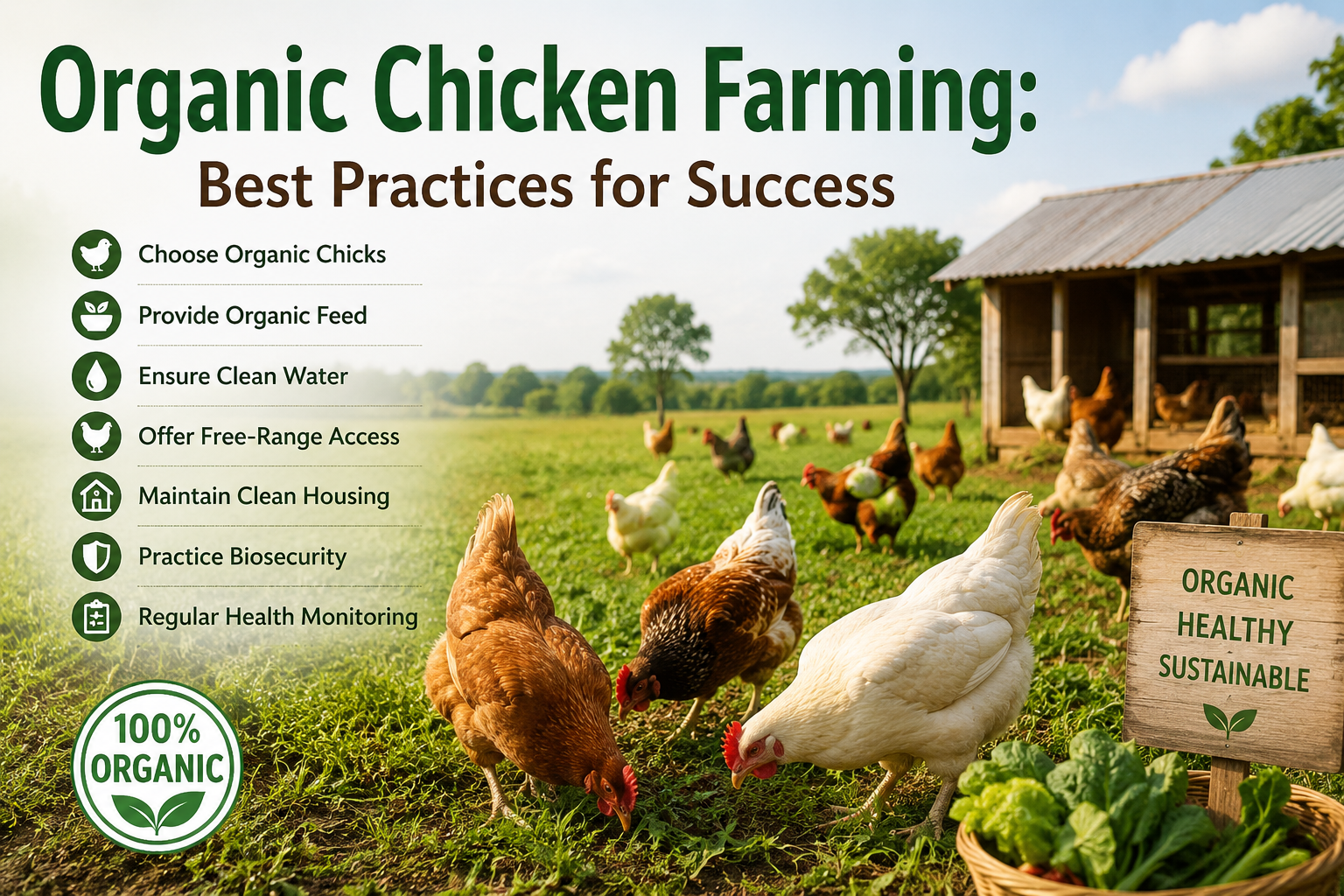
Organic Chicken Farming: Best Practices for Success
Organic Chicken Farming: Best Practices for Success
Organic chicken farming has become one of the fastest-growing sectors in modern agriculture. As consumers become more aware of food quality, animal welfare, and environmental sustainability, the demand for organically raised poultry continues to rise. Farmers around the world are now shifting toward organic chicken farming because it offers healthier products, supports eco-friendly farming practices, and creates long-term business opportunities.
Unlike conventional poultry farming, organic chicken farming focuses on providing chickens with natural feed, clean living conditions, outdoor access, and freedom from unnecessary antibiotics and synthetic chemicals. These practices not only improve the health of the birds but also produce high-quality meat and eggs that are preferred by health-conscious consumers.
Whether you’re planning to start a small backyard poultry farm or build a large-scale commercial operation, understanding the best practices is essential for long-term success. This comprehensive guide covers everything you need to know about organic chicken farming, including choosing the right breed, housing, feeding, health management, certification, marketing strategies, and common mistakes to avoid.
What Is Organic Chicken Farming?
Organic chicken farming is a poultry production system that follows organic agricultural principles. The goal is to raise healthy chickens naturally while protecting the environment and ensuring animal welfare.
In organic chicken farming, birds are provided with:
- Organic, non-GMO feed
- Access to outdoor pasture
- Natural lighting and ventilation
- Chemical-free environments
- Limited use of medications
- Humane living conditions
Unlike industrial poultry farms that often rely on growth promoters and intensive production methods, organic farms prioritize natural growth and healthy living conditions.
According to the United States Department of Agriculture (USDA), organic poultry must be raised under certified organic management practices and have year-round access to the outdoors whenever weather conditions permit.
Reference:
https://www.usda.gov/topics/organic
Why Organic Chicken Farming Is Growing in Popularity
Consumers today are more interested in knowing where their food comes from. Organic poultry products are perceived as healthier, safer, and more environmentally friendly.
Some of the main reasons behind the growing popularity include:
- Increased demand for organic meat and eggs
- Better animal welfare standards
- Reduced chemical exposure
- Higher market prices
- Sustainable farming practices
- Environmentally friendly production
Organic products often command premium prices, allowing farmers to generate better profits compared to conventional poultry farming.
Benefits of Organic Chicken Farming
1. Healthier Meat and Eggs
One of the biggest advantages of organic chicken farming is the production of healthier poultry products. Chickens fed organic diets generally produce meat and eggs with fewer chemical residues.
Consumers often choose organic poultry because they want food produced without synthetic pesticides, antibiotics, or genetically modified feed.
2. Better Animal Welfare
Organic farming places great importance on animal welfare.
Organic chickens enjoy:
- More space
- Fresh air
- Outdoor grazing
- Natural behaviors
- Lower stress levels
Happy and healthy birds generally experience fewer diseases and better growth.
3. Environmental Sustainability
Organic farming protects natural resources through sustainable agricultural methods.
Benefits include:
- Reduced pollution
- Improved soil fertility
- Better biodiversity
- Less chemical runoff
- Lower environmental impact
Healthy ecosystems benefit both farmers and future generations.
4. Higher Market Value
Organic chicken products usually sell at premium prices.
Consumers are often willing to pay more for:
- Organic chicken meat
- Free-range chicken
- Organic eggs
This price difference can significantly increase farm profitability.
Choosing the Right Chicken Breed
Selecting suitable breeds is one of the most important decisions in organic chicken farming.
Some popular breeds include:
Rhode Island Red
Known for:
- Excellent egg production
- Disease resistance
- Adaptability
- Hardy nature
Plymouth Rock
A favorite among organic farmers because of:
- Calm temperament
- Good meat quality
- Reliable egg production
Sussex
Ideal for free-range systems.
Advantages include:
- Active foraging
- Friendly behavior
- Dual-purpose production
Australorp
Popular because they produce large numbers of eggs while remaining easy to manage.
Organic Chicken Housing Requirements
Housing plays a major role in maintaining bird health.
Good poultry housing should provide:
- Proper ventilation
- Natural sunlight
- Dry bedding
- Predator protection
- Adequate space
- Easy cleaning
Organic standards also encourage outdoor access so chickens can scratch, forage, and exercise naturally.
Importance of Outdoor Access
Outdoor access is a defining feature of organic chicken farming.
Benefits include:
- Reduced stress
- Better muscle development
- Natural insect hunting
- Improved immune systems
- Enhanced animal welfare
Pasture rotation also helps prevent disease buildup and protects vegetation.
Organic Chicken Feed
Feed accounts for the largest portion of poultry production costs.
Organic chickens should consume certified organic feed containing:
- Organic corn
- Organic wheat
- Soybean meal
- Natural grains
- Organic vitamins
- Mineral supplements
Many organic farmers also grow their own grains to reduce production costs.
USDA Organic Standards:
https://www.ams.usda.gov/grades-standards/organic-standards
Water Management
Fresh, clean water should always be available.
Water systems should be:
- Clean
- Easy to access
- Frequently sanitized
- Protected from contamination
Dirty water can quickly spread disease throughout a flock.
Disease Prevention in Organic Chicken Farming
Disease prevention is always better than treatment.
Effective prevention methods include:
- Farm biosecurity
- Proper sanitation
- Vaccination where permitted
- Clean housing
- Balanced nutrition
- Stress reduction
Instead of relying heavily on antibiotics, organic farms focus on prevention through proper management.
Maintaining Biosecurity
Biosecurity reduces the risk of disease entering the farm.
Best practices include:
- Restricting visitor access
- Cleaning footwear
- Disinfecting equipment
- Quarantining new birds
- Controlling rodents
- Limiting contact with wild birds
Good biosecurity can prevent major disease outbreaks.
Waste Management
Chicken manure is an excellent organic fertilizer.
Proper composting helps:
- Reduce odors
- Destroy harmful pathogens
- Improve soil fertility
- Minimize pollution
Composted manure can be used for vegetables, fruit trees, and field crops.
Organic Certification
If farmers want to sell products as organic, certification is usually required.
Certification generally includes:
- Inspection of farming practices
- Feed verification
- Animal welfare assessment
- Record keeping
- Compliance with national organic standards
Certification requirements vary between countries.
For USDA Organic Certification:
https://www.ams.usda.gov/services/organic-certification
Marketing Organic Chicken Products
Producing quality poultry is only half the business.
Successful farmers also focus on marketing.
Popular sales channels include:
- Farmers’ markets
- Grocery stores
- Organic food shops
- Restaurants
- Online stores
- Direct farm sales
Creating a strong brand can help build customer trust and increase repeat business.
Cost of Starting Organic Chicken Farming
Startup costs vary depending on farm size.
Major expenses include:
- Land
- Housing
- Organic feed
- Chicks
- Equipment
- Fencing
- Water systems
- Certification
Although organic production costs are generally higher, premium selling prices often compensate for the additional investment.
Common Challenges
Like any farming business, organic chicken farming comes with challenges.
Some common problems include:
- Higher feed costs
- Predator attacks
- Disease management
- Weather conditions
- Certification expenses
- Labor requirements
Proper planning can minimize these risks.
Tips for Long-Term Success
Successful organic poultry farmers consistently follow good management practices.
Helpful tips include:
- Choose healthy chicks from reputable hatcheries.
- Maintain strict cleanliness.
- Provide balanced organic nutrition.
- Rotate grazing areas regularly.
- Monitor bird health daily.
- Keep accurate farm records.
- Invest in quality housing.
- Build relationships with local customers.
- Stay updated on organic regulations.
- Continue learning through workshops and training.
Future of Organic Chicken Farming
The future of organic chicken farming looks promising. As awareness about healthy eating and environmental sustainability continues to grow, consumer demand for organic poultry products is expected to increase worldwide.
Technological advancements such as automated watering systems, climate-controlled housing, and digital farm management tools are making organic poultry farming more efficient than ever. At the same time, governments and agricultural organizations in many countries are encouraging sustainable farming practices through training programs and financial support.
Farmers who focus on quality, transparency, and animal welfare are likely to build strong brands and loyal customer bases. With proper planning and consistent management, organic chicken farming can become both a profitable business and a meaningful contribution to sustainable agriculture.
Conclusion
Organic chicken farming is much more than raising chickens without chemicals—it is a complete farming system that emphasizes animal welfare, environmental responsibility, and the production of healthier food. By following best practices such as selecting suitable breeds, providing nutritious organic feed, maintaining clean housing, ensuring outdoor access, practicing strong biosecurity, and obtaining proper certification, farmers can build a successful and sustainable poultry business.
Although organic farming requires greater attention to detail and often involves higher production costs, the long-term benefits make it an attractive option for modern agriculture. Consumers are increasingly willing to pay premium prices for organic poultry products, creating valuable opportunities for dedicated farmers.
Whether you are just starting your poultry journey or looking to transition from conventional methods, adopting these best practices can help you improve productivity, protect animal health, and achieve long-term success in organic chicken farming.
For more: click here