Wildlife Conservation and Responsible Hunting
Wildlife Conservation and Responsible Hunting
Introduction
The relationship between humans and wildlife has existed for thousands of years. Early civilizations depended on animals for food, clothing, and survival, while modern societies have developed a greater understanding of the importance of protecting biodiversity. Today, discussions about hunting often spark strong opinions. Some people believe hunting should be completely banned, while others argue that regulated hunting can play a role in conservation efforts. The truth is far more complex than either viewpoint alone.
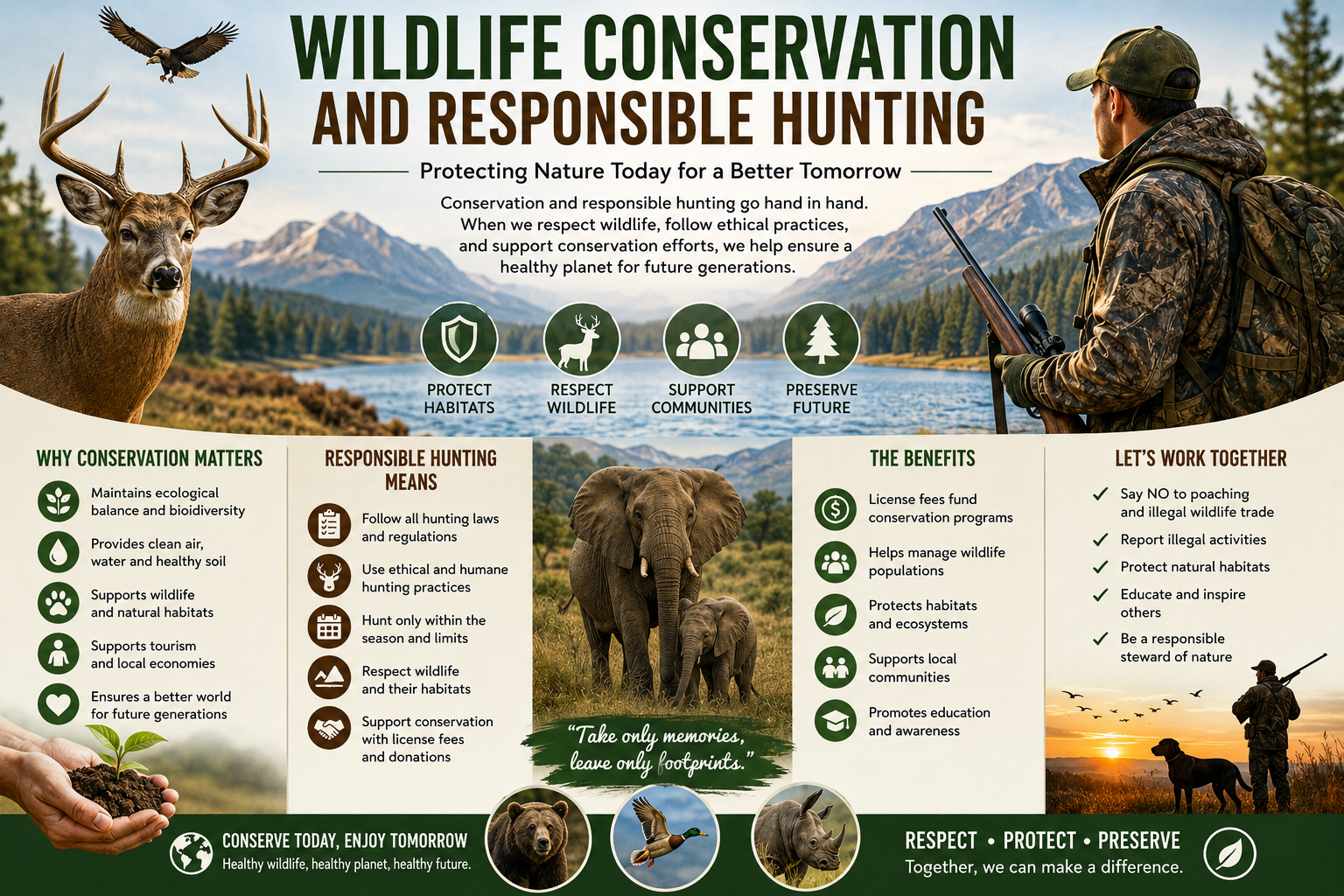
Wildlife Conservation and Responsible Hunting are often seen as opposing ideas, but when managed ethically and scientifically, they can complement each other. Conservation focuses on protecting animal populations, preserving natural habitats, and maintaining ecological balance. Responsible hunting emphasizes ethical practices, strict regulations, respect for wildlife, and sustainable population management.
As habitats shrink due to urbanization, climate change, pollution, and illegal poaching, protecting wildlife has become more important than ever. Governments, conservation organizations, local communities, and responsible hunters all have roles to play in ensuring that future generations inherit healthy ecosystems rich in biodiversity.
This article explores the meaning of wildlife conservation and responsible hunting, their connection, benefits, challenges, ethical considerations, and practical ways individuals can contribute to protecting nature.
Understanding Wildlife Conservation
Wildlife conservation refers to the protection, management, and restoration of wild animals and their natural habitats. Its primary goal is to ensure that species continue to thrive while maintaining the balance of ecosystems.
Conservation is about more than preventing extinction. It also involves restoring damaged habitats, protecting migration routes, supporting endangered species, reducing pollution, and encouraging sustainable interactions between humans and nature.
Healthy ecosystems provide clean water, fertile soil, stable climates, and food resources that benefit both wildlife and people.
What Is Responsible Hunting?
Responsible hunting is the ethical and regulated practice of hunting wildlife while respecting conservation laws and animal welfare.
Unlike illegal poaching, responsible hunting follows strict guidelines that include:
- Obtaining proper licenses
- Following seasonal regulations
- Respecting hunting quotas
- Using legal equipment
- Avoiding unnecessary suffering
- Harvesting only permitted species
- Supporting habitat conservation
Responsible hunters recognize that wildlife populations must remain healthy and sustainable for future generations.
Why Wildlife Conservation Matters
Wildlife plays an essential role in maintaining ecological balance.
Animals contribute to ecosystems by:
- Pollinating plants
- Dispersing seeds
- Controlling pest populations
- Recycling nutrients
- Supporting food chains
- Maintaining healthy forests
When one species disappears, the effects often spread throughout the entire ecosystem.
For example, the decline of predators can lead to overpopulation of herbivores, resulting in excessive vegetation loss and habitat degradation.
This is why Wildlife Conservation and Responsible Hunting must always prioritize ecological balance rather than short-term human interests.
The Relationship Between Conservation and Hunting
At first glance, conservation and hunting may seem incompatible.
However, wildlife experts explain that regulated hunting can support conservation under carefully managed conditions.
Wildlife agencies often conduct scientific studies to estimate animal populations before setting hunting limits.
These limits help ensure:
- Healthy breeding populations
- Balanced ecosystems
- Reduced human-wildlife conflicts
- Sustainable wildlife management
When hunting is based on scientific data rather than commercial demand, it can become one tool among many used in conservation programs.
Responsible Hunting vs. Illegal Poaching
One of the biggest misconceptions is confusing responsible hunting with poaching.
Responsible hunting involves:
- Government regulation
- Ethical standards
- Legal permits
- Population monitoring
- Conservation funding
Poaching involves:
- Illegal killing
- Protected species
- Black-market trade
- Habitat destruction
- Lack of regulation
Poaching remains one of the greatest threats to wildlife worldwide and has pushed many species toward extinction.
Supporting wildlife conservation and Responsible Hunting also means actively opposing illegal wildlife trafficking.
Ethical Principles of Responsible Hunting
Ethics play a central role in responsible hunting.
Ethical hunters generally follow principles such as:
Respect for Wildlife
Animals should never be viewed merely as trophies. Ethical hunting values wildlife as an important part of nature.
Fair Chase
Hunters avoid unfair advantages that eliminate an animal’s natural ability to escape.
Quick and Humane Harvest
Responsible hunters strive to minimize suffering by using appropriate equipment and proper training.
Following the Law
Ethical hunters respect protected species, hunting seasons, and conservation regulations.
Habitat Protection
Many hunting organizations actively support habitat restoration projects through volunteer work and conservation funding.
Benefits of Wildlife Conservation
Conservation provides numerous environmental, economic, and social benefits.
Protecting Biodiversity
Every species contributes to ecosystem health.
Greater biodiversity improves resilience against diseases, climate change, and environmental disturbances.
Supporting Local Economies
Wildlife tourism generates billions of dollars worldwide.
National parks, nature reserves, and eco-tourism create employment opportunities while encouraging habitat protection.
Climate Regulation
Forests, wetlands, and grasslands that support wildlife also absorb carbon dioxide, helping reduce climate change impacts.
Scientific Research
Wildlife studies improve understanding of ecosystems, medicine, genetics, and environmental management.
Cultural Importance
Many cultures maintain deep spiritual and historical connections with wildlife and natural landscapes.
Protecting these resources preserves important cultural traditions.
Challenges Facing Wildlife Conservation
Despite ongoing efforts, wildlife faces increasing threats.
Habitat Loss
Urban expansion, agriculture, mining, and deforestation continue destroying natural habitats.
Animals often lose breeding grounds, food sources, and migration routes.
Climate Change
Changing temperatures affect migration patterns, breeding seasons, food availability, and habitat suitability.
Many species struggle to adapt quickly enough.
Pollution
Plastic waste, chemical runoff, oil spills, and air pollution threaten both terrestrial and aquatic wildlife.
Invasive Species
Non-native plants and animals often outcompete native species, disrupting ecological balance.
Illegal Wildlife Trade
The illegal trade in animal products remains one of the world’s largest criminal industries.
This directly threatens elephants, rhinos, tigers, pangolins, and countless other species.
How Responsible Hunting Supports Conservation
When properly managed, responsible hunting may contribute to conservation in several ways.
Funding Conservation Programs
In some countries, hunting licenses and permit fees provide funding for:
- Wildlife research
- Habitat restoration
- Park management
- Anti-poaching patrols
- Conservation education
Population Management
Some animal populations grow beyond the carrying capacity of their habitats.
Overpopulation may lead to:
- Disease outbreaks
- Starvation
- Crop damage
- Vehicle collisions
- Habitat degradation
Wildlife biologists sometimes recommend controlled population management where appropriate.
Supporting Rural Communities
In some regions, regulated hunting provides income that encourages communities to protect wildlife rather than convert habitats into farmland or industrial development.
Common Misunderstandings About Responsible Hunting
Several myths surround this topic.
Myth 1: All Hunting Harms Conservation
Reality:
Unregulated hunting harms wildlife.
Scientifically managed hunting can sometimes support broader conservation goals.
Myth 2: Hunters Don’t Care About Animals
Many responsible hunters spend significant time restoring habitats, supporting conservation organizations, and promoting ethical wildlife management.
Myth 3: Conservation Means Never Hunting
Conservation involves balancing ecological health using science-based management practices.
In some cases, controlled hunting is considered one management option among many.
The Role of Governments
Governments play a critical role in Wildlife Conservation and Responsible Hunting through:
- Wildlife protection laws
- National parks
- Protected areas
- Scientific population surveys
- Hunting regulations
- Anti-poaching enforcement
- Public education
Strong environmental policies help ensure wildlife remains protected for future generations.
Community Involvement
Local communities often become the strongest defenders of wildlife when conservation provides clear benefits.
Community participation includes:
- Eco-tourism
- Habitat restoration
- Wildlife monitoring
- Environmental education
- Sustainable agriculture
- Reporting illegal activities
Successful conservation depends on cooperation between governments, scientists, conservationists, and local residents.
Technology in Wildlife Conservation
Modern technology has greatly improved conservation efforts.
Examples include:
- GPS tracking collars
- Camera traps
- Drones
- Satellite monitoring
- DNA analysis
- Artificial intelligence
- Geographic Information Systems (GIS)
These technologies allow researchers to better understand wildlife populations and respond to conservation challenges.
How Individuals Can Help
Everyone can contribute to Wildlife Conservation and Responsible Hunting, even if they never hunt.
Simple actions include:
- Supporting conservation organizations
- Reducing plastic waste
- Recycling
- Planting native trees
- Respecting wildlife habitats
- Avoiding products made from endangered species
- Practicing responsible tourism
- Educating others about conservation
Small daily actions create meaningful long-term environmental benefits.
The Future of Wildlife Conservation
Conservation will become increasingly important as human populations continue growing.
Future success depends on:
- International cooperation
- Scientific research
- Sustainable land management
- Climate action
- Strong environmental policies
- Public awareness
- Responsible resource use
Protecting wildlife requires long-term commitment rather than short-term solutions.
Balancing Human Needs and Nature
Finding the balance between human development and wildlife protection remains one of the greatest environmental challenges.
Agriculture, transportation, housing, and economic growth are important, but they must be planned responsibly to minimize environmental damage.
Sustainable development seeks to meet today’s needs without compromising the ability of future generations to enjoy healthy ecosystems.
This philosophy aligns closely with the principles of Wildlife Conservation and Responsible Hunting, emphasizing careful resource management and respect for nature.
Conclusion
Wildlife Conservation and Responsible Hunting are interconnected topics that require thoughtful discussion rather than simple assumptions. While conservation focuses on protecting biodiversity, restoring habitats, and preserving ecosystems, responsible hunting emphasizes ethical behavior, scientific management, and sustainability. When properly regulated and supported by research, responsible hunting can contribute to conservation efforts by funding habitat protection, supporting wildlife management, and encouraging local communities to value natural resources.
At the same time, challenges such as habitat destruction, climate change, pollution, and illegal poaching continue to threaten countless species around the world. Addressing these issues demands cooperation among governments, scientists, conservation organizations, responsible hunters, and the public.
Ultimately, protecting wildlife is a shared responsibility. Whether through supporting conservation projects, reducing environmental impact, respecting wildlife laws, or promoting education, every individual has the opportunity to make a positive difference. By embracing the principles of Wildlife Conservation and Responsible Hunting, we can help preserve Earth’s incredible biodiversity and ensure that future generations inherit a healthier, more balanced, and sustainable natural world.