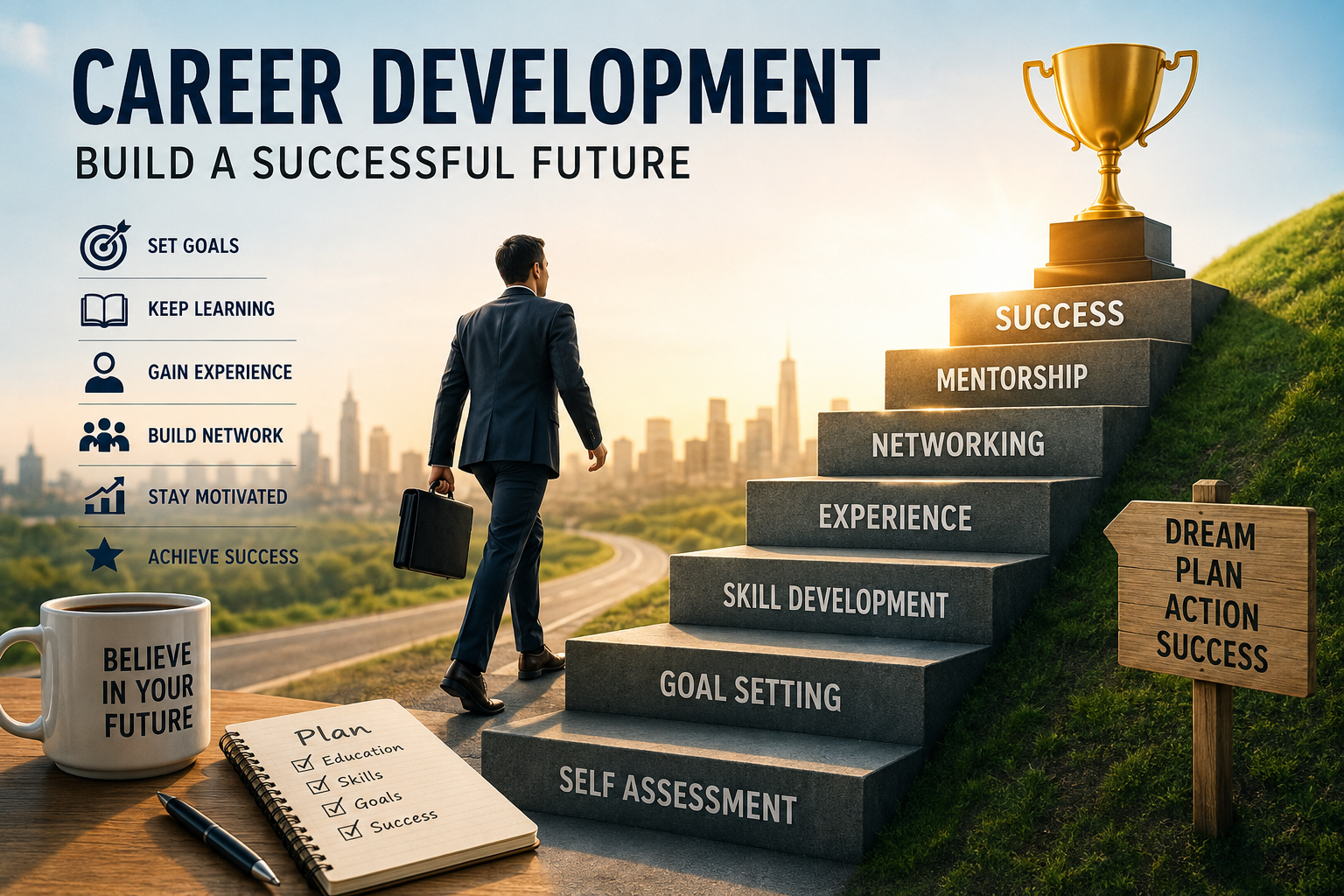
Career Development: Build a Successful Future
Career Development: Build a Successful Future
Introduction
In today’s rapidly changing world, career development has become more important than ever. Whether you are a student, a recent graduate, or an experienced professional, investing in your career is essential for long-term success. Career development is not just about finding a job—it is a continuous process of improving your skills, gaining knowledge, setting goals, and preparing yourself for better opportunities.
Technology, globalization, and evolving workplace demands have transformed the employment landscape. Professionals who continuously learn and adapt are more likely to achieve career satisfaction and financial stability. Instead of waiting for opportunities, successful individuals actively create them through careful planning and consistent self-improvement.
This guide will help you understand everything about career development, including its importance, benefits, planning strategies, skill development, and practical steps to build a successful future.
What Is Career Development?
Career development is the lifelong process of managing your learning, work, leisure, and transitions to achieve your desired career goals. It includes identifying your strengths, improving your skills, gaining experience, networking with professionals, and adapting to changes in your industry.
Career development is not limited to promotions or salary increases. It also focuses on personal growth, professional confidence, work-life balance, leadership abilities, and achieving long-term career satisfaction.
According to the U.S. Bureau of Labor Statistics, employment trends and job requirements continue to evolve, making continuous learning an essential part of career growth.
Learn more:
https://www.bls.gov
Why Is Career Development Important?
Career development provides direction, purpose, and motivation throughout your professional journey. Without proper planning, many people remain stuck in jobs that do not match their interests or abilities.
Some major benefits include:
- Better career opportunities
- Higher earning potential
- Increased confidence
- Improved job satisfaction
- Stronger professional reputation
- Better adaptability to industry changes
- Long-term career stability
Professionals who invest in career development often become valuable assets to their organizations because they continuously improve their knowledge and skills.
Key Components of Career Development
Successful career development involves several interconnected elements.
1. Self-Assessment
Before choosing a career path, you need to understand yourself.
Ask yourself:
- What are my strengths?
- What skills do I enjoy using?
- What motivates me?
- What are my long-term goals?
- Which work environment suits me?
Self-assessment helps you identify careers that align with your personality, interests, and abilities.
One useful career assessment resource is:
2. Setting Career Goals
Career goals provide direction and motivation. Instead of having vague ambitions, create SMART goals:
- Specific
- Measurable
- Achievable
- Relevant
- Time-bound
For example:
Poor Goal:
“I want a better job.”
SMART Goal:
“I want to become a Digital Marketing Manager within three years by completing professional certifications and gaining leadership experience.”
Goal setting makes career development more organized and measurable.
3. Skill Development
Skills are the foundation of career growth.
There are two major categories:
Hard Skills
Hard skills are technical abilities learned through education or training.
Examples include:
- Programming
- Graphic Design
- Accounting
- Data Analysis
- SEO
- Digital Marketing
- Project Management
Learning platforms:
Coursera
https://www.coursera.org
Google Digital Garage
https://grow.google
Soft Skills
Soft skills determine how effectively you work with others.
Important soft skills include:
- Communication
- Leadership
- Teamwork
- Time Management
- Problem Solving
- Emotional Intelligence
- Critical Thinking
- Adaptability
Many employers value soft skills as much as technical expertise.
Continuous Learning
Learning should never stop.
Industries evolve rapidly because of technology and innovation. Professionals who continuously upgrade their knowledge remain competitive in the job market.
Continuous learning can include:
- Online courses
- Workshops
- Professional certifications
- Conferences
- Books
- Podcasts
- Industry newsletters
LinkedIn Learning offers thousands of professional courses.
https://www.linkedin.com/learning
Building Professional Experience
Experience plays a major role in career development.
You can gain valuable experience through:
- Internships
- Freelancing
- Volunteer work
- Part-time jobs
- Personal projects
- Open-source contributions
- Research work
Every experience helps develop practical skills that employers value.
Students should focus on gaining practical experience even before graduation.
Networking for Career Growth
Professional networking creates opportunities that job applications alone cannot provide.
Networking helps you:
- Learn about job openings
- Find mentors
- Receive career advice
- Build professional relationships
- Increase industry knowledge
Effective networking methods include:
- Industry conferences
- Professional associations
- Alumni networks
- Business seminars
- Online communities
Create a professional LinkedIn profile:
Personal Branding
Your personal brand represents your professional identity.
Employers often research candidates online before hiring.
A strong personal brand includes:
- Professional LinkedIn profile
- Updated resume
- Portfolio website
- Professional email address
- Industry knowledge
- Positive online presence
Personal branding builds credibility and trust.
Importance of Mentorship
Mentors can significantly accelerate career development.
A mentor helps by:
- Sharing experience
- Providing guidance
- Offering constructive feedback
- Expanding your professional network
- Helping avoid common mistakes
Mentorship relationships can be found within companies, universities, professional organizations, or online communities.
Time Management in Career Development
Managing time effectively improves productivity and career growth.
Useful techniques include:
- Daily planning
- Priority management
- Goal tracking
- Avoiding distractions
- Calendar scheduling
- Task batching
Time management allows professionals to balance work, learning, and personal life effectively.
Developing Leadership Skills
Leadership is valuable even if you are not a manager.
Leadership includes:
- Decision making
- Accountability
- Communication
- Team motivation
- Conflict resolution
- Strategic thinking
Many organizations promote employees who demonstrate leadership qualities consistently.
Staying Updated with Industry Trends
Every industry changes over time.
Professionals should regularly follow:
- Industry blogs
- Research reports
- Company news
- Government labor statistics
- Professional associations
Google Alerts can help monitor industry updates.
Creating an Effective Career Development Plan
A career development plan is a roadmap that outlines your professional goals and the steps required to achieve them. Without a plan, it’s easy to lose direction or miss valuable opportunities.
Steps to Build a Career Development Plan
1. Define Your Career Vision
Start by asking yourself where you want to be in the next 5–10 years. Your vision should reflect both your professional ambitions and personal values.
For example:
- Become a Software Engineer at a multinational company.
- Start your own digital marketing agency.
- Become a certified Project Manager.
- Work remotely for an international organization.
Having a clear vision makes it easier to stay motivated and focused.
2. Identify Skill Gaps
Compare your current skills with the qualifications required for your dream job.
Ask yourself:
- Which technical skills am I missing?
- Which certifications would improve my profile?
- Do I need better communication or leadership skills?
This helps you prioritize learning and professional development.
You can explore in-demand career skills through the World Economic Forum’s Future of Jobs reports:
3. Create Short-Term and Long-Term Goals
Your career plan should include both immediate and future objectives.
Short-Term Goals
- Complete an online certification.
- Improve communication skills.
- Build a professional resume.
- Learn a new software tool.
- Attend networking events.
Long-Term Goals
- Earn a management position.
- Increase salary.
- Become an industry expert.
- Build a personal brand.
- Launch your own business.
Career Development Strategies That Actually Work
Continue Learning
Successful professionals never stop learning.
You can improve your knowledge through:
- Online courses
- Professional certifications
- Workshops
- Books
- Industry blogs
- Podcasts
Popular learning platforms include:
- Coursera
https://www.coursera.org - Udemy
https://www.udemy.com - edX
https://www.edx.org
Gain Practical Experience
Experience often matters as much as education.
Ways to gain experience include:
- Freelancing
- Internships
- Volunteer work
- Personal projects
- Research
- Open-source contributions
Even small projects can strengthen your resume and demonstrate your abilities to employers.
Improve Communication Skills
Communication is one of the most valuable soft skills in any profession.
Focus on improving:
- Public speaking
- Writing
- Presentation skills
- Active listening
- Negotiation
- Professional email writing
Good communication helps build stronger relationships with colleagues, managers, and clients.
Develop Problem-Solving Skills
Employers value people who can identify challenges and provide effective solutions.
Practice:
- Critical thinking
- Data analysis
- Decision-making
- Creativity
- Logical reasoning
Problem-solving skills make you a valuable employee in every industry.
Building a Strong Resume
Your resume creates the first impression.
A professional resume should include:
- Contact information
- Professional summary
- Work experience
- Education
- Skills
- Certifications
- Projects
- Achievements
Resume Tips
- Keep it concise.
- Use action verbs.
- Quantify achievements whenever possible.
- Customize it for each job.
- Proofread carefully.
You can find resume guidance from Harvard Career Services:
https://careerservices.fas.harvard.edu
Preparing for Job Interviews
Interview preparation is an important part of career development.
Before the Interview
- Research the company.
- Understand the job description.
- Practice common interview questions.
- Prepare examples of your achievements.
- Dress professionally.
During the Interview
- Maintain eye contact.
- Listen carefully.
- Answer confidently.
- Be honest.
- Ask thoughtful questions.
After the Interview
- Send a thank-you email.
- Reflect on your performance.
- Continue applying for opportunities.
Importance of Professional Certifications
Certifications help demonstrate your expertise and commitment to learning.
Popular certifications include:
- Google Career Certificates
- Microsoft Certifications
- AWS Certifications
- CompTIA
- PMP (Project Management Professional)
- Cisco Certifications
Official Google Career Certificates:
https://grow.google/certificates
Career Development in the Digital Age
Technology has changed how people build successful careers.
Today’s professionals can:
- Work remotely
- Learn online
- Build digital portfolios
- Network globally
- Freelance internationally
- Start online businesses
Digital skills have become increasingly valuable across nearly every profession.
Remote Work and Career Growth
Remote work offers flexibility and access to global opportunities.
Benefits include:
- Better work-life balance
- International clients
- Reduced commuting time
- Flexible schedules
- Higher productivity for many professionals
Popular remote job websites include:
- Remote OK
https://remoteok.com - We Work Remotely
https://weworkremotely.com
The Role of Artificial Intelligence in Career Development
Artificial Intelligence (AI) is transforming workplaces around the world.
Professionals should learn how to use AI tools responsibly to improve productivity rather than fear them.
Examples include:
- Writing assistance
- Data analysis
- Customer support
- Coding assistance
- Research
- Marketing automation
Learning AI-related skills can improve your competitiveness in the modern job market.
Common Career Development Challenges
Many professionals face obstacles during their careers.
Common challenges include:
Lack of Direction
Without clear goals, career growth becomes difficult.
Solution: Create a structured career development plan.
Fear of Change
Many people stay in jobs they dislike because they fear uncertainty.
Solution: Learn new skills while still employed and prepare before making major career changes.
Limited Skills
Technology changes rapidly.
Solution: Invest in continuous learning and certifications.
Poor Networking
Many opportunities come through professional connections.
Solution: Build genuine relationships within your industry.
Low Confidence
Self-doubt prevents many talented professionals from applying for better opportunities.
Solution: Celebrate achievements, seek feedback, and continue developing your skills.
Common Mistakes to Avoid
Avoid these mistakes during your career development journey:
- Ignoring skill development
- Avoiding networking
- Not updating your resume
- Failing to set career goals
- Resisting change
- Neglecting personal branding
- Poor time management
- Depending on a single source of income
- Ignoring industry trends
Learning from these mistakes can save years of professional frustration.
Tips for Long-Term Career Success
To build a successful future, remember these key principles:
- Never stop learning.
- Set realistic goals.
- Build meaningful professional relationships.
- Stay adaptable.
- Embrace new technology.
- Develop leadership skills.
- Seek mentorship.
- Take calculated risks.
- Maintain a positive attitude.
- Focus on continuous improvement.
Consistency, patience, and resilience are the foundation of lasting career success.
Frequently Asked Questions (FAQs)
What is career development?
Career development is the ongoing process of improving your skills, knowledge, and experience to achieve your professional goals.
Why is career development important?
It helps you increase your employability, earn better opportunities, adapt to industry changes, and achieve long-term job satisfaction.
How can I improve my career development?
You can improve your career by setting goals, learning new skills, gaining practical experience, networking with professionals, and continuously updating your knowledge.
How often should I update my career goals?
Review your goals at least once every six to twelve months or whenever there are significant changes in your industry or personal circumstances.
What skills are most important for career growth?
Communication, leadership, problem-solving, adaptability, teamwork, digital literacy, and time management are among the most valuable skills.
Final Thoughts
Career development is not a one-time event but a lifelong journey of learning, adapting, and growing. In an increasingly competitive and technology-driven world, professionals who continuously improve their skills, embrace change, and build strong professional relationships are better positioned for long-term success.
Whether you are just beginning your career or looking to advance to the next level, every step you take toward learning, networking, and personal growth contributes to a stronger future. Set clear goals, stay committed to your development, and never stop exploring new opportunities. By investing in yourself today, you can build a rewarding, resilient, and successful career for years to come.
For more: click here