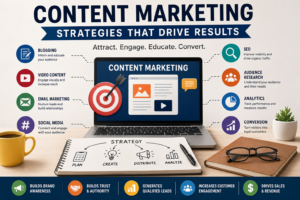
Content Marketing: Strategies That Drive Results
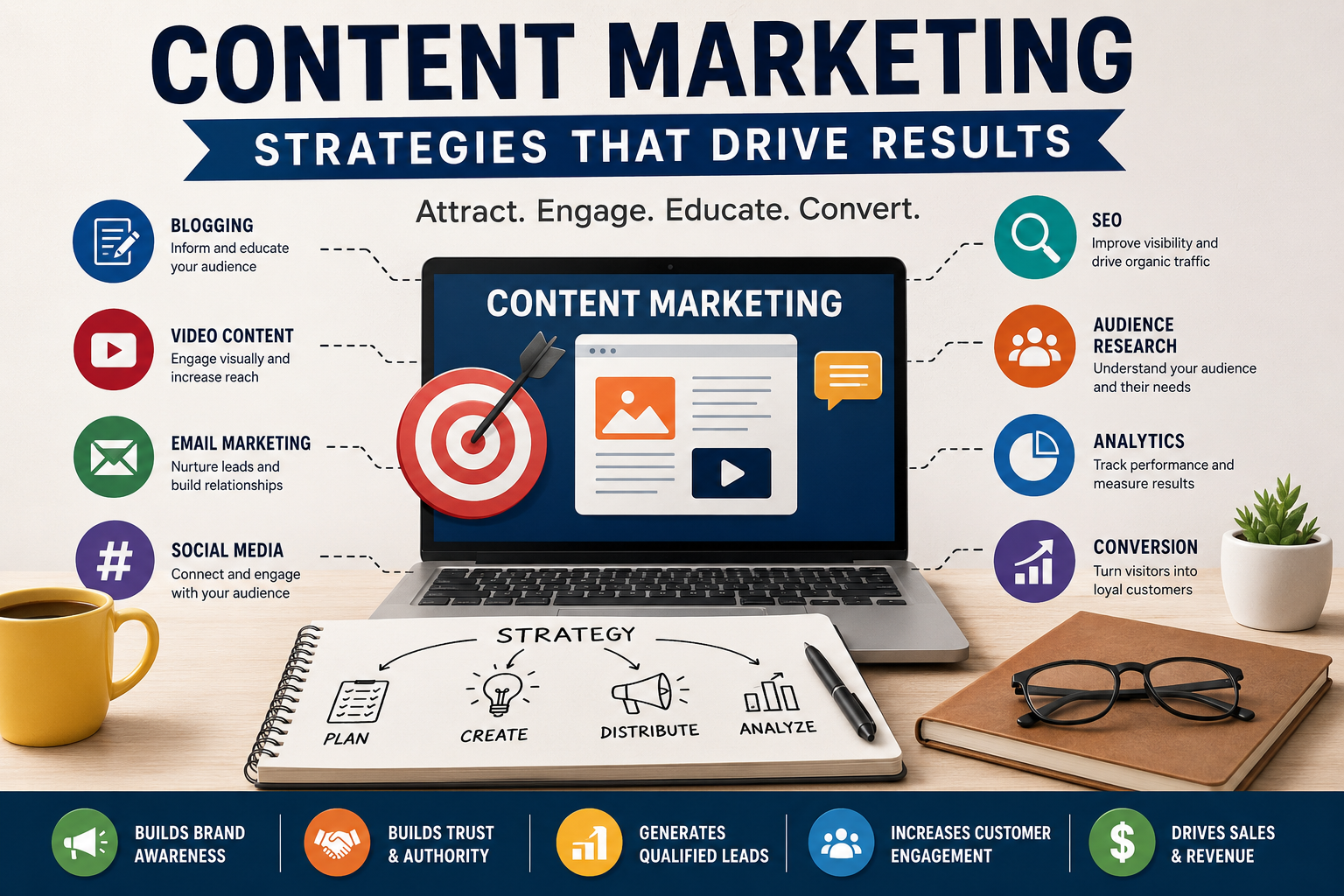
Content Marketing: Strategies That Drive Results
Introduction
In today’s digital world, content marketing has become one of the most effective ways for businesses to attract customers, build trust, and increase revenue. Unlike traditional advertising, which interrupts customers with promotional messages, content marketing focuses on providing valuable, relevant, and engaging information that solves problems and answers questions.
Whether you own a small business, run an eCommerce store, or manage a multinational company, investing in a strong content marketing strategy can significantly improve your online presence and generate long-term results.
According to the Content Marketing Institute, businesses that consistently create valuable content build stronger relationships with their audience, improve brand authority, and generate more qualified leads.
Source: https://contentmarketinginstitute.com/articles/
What is Content Marketing?
Content marketing is a strategic marketing approach focused on creating, publishing, and distributing valuable content to attract and retain a clearly defined audience.
Instead of directly selling products or services, businesses educate, entertain, or inspire their audience through various content formats such as:
- Blog posts
- Videos
- Podcasts
- Infographics
- Social media posts
- Email newsletters
- Case studies
- eBooks
The primary objective is to build trust so customers naturally choose your brand when they are ready to make a purchase.
Reference:
https://blog.hubspot.com/marketing/content-marketing
Why Content Marketing Matters
Businesses today face intense competition online. Consumers research products before buying, compare different brands, and read reviews before making decisions.
Content marketing helps businesses become the trusted source of information during this decision-making process.
Some major benefits include:
1. Builds Brand Awareness
Publishing useful content regularly helps people discover your business through search engines and social media.
When users repeatedly see your helpful content, they begin recognizing your brand as an authority.
2. Improves SEO Rankings
Google rewards websites that consistently publish high-quality, relevant content.
Optimized blog posts targeting user search intent can increase organic traffic without paying for advertisements.
SEO Guide:
https://developers.google.com/search/docs
3. Generates Qualified Leads
Educational content attracts people already interested in your industry.
Instead of reaching random audiences, content marketing brings visitors actively searching for solutions.
Examples include:
- “Best CRM software”
- “How to start digital marketing”
- “Content marketing strategy”
These visitors have stronger buying intent.
4. Builds Customer Trust
People buy from brands they trust.
Helpful guides, tutorials, FAQs, and case studies establish credibility and demonstrate expertise.
Trust eventually converts readers into loyal customers.
Types of Content Marketing
A successful strategy uses multiple content formats depending on audience preferences.
Blog Articles
Blogs remain one of the most effective forms of content marketing.
Benefits include:
- Better SEO
- More website traffic
- Higher authority
- Long-term organic growth
Example topics:
- Beginner guides
- Industry news
- Tutorials
- Product comparisons
- Expert tips
Video Marketing
Video content continues growing across platforms like YouTube, Instagram, TikTok, and LinkedIn.
Businesses use videos for:
- Product demonstrations
- Tutorials
- Customer testimonials
- Behind-the-scenes content
- Educational series
Research shows video significantly improves engagement and conversion rates.
Reference:
https://www.wyzowl.com/video-marketing-statistics/
Social Media Content
Social media allows brands to communicate directly with customers.
Popular platforms include:
- X (formerly Twitter)
- TikTok
Effective social content includes:
- Short educational posts
- Reels
- Stories
- Polls
- Carousels
- Infographics
Email Marketing
Email remains one of the highest ROI marketing channels.
Businesses use newsletters to:
- Share new blogs
- Promote offers
- Educate subscribers
- Announce products
- Build long-term relationships
Reference:
https://mailchimp.com/resources/email-marketing-field-guide/
Infographics
Visual content makes complex information easier to understand.
Infographics perform well because they are:
- Easy to share
- Highly engaging
- SEO-friendly
- Great for backlinks
Creating a Successful Content Marketing Strategy
Publishing random blog posts rarely delivers results.
Successful companies follow a structured strategy.
Step 1: Define Your Goals
Every content marketing campaign should have measurable objectives.
Examples include:
- Increase website traffic
- Generate leads
- Improve sales
- Build brand awareness
- Grow email subscribers
Without goals, measuring success becomes impossible.
Step 2: Understand Your Audience
Know who your audience is.
Research:
- Age
- Location
- Interests
- Pain points
- Buying behavior
- Preferred platforms
Creating buyer personas helps produce highly relevant content.
Reference:
https://blog.hubspot.com/marketing/buyer-persona-research
Step 3: Perform Keyword Research
Keyword research identifies what users search for online.
Useful tools include:
- Google Keyword Planner
- Ahrefs
- SEMrush
- Ubersuggest
Focus on:
- Search volume
- Competition
- Search intent
- Long-tail keywords
For example:
Primary Keyword:
Content Marketing
Related Keywords:
- Content marketing strategy
- Content marketing examples
- Content marketing tips
- SEO content marketing
- Digital content marketing
Step 4: Create High-Quality Content
Quality always beats quantity.
Effective content should be:
- Original
- Helpful
- Accurate
- Easy to read
- Well-structured
- SEO optimized
- Updated regularly
Google values content that demonstrates experience, expertise, authoritativeness, and trustworthiness (E-E-A-T).
Reference:
https://developers.google.com/search/docs/fundamentals/creating-helpful-content
Step 5: Optimize for SEO
SEO and content marketing work together.
Best practices include:
- Optimize title tags
- Write compelling meta descriptions
- Use heading tags
- Add internal links
- Include external authoritative sources
- Optimize images
- Improve page speed
- Ensure mobile responsiveness
These practices increase search engine visibility and improve user experience.
Content Distribution Strategies
Creating high-quality content is only half the battle. The other half is ensuring your target audience actually sees it. Content distribution is the process of promoting and sharing your content across multiple channels to maximize its reach and impact.
1. Organic Search
Publishing SEO-optimized articles helps your website rank higher in search engine results. Over time, organic traffic becomes one of the most cost-effective sources of visitors because it doesn’t require ongoing advertising expenses.
Reference:
https://developers.google.com/search/docs
2. Social Media Marketing
Share your content across platforms where your audience spends time. Customize your posts for each platform instead of using the same message everywhere. For example, a LinkedIn post may focus on professional insights, while an Instagram post can highlight visual elements.
Popular platforms include:
- X (formerly Twitter)
- TikTok
3. Email Marketing
Email newsletters remain one of the best ways to distribute content directly to subscribers. Include links to your latest blog posts, case studies, industry news, and exclusive resources to keep your audience engaged.
Reference:
https://mailchimp.com/resources/email-marketing-field-guide/
4. Guest Blogging
Publishing articles on reputable websites allows you to reach new audiences while building backlinks that strengthen your website’s SEO.
5. Influencer Collaboration
Partnering with industry experts and influencers can significantly increase your content’s visibility and credibility. Influencers often have established communities that trust their recommendations.
Measuring Content Marketing Success
Creating content without measuring performance makes it difficult to improve your strategy. Tracking key performance indicators (KPIs) helps you understand what’s working and where adjustments are needed.
Website Traffic
Use analytics tools to monitor:
- Total visitors
- Unique visitors
- Organic traffic
- Referral traffic
Reference:
https://support.google.com/analytics
Engagement Metrics
High engagement indicates your content resonates with readers. Monitor:
- Time on page
- Bounce rate
- Social shares
- Comments
- Click-through rate (CTR)
Lead Generation
Evaluate how many visitors complete valuable actions, such as:
- Filling out contact forms
- Downloading eBooks
- Subscribing to newsletters
- Requesting demos
Conversion Rate
Traffic alone doesn’t guarantee success. Measure how many visitors become customers after interacting with your content.
SEO Performance
Track important SEO metrics such as:
- Keyword rankings
- Organic impressions
- Clicks
- Backlinks
- Domain authority
Google Search Console is an excellent free tool for monitoring search performance.
Reference:
https://search.google.com/search-console
Common Content Marketing Mistakes
Even experienced marketers make mistakes that reduce content performance. Avoiding these common issues can improve your results.
Ignoring Search Intent
Many businesses target keywords without understanding what users actually want. Always create content that matches the user’s search intent.
Publishing Low-Quality Content
Thin, outdated, or poorly researched articles rarely perform well. Focus on creating original, informative, and actionable content.
Inconsistent Publishing
Consistency is essential. Develop a content calendar and publish regularly to keep your audience engaged and improve SEO.
Neglecting Content Promotion
Publishing an article without promoting it limits its reach. Share every piece of content through email, social media, and relevant online communities.
Failing to Update Old Content
Search engines favor fresh, accurate information. Review and update older articles periodically with new statistics, examples, and insights.
Advanced Content Marketing Techniques
Once you’ve mastered the basics, consider these advanced strategies to maximize your results.
Content Personalization
Deliver personalized content based on user interests, browsing behavior, or purchase history. Personalized experiences often lead to higher engagement and conversions.
Pillar Pages and Topic Clusters
Create a comprehensive pillar page that covers a broad topic and link it to multiple related articles. This structure improves user navigation and strengthens SEO.
For example:
Pillar Page: Content Marketing
Cluster Topics:
- Content Marketing Strategy
- Content Marketing Tools
- SEO Content Writing
- Content Promotion
- Content Marketing Examples
Repurposing Content
Extend the life of your content by transforming it into different formats, such as:
- Blog posts into videos
- Webinars into articles
- Podcasts into infographics
- Articles into social media posts
Repurposing saves time while reaching audiences with different content preferences.
The Role of AI in Content Marketing
Artificial Intelligence (AI) is transforming the way businesses create and optimize content. AI-powered tools assist with keyword research, topic generation, grammar checking, and content optimization.
However, AI should support—not replace—human creativity. The best content combines AI efficiency with human expertise, originality, and real-world experience.
Popular AI tools include:
- ChatGPT
- Gemini
- Claude
- Jasper AI
- Grammarly
These tools can improve productivity, but human editing remains essential for maintaining quality and authenticity.
Future Trends in Content Marketing
Content marketing continues to evolve. Businesses should stay informed about emerging trends to remain competitive.
Voice Search Optimization
With the growing popularity of voice assistants, optimizing content for conversational queries is becoming increasingly important.
Interactive Content
Quizzes, polls, calculators, and interactive infographics improve user engagement and encourage longer website visits.
Short-Form Video
Platforms such as TikTok, Instagram Reels, and YouTube Shorts continue to drive significant audience engagement.
First-Party Data
As privacy regulations evolve, businesses are relying more on first-party data collected through newsletters, memberships, and customer interactions.
Experience-Driven Content
Google increasingly rewards content that demonstrates real-world experience, expertise, authoritativeness, and trustworthiness (E-E-A-T).
Frequently Asked Questions (FAQs)
What is content marketing?
Content marketing is a strategy that focuses on creating valuable, relevant, and consistent content to attract and retain a target audience, ultimately driving profitable customer actions.
Why is content marketing important?
It helps businesses increase brand awareness, improve SEO rankings, generate qualified leads, build trust, and boost long-term customer loyalty.
How long does content marketing take to show results?
SEO-based content marketing typically takes three to six months to produce noticeable improvements, although results vary depending on competition, content quality, and consistency.
What types of content perform best?
Blog posts, videos, case studies, email newsletters, podcasts, infographics, and social media content all perform well when aligned with audience needs.
Is content marketing suitable for small businesses?
Yes. Small businesses can compete effectively by producing high-quality, niche-focused content that addresses their customers’ questions and challenges.
Conclusion
Content marketing is more than just publishing articles—it’s a long-term strategy for building relationships, establishing authority, and driving sustainable business growth. By understanding your audience, creating valuable content, optimizing for SEO, and distributing it through the right channels, you can attract qualified visitors and convert them into loyal customers.
Success in content marketing requires consistency, continuous improvement, and a willingness to adapt to changing trends and technologies. Businesses that invest in high-quality content today are better positioned to earn trust, increase visibility, and achieve lasting results in an increasingly competitive digital landscape.
Whether you’re a startup, a small business, or a global enterprise, implementing a well-planned content marketing strategy can help you achieve measurable growth and long-term success.
For more: click here