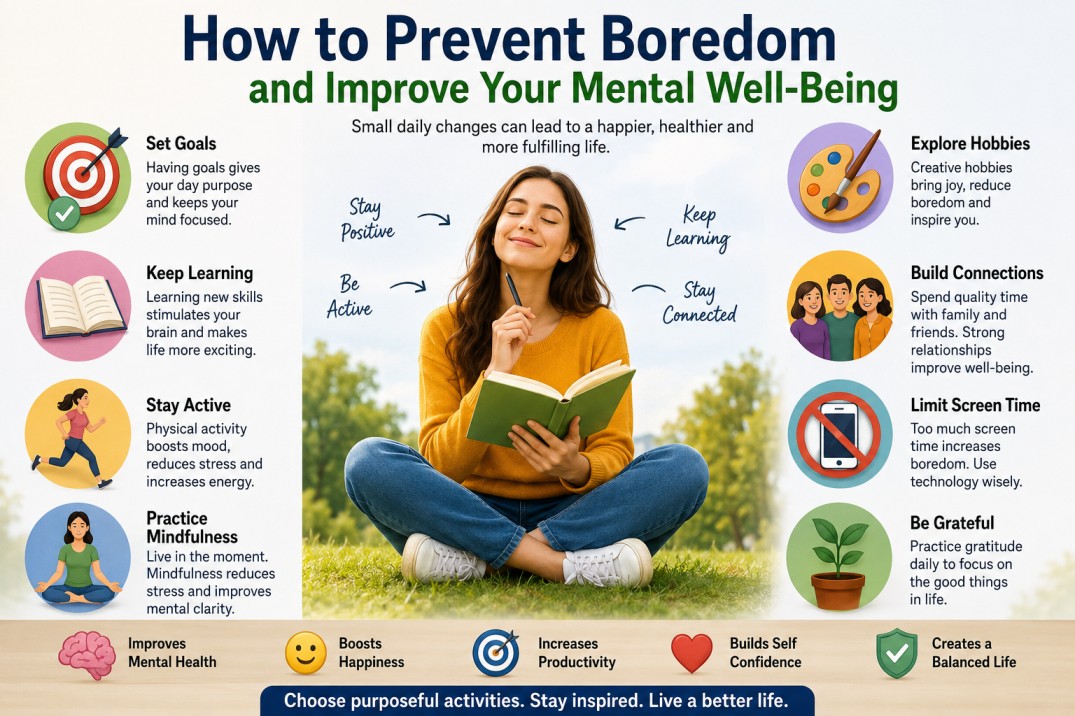
How to Prevent Boredom and Improve Mental Well-Being
How to Prevent Boredom and Improve Mental Well-Being
Introduction
How to Prevent Boredom and Improve Mental Well-Being, Have you ever looked at the clock and wondered why time seems to move so slowly? You have your phone, television, social media, and countless entertainment options, yet you still feel empty, restless, or uninterested. This is the reality many people face today. Boredom is no longer just about having nothing to do—it often comes from feeling disconnected from meaningful activities, relationships, and personal goals.
Learning how to Prevent Boredom is not only about staying busy. It’s about creating a life filled with purpose, curiosity, and emotional balance. When boredom becomes a regular part of your routine, it can negatively affect your mental well-being, productivity, confidence, and even physical health. On the other hand, when you know how to manage boredom effectively, you become more creative, happier, and emotionally resilient.
In this article, we’ll explore what boredom really is, why it happens, and practical strategies to Prevent Boredom while improving your mental health naturally. Whether you’re a student, a working professional, a stay-at-home parent, or someone going through a life transition, these tips can help you build a more fulfilling and balanced lifestyle.
What Is Boredom?
Boredom is a psychological state in which a person feels uninterested, unmotivated, or mentally unstimulated. It can occur even when you’re surrounded by entertainment or people. This happens because boredom is often connected to your emotional needs rather than your environment.
For example, scrolling through social media for hours may seem entertaining at first, but eventually, it can leave you feeling mentally exhausted and emotionally empty. That’s because passive entertainment doesn’t always satisfy your need for meaningful engagement.
Understanding boredom is the first step to learning how to Prevent Boredom in a healthy and lasting way.
Why Does Boredom Affect Mental Well-Being?
Many people underestimate the impact boredom can have on mental health. Occasional boredom is completely normal and can even encourage creativity. However, chronic boredom may contribute to:
- Increased stress and anxiety
- Feelings of loneliness
- Low motivation
- Reduced productivity
- Negative thinking
- Emotional exhaustion
- Poor self-esteem
When boredom continues for long periods, people often turn to unhealthy coping mechanisms such as excessive screen time, overeating, impulsive shopping, or substance use.
Finding healthy ways to Prevent Boredom helps protect your emotional health and encourages positive habits that support long-term happiness.
Common Causes of Boredom
Understanding the root cause of boredom makes it easier to deal with it effectively.
Lack of Purpose
When your daily routine lacks meaningful goals, every day can begin to feel repetitive. Without something exciting to work toward, motivation naturally decreases.
Repetitive Routine
Doing the same tasks every day without variation can make life feel predictable and dull.
Too Much Screen Time
While technology provides endless entertainment, excessive screen use often leads to mental fatigue rather than genuine satisfaction.
Social Isolation
Humans are naturally social creatures. Spending too much time alone may increase feelings of boredom and emotional emptiness.
Lack of Challenges
If you’re not learning, growing, or facing new experiences, your brain receives less stimulation, making boredom more likely.
Recognizing these causes allows you to choose better strategies to Prevent Boredom before it begins affecting your emotional health.
Effective Ways to Prevent Boredom
Let’s explore practical techniques that can help you stay mentally active and emotionally healthy.
1. Set Meaningful Daily Goals
Having something to accomplish each day gives your mind direction. Your goals don’t have to be huge.
Simple examples include:
- Reading 20 pages of a book
- Learning five new vocabulary words
- Walking for 30 minutes
- Cooking a healthy meal
- Organizing your workspace
Small achievements create a sense of progress, making it easier to Prevent Boredom and improve your confidence.
2. Learn Something New
One of the best ways to keep your brain active is continuous learning.
Consider learning:
- A foreign language
- Photography
- Graphic design
- Cooking
- Playing a musical instrument
- Digital marketing
- Writing
- Coding
Learning activates different parts of your brain, making life more interesting while improving cognitive function.
3. Stay Physically Active
Exercise benefits both physical and mental health.
Physical activities release endorphins, often called “feel-good hormones,” which help reduce stress and improve mood.
You don’t have to spend hours at the gym.
Try:
- Walking
- Jogging
- Yoga
- Cycling
- Swimming
- Dancing
Regular movement is one of the easiest ways to Prevent Boredom naturally.
4. Build Healthy Relationships
Meaningful conversations provide emotional support and mental stimulation.
Spend quality time with:
- Family
- Friends
- Neighbors
- Colleagues
- Community groups
Even a short conversation can improve your mood and reduce feelings of isolation.
5. Practice Mindfulness
Sometimes boredom happens because we’re constantly looking for external entertainment instead of appreciating the present moment.
Mindfulness teaches you to fully experience everyday activities.
You can practice mindfulness while:
- Drinking tea
- Walking
- Gardening
- Eating meals
- Reading
Being present helps improve emotional balance and reduces unnecessary mental restlessness.
Develop Creative Hobbies
Creative hobbies stimulate your imagination and provide emotional satisfaction.
Some excellent hobbies include:
- Painting
- Drawing
- Writing
- Knitting
- Woodworking
- Gardening
- DIY crafts
- Baking
Creative expression helps Prevent Boredom while reducing anxiety and increasing happiness.
Reduce Excessive Social Media Use
Many people believe social media cures boredom, but excessive scrolling often creates the opposite effect.
Instead of endless scrolling:
- Set daily screen limits.
- Turn off unnecessary notifications.
- Replace social media time with reading or hobbies.
- Schedule offline activities.
Reducing digital overload improves focus and mental clarity.
Spend Time Outdoors
Nature has a calming effect on the brain.
Research consistently shows that spending time outdoors helps reduce stress and improve mood.
Activities include:
- Hiking
- Walking in the park
- Bird watching
- Gardening
- Picnics
- Beach visits
Nature provides healthy stimulation that helps Prevent Boredom without overwhelming your mind.
Create a Balanced Daily Routine
Structure gives your day purpose.
A healthy routine might include:
Morning:
- Wake up early
- Exercise
- Healthy breakfast
Afternoon:
- Work or study
- Short breaks
- Lunch
Evening:
- Family time
- Reading
- Light exercise
- Relaxation
Having a flexible routine keeps your mind engaged without feeling overwhelmed.
Read More Books
Books stimulate imagination far more than passive entertainment.
Reading offers:
- New perspectives
- Better vocabulary
- Reduced stress
- Increased focus
- Improved creativity
Choose books that genuinely interest you rather than forcing yourself to read something boring.
Reading regularly helps Prevent Boredom while supporting lifelong learning.
Volunteer and Help Others
Helping others creates a sense of purpose that’s difficult to find elsewhere.
Volunteer opportunities include:
- Animal shelters
- Food banks
- Community centers
- Schools
- Environmental organizations
Acts of kindness improve emotional well-being while strengthening social connections.
How to Prevent Boredom and Improve Mental Well-Being:: Challenge Your Brain
Your brain enjoys solving problems.
Try activities such as:
- Crossword puzzles
- Sudoku
- Chess
- Memory games
- Strategy games
- Logic puzzles
Mental challenges improve concentration and reduce feelings of monotony.
Improve Your Sleep
Poor sleep often makes everyday activities feel less enjoyable.
To improve sleep:
- Maintain a regular bedtime.
- Avoid caffeine late in the day.
- Limit screen exposure before bed.
- Keep your bedroom cool and quiet.
Better sleep leads to better emotional regulation and more energy throughout the day.
How to Prevent Boredom and Improve Mental Well-Being:: Practice Gratitude
Gratitude shifts your focus from what’s missing to what’s already positive.
Every evening, write down three things you’re grateful for.
Examples:
- A supportive friend
- Good health
- A beautiful sunset
- A successful workday
- A delicious meal
Gratitude encourages a positive mindset that naturally helps Prevent Boredom.
How to Prevent Boredom and Improve Mental Well-Being:: Limit Multitasking
Constantly switching between tasks reduces focus and satisfaction.
Instead:
- Finish one task before starting another.
- Take short breaks.
- Remove distractions.
Deep focus creates a stronger sense of accomplishment.
Find Personal Purpose
One of the biggest reasons people struggle with boredom is the absence of purpose.
Ask yourself:
- What excites me?
- What skills do I want to develop?
- How can I help others?
- What kind of life do I want to build?
Purpose provides motivation even during ordinary days.
Signs That Boredom May Require Professional Help
Sometimes boredom may be linked to deeper mental health concerns.
Consider speaking with a mental health professional if boredom is accompanied by:
- Persistent sadness
- Loss of interest in everything
- Severe anxiety
- Hopelessness
- Difficulty functioning daily
- Sleep disturbances
- Changes in appetite
Seeking support is a positive step toward improving overall well-being.
Long-Term Benefits of Preventing Boredom
When you consistently work to Prevent Boredom, you’ll likely experience:
- Better emotional health
- Higher productivity
- Increased creativity
- Stronger relationships
- Greater self-confidence
- Improved physical health
- Enhanced resilience
- More life satisfaction
These benefits extend beyond simply staying occupied—they contribute to a richer and more meaningful life.
Conclusion
Boredom is something everyone experiences from time to time, but it doesn’t have to control your life. The secret isn’t filling every minute with activity—it’s choosing experiences that bring meaning, growth, and genuine enjoyment. By setting personal goals, staying active, learning new skills, nurturing relationships, practicing mindfulness, and spending time on creative hobbies, you can successfully Prevent Boredom while strengthening your mental well-being.
Remember that improving your mental health is a journey, not a race. Small daily changes often lead to the biggest long-term results. Instead of waiting for excitement to find you, create opportunities that challenge your mind, inspire your curiosity, and bring purpose to your everyday life. As you build healthier habits and focus on activities that truly matter, you’ll discover that life becomes more engaging, rewarding, and fulfilling. The ability to Prevent Boredom is ultimately about creating a lifestyle where every day offers a chance to learn, grow, connect, and thrive.
For more: click here