Bullet Hunting vs Bow Hunting: What’s the Difference
Bullet Hunting vs Bow Hunting: What’s the Difference
Introduction
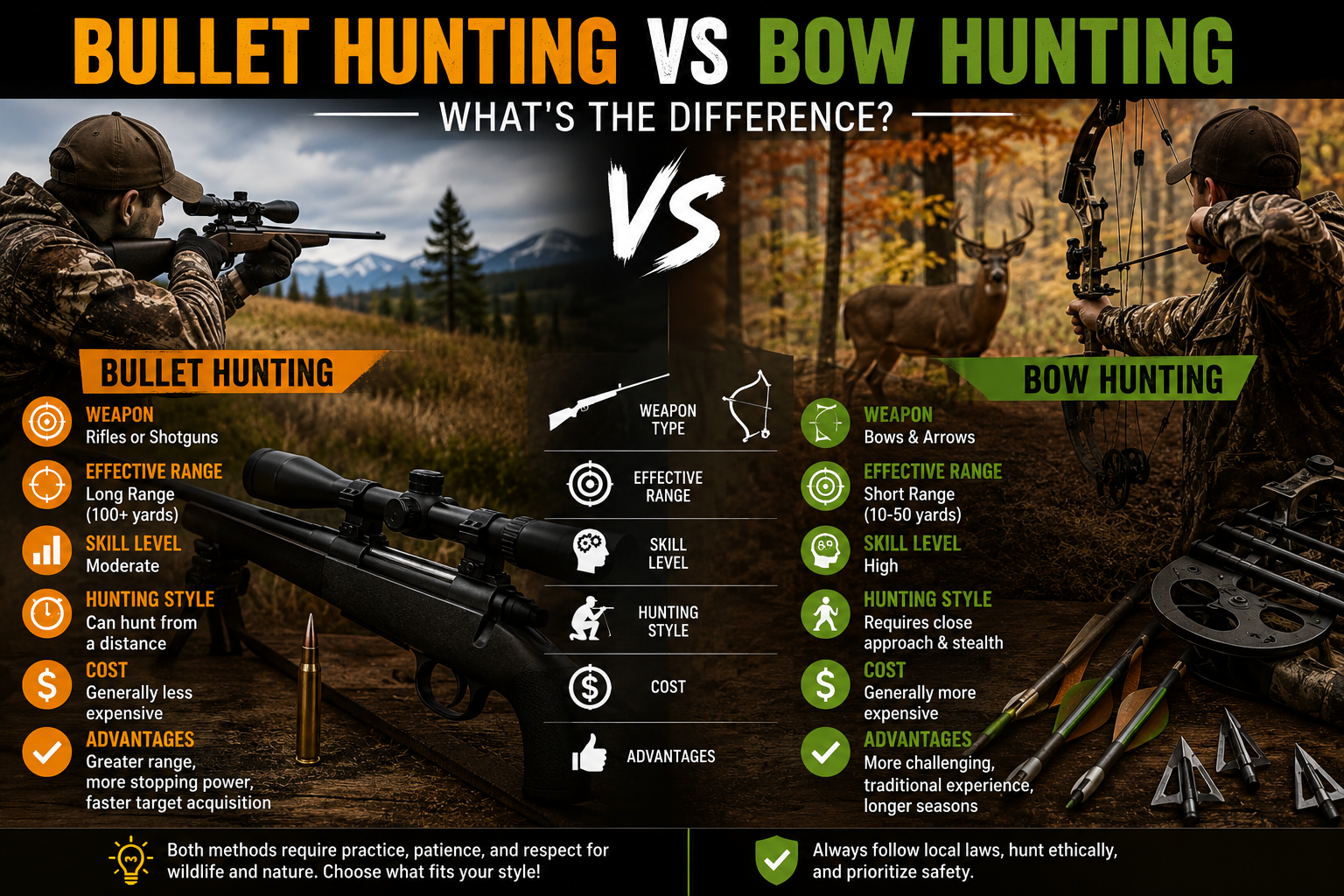
Hunting has been an important part of human history for thousands of years. What once began as a means of survival has evolved into a popular outdoor activity, a wildlife management tool, and a recreational sport enjoyed by millions of people around the world. Whether someone prefers hunting for conservation purposes, personal challenge, or spending time in nature, one question often comes up among beginners and experienced hunters alike: Bullet Hunting vs Bow Hunting: What’s the Difference?
While both methods share the same ultimate goal, they require very different skills, equipment, strategies, and levels of patience. Some hunters appreciate the precision and long-range capability of firearms, while others enjoy the traditional challenge and close-range experience that comes with archery equipment.
Interestingly, outdoor hobbies like hunting also offer mental health benefits. Spending time in nature, learning new skills, and disconnecting from daily stress can help Prevent Boredom, improve focus, and create meaningful experiences that many people struggle to find in today’s fast-paced digital world.
In this article, we’ll explore the major differences between bullet hunting and bow hunting, including equipment, hunting techniques, skill requirements, safety, ethics, costs, advantages, disadvantages, and how to choose the method that best suits your interests.
Understanding Bullet Hunting
Bullet hunting refers to hunting game animals using a firearm that fires a bullet, such as a rifle or shotgun, depending on the game species and local regulations.
Firearms have become one of the most common hunting tools because they offer:
- Greater range
- Higher accuracy
- Faster target acquisition
- More stopping power
Modern hunting rifles are designed with advanced optics, adjustable scopes, and improved accuracy, making them effective for hunting in a variety of terrains.
Bullet hunting is commonly used for:
- Deer
- Elk
- Wild boar
- Moose
- Coyotes
- Other legally huntable game, depending on local laws
Understanding Bow Hunting
Bow hunting involves using archery equipment, such as a traditional bow, recurve bow, or compound bow, to harvest game animals.
Unlike firearms, bows require hunters to get much closer to their target before taking a shot. This makes bow hunting a more physically demanding and skill-intensive activity.
Many hunters appreciate bow hunting because it emphasizes patience, stealth, and precision over long-distance shooting.
Bow hunting is commonly associated with:
- Deer hunting
- Turkey hunting
- Wild hog hunting
- Elk hunting
In many regions, archery seasons also begin earlier than firearm seasons, providing hunters with additional opportunities.
The History of Hunting Methods
Long before firearms existed, humans relied entirely on bows, spears, and other primitive tools for survival.
The invention of firearms changed hunting dramatically by increasing effective range and accuracy.
Despite technological advances, bow hunting remains popular because many outdoor enthusiasts enjoy the traditional challenge it offers.
Today, both methods continue to coexist, each attracting hunters with different interests and skill levels.
Bullet Hunting vs Bow Hunting: What’s the Difference? Difference: Equipment Differences
One of the biggest distinctions between bullet hunting and bow hunting is the equipment required.
Bullet Hunting Equipment
Typical gear includes the following:
- Hunting rifle or shotgun
- Ammunition
- Scope or sights
- Hearing protection
- Protective eyewear
- Cleaning kit
- Sling
- Appropriate hunting clothing
Firearms generally require regular maintenance to ensure safe and reliable operation.
Bow Hunting Equipment
Bow hunters typically use the following:
- Compound, recurve, or traditional bow
- Arrows
- Broadheads
- Release aid (for many compound bows)
- Quiver
- Arm guard
- Rangefinder
- Bow sight
Archery equipment also requires maintenance, including checking strings, limbs, and arrow condition.
Effective Hunting Range
Perhaps the most obvious difference is shooting distance.
Bullet Hunting
Firearms generally allow hunters to shoot accurately from much longer distances, depending on the firearm, ammunition, terrain, weather, and the hunter’s skill.
This makes firearms especially useful in open landscapes where animals may be farther away.
Bow Hunting
Bow hunting is usually performed at much shorter distances.
Because arrows lose speed more quickly than bullets, hunters must carefully approach game without being detected.
Success depends heavily on stealth and patience.
Skill Requirements
Both hunting methods require practice, but the skills involved differ considerably.
Skills Needed for Bullet Hunting
Hunters should develop:
- Safe firearm handling
- Accurate shooting
- Range estimation
- Wind assessment
- Wildlife identification
- Responsible shot placement
Although firearms are powerful tools, ethical hunting still requires significant preparation and discipline.
Skills Needed for Bow Hunting
Bow hunters often spend considerable time mastering:
- Consistent shooting form
- Drawing technique
- Anchor point consistency
- Distance judgment
- Quiet movement
- Patience
Because bow hunting often involves getting closer to animals, hunters must also become skilled at reading animal behavior.
Stealth and Strategy
Stealth plays an important role in both methods, but especially in bow hunting.
Bullet hunters may be able to remain farther from wildlife.
Bow hunters often need to
- Move slowly
- Control scent
- Stay hidden
- Use natural cover
- Remain motionless for extended periods
Many people enjoy this immersive experience because it creates a deeper connection with nature and can help prevent boredom by offering a rewarding outdoor challenge.
Accuracy and Precision
Accuracy matters regardless of hunting method.
Firearms generally provide:
- Higher projectile speed
- Flatter trajectories
- Easier long-distance shooting
Bow hunting, however, demands the following:
- Excellent form
- Consistent practice
- Careful shot selection
The margin for error is often smaller with archery equipment.
Physical Demands
Bow hunting is generally more physically demanding.
Hunters may need to:
- Draw and hold the bow steadily
- Practice upper-body strength
- Maintain shooting posture
- Spend long periods waiting quietly
Bullet hunting also requires physical fitness, particularly when hiking rugged terrain or carrying equipment, but drawing a bow adds another physical element.
Cost Comparison
Costs vary depending on quality and accessories.
Bullet Hunting Expenses
Potential costs include the following:
- Firearm
- Ammunition
- Scope
- Protective gear
- Cleaning supplies
- Storage equipment
Ongoing ammunition costs should also be considered.
Bow Hunting Expenses
Typical expenses include the following:
- Bow
- Arrows
- Broadheads
- String maintenance
- Target equipment
- Release aids
While arrows can often be reused if undamaged, they still require inspection and replacement over time.
Safety Considerations
Safety should always be the highest priority.
Important safety practices include:
- Following all hunting laws
- Identifying your target and surroundings
- Wearing appropriate safety gear where required
- Maintaining equipment properly
- Practicing regularly before hunting
Responsible hunters also respect property boundaries and local regulations.
Hunting Seasons
Many regions establish separate hunting seasons for different methods.
Archery seasons may open earlier than firearm seasons because a shorter effective range can influence wildlife management strategies.
Always check local regulations before planning a hunt.
Advantages of Bullet Hunting
Many hunters prefer firearms because they offer the following:
- Greater effective range
- Faster projectile speed
- Increased versatility
- Easier learning curve for some beginners
- Effectiveness in open terrain
These qualities make bullet hunting a practical option for many legal hunting situations.
Advantages of Bow Hunting
Bow hunting offers unique rewards, including:
- Greater challenge
- Closer connection to nature
- Longer archery seasons in many areas
- Skill development
- Quiet operation
Many enthusiasts appreciate the satisfaction that comes from mastering archery over time.
Which Method Is Better for Beginners?
The answer depends on personal goals.
Someone interested in long-range accuracy and modern equipment may prefer bullet hunting.
Someone who enjoys patience, close-range strategy, and traditional skills may find bow hunting more rewarding.
Trying archery at a supervised range or learning firearm safety through certified instruction can help beginners discover which activity suits them best.
Mental Benefits of Outdoor Activities
One reason people enjoy hunting is the opportunity to disconnect from busy schedules.
Outdoor recreation can:
- Reduce stress
- Improve concentration
- Encourage physical activity
- Build confidence
- Strengthen patience
Learning new outdoor skills may also Prevent Boredom by replacing excessive screen time with purposeful experiences.
Conservation and Ethical Hunting
Responsible hunting supports wildlife management in many areas when conducted under established regulations.
Ethical hunters typically strive to:
- Follow local laws
- Respect harvest limits
- Practice accurate shot placement
- Minimize unnecessary suffering
- Respect the environment
- Leave natural areas clean
Conservation efforts and education remain essential parts of modern hunting culture.
Choosing the Right Hunting Style
Before deciding between bullet hunting and bow hunting, consider:
- Your experience level
- Local hunting regulations
- Physical fitness
- Budget
- Available training
- Personal interests
Some hunters eventually enjoy both methods, using each during different legal seasons or for different outdoor experiences.
Conclusion
When comparing Bullet Hunting vs Bow Hunting, it’s clear that each method offers a unique experience. Bullet hunting is often valued for its longer effective range, modern equipment, and versatility, while bow hunting appeals to those who enjoy a more traditional, skill-based approach that emphasizes patience, stealth, and precision. Neither method is universally better—the right choice depends on your goals, experience, local regulations, and personal preferences.
Beyond the equipment and techniques, both activities encourage time outdoors, personal growth, and a greater appreciation for nature. They can also help Prevent Boredom by providing meaningful challenges, opportunities to learn new skills, and a healthy break from everyday routines. Whatever method you choose, always prioritize safety, ethical practices, respect for wildlife, and compliance with the laws in your area. With the right preparation and mindset, hunting can become a rewarding outdoor pursuit that combines adventure, responsibility, and lifelong learning.
For more: click here