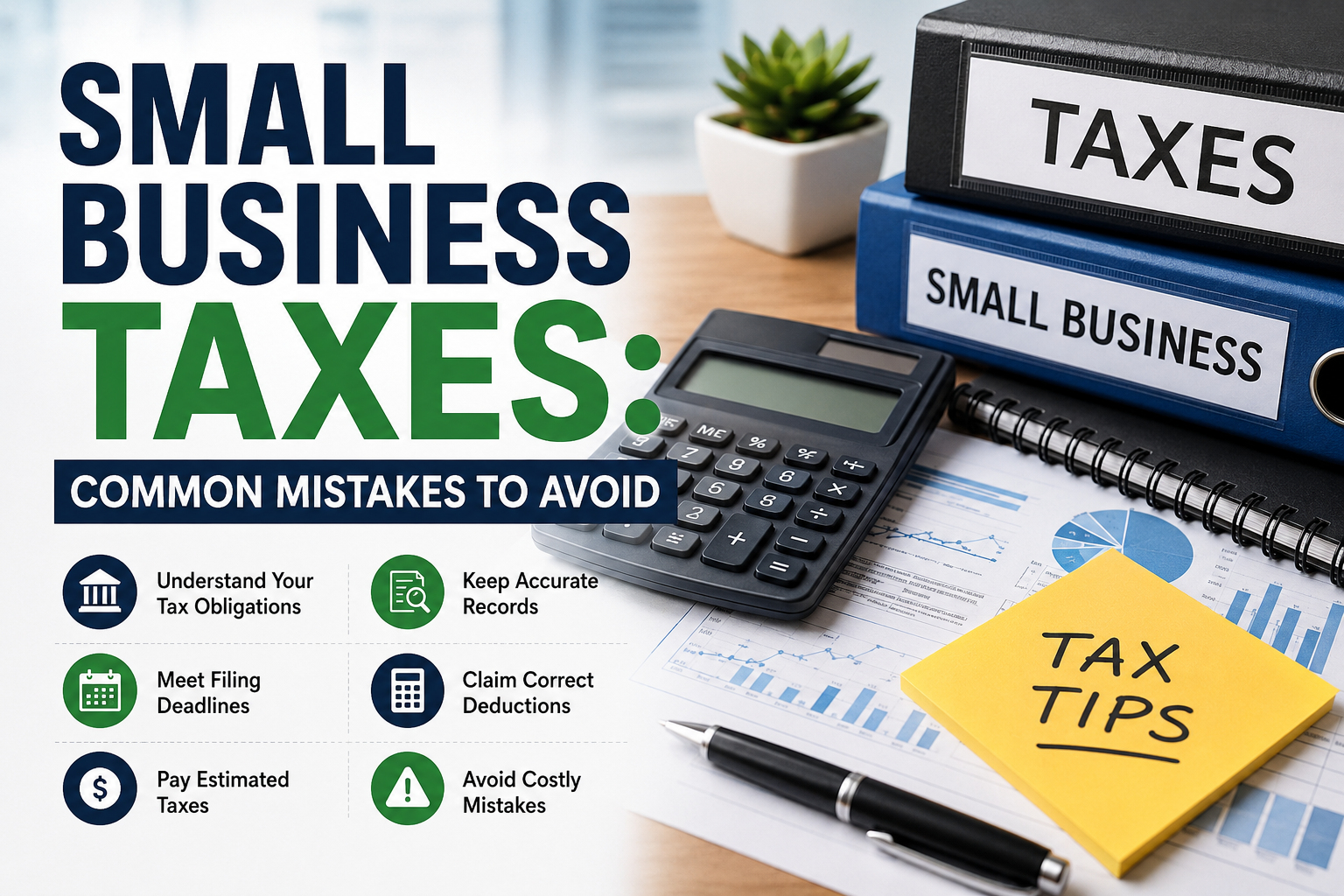
Small Business Taxes: Common Mistakes to Avoid
Small Business Taxes: Common Mistakes to Avoid
Running a small business comes with many responsibilities, and one of the most important is managing your taxes correctly. While many entrepreneurs focus on growing their businesses, they often overlook tax obligations until the filing deadline approaches. Unfortunately, even small mistakes can result in penalties, audits, or unnecessary financial losses.
Understanding small business taxes is essential for maintaining compliance and protecting your profits. Whether you’re a sole proprietor, LLC owner, partnership, or corporation, avoiding common tax mistakes can save you time, money, and stress.
In this guide, you’ll learn the most common small business tax mistakes and practical ways to avoid them.
Why Small Business Taxes Matter
Taxes are more than just an annual obligation. They directly affect your business’s cash flow, profitability, and legal standing. Paying taxes correctly ensures your business remains compliant with government regulations while helping you avoid penalties and interest charges.
A good tax strategy can also help you identify deductions and credits that reduce your tax burden legally.
Helpful Resource:
- IRS Small Business and Self-Employed Tax Center: https://www.irs.gov/businesses/small-businesses-self-employed
1. Mixing Personal and Business Finances
One of the biggest mistakes business owners make is using the same bank account for personal and business expenses.
For example, paying household bills from your business account or purchasing business supplies with your personal credit card without proper documentation can create accounting confusion.
Why It’s a Problem
- Difficult bookkeeping
- Missed tax deductions
- Increased audit risk
- Inaccurate financial reports
How to Avoid It
- Open a dedicated business bank account.
- Use a separate business credit card.
- Track every business expense.
- Keep receipts organized throughout the year.
2. Poor Record Keeping
Good record keeping is the foundation of accurate tax filing.
Many businesses wait until tax season to organize receipts and invoices. By then, documents may be missing or inaccurate.
Keep Records Of
- Sales
- Expenses
- Payroll
- Business mileage
- Equipment purchases
- Loan documents
- Utility bills
- Rent payments
Digital accounting software can simplify record management and reduce errors.
Recommended Tools
- QuickBooks
- Xero
- Wave Accounting
3. Missing Tax Deadlines
Late tax filing is one of the costliest mistakes.
Even if your business cannot pay the full amount owed, filing late often results in additional penalties.
Different businesses have different filing deadlines depending on their legal structure.
How to Stay on Schedule
- Use a tax calendar.
- Set reminders several weeks before deadlines.
- Work with a CPA if necessary.
- File electronically whenever possible.
Helpful Resource:
- IRS Filing Deadlines: https://www.irs.gov
4. Not Paying Estimated Taxes
Many small business owners mistakenly believe taxes are only due once a year.
In reality, many self-employed individuals and business owners must make quarterly estimated tax payments.
Missing these payments can result in penalties.
Who Usually Pays Estimated Taxes?
- Sole proprietors
- Freelancers
- Independent contractors
- LLC owners
- Partners
Tips
- Estimate annual income.
- Set aside a percentage of every payment received.
- Review your earnings every quarter.
5. Claiming Incorrect Business Deductions
Business deductions reduce taxable income, but claiming deductions incorrectly is a common mistake.
Some owners claim personal expenses as business expenses, while others fail to claim legitimate deductions.
Common Deductible Expenses
- Office supplies
- Business travel
- Marketing costs
- Website expenses
- Professional services
- Insurance
- Office rent
- Business software
Always maintain receipts and documentation supporting every deduction.
Helpful Resource:
- IRS Business Expenses Guide:
https://www.irs.gov/businesses/small-businesses-self-employed/deducting-business-expenses
6. Forgetting About Home Office Deductions
Many entrepreneurs operate from home but never claim the home office deduction because they fear an audit.
If you qualify, this deduction is completely legitimate.
Requirements
The workspace must be:
- Used regularly
- Used exclusively for business
- Your principal place of business
Always calculate this deduction accurately according to IRS rules.
7. Incorrect Worker Classification
Hiring workers creates additional tax responsibilities.
Many businesses incorrectly classify employees as independent contractors.
Doing so can result in significant penalties if the IRS determines the classification was incorrect.
Employee vs. Contractor
Employees typically:
- Follow company schedules
- Receive training
- Use company equipment
Independent contractors generally:
- Control how work is completed
- Work for multiple clients
- Use their own equipment
Helpful Resource:
- IRS Worker Classification:
https://www.irs.gov/businesses/small-businesses-self-employed/independent-contractor-defined
8. Ignoring Sales Tax Responsibilities
Depending on your location and the products or services you sell, you may need to collect and remit sales tax.
Failing to do so can create large liabilities over time.
Best Practices
- Understand your state’s sales tax laws.
- Register for a sales tax permit if required.
- File sales tax returns on time.
- Keep detailed sales records.
9. Choosing the Wrong Business Structure
Your business structure plays a major role in determining how your taxes are calculated. Many entrepreneurs select a business structure without understanding its tax implications, which can lead to paying more taxes than necessary.
The most common business structures include:
- Sole Proprietorship
- Partnership
- Limited Liability Company (LLC)
- S Corporation
- C Corporation
Each structure has different tax rules, reporting requirements, and liability protections. For example, an LLC offers flexibility in taxation, while corporations have separate tax obligations.
Before choosing or changing your business structure, consult a qualified tax professional to determine which option best fits your business goals.
Helpful Resource:
https://www.sba.gov/business-guide/launch-your-business/choose-business-structure
10. Overlooking Tax Credits
Many business owners focus only on deductions and completely overlook tax credits. Unlike deductions, tax credits directly reduce the amount of tax you owe, making them extremely valuable.
Some common tax credits available to small businesses include:
- Work Opportunity Tax Credit (WOTC)
- Research and Development (R&D) Tax Credit
- Disabled Access Credit
- Small Employer Health Insurance Credit
- Energy-Efficient Commercial Building Deduction
Eligibility requirements vary, so review the latest IRS guidelines before claiming any credit.
Helpful Resource:
https://www.irs.gov/businesses/small-businesses-self-employed/business-tax-credits
11. Forgetting Payroll Tax Responsibilities
If you have employees, payroll taxes become one of your biggest responsibilities.
Payroll taxes typically include:
- Federal income tax withholding
- Social Security tax
- Medicare tax
- Federal unemployment tax (FUTA)
Late payroll tax deposits can result in significant penalties and interest.
Best Practices
- Use reliable payroll software.
- Verify employee tax forms.
- Deposit payroll taxes on time.
- Review payroll reports regularly.
Many businesses choose payroll providers to reduce errors and stay compliant.
12. Not Saving Money for Taxes
A common financial mistake is spending all business income without setting aside money for taxes.
Many new entrepreneurs are surprised by their tax bill because they never planned for it.
A good practice is to transfer a percentage of every payment into a separate tax savings account. The exact percentage depends on your business type and location, but many experts recommend saving around 20–30% of taxable income until you know your actual liability.
This simple habit can prevent cash flow problems when tax payments are due.
13. Filing Without Reviewing Your Return
Even small errors on a tax return can delay processing or trigger IRS notices.
Common mistakes include:
- Incorrect Social Security or Employer Identification Number
- Math errors
- Missing signatures
- Wrong bank account information
- Missing income
- Incorrect deductions
Before submitting your return:
- Review every section carefully.
- Compare it with your accounting records.
- Double-check calculations.
- Ensure all supporting documents are included.
Taking an extra 30 minutes to review your return can save weeks of stress later.
14. Ignoring Changes in Tax Laws
Tax laws change frequently. New deductions, reporting requirements, and filing rules can affect your business from year to year.
Business owners who rely on outdated information may miss valuable tax-saving opportunities or accidentally violate current regulations.
Stay informed by:
- Following IRS updates.
- Reading publications from reputable accounting organizations.
- Consulting a Certified Public Accountant (CPA).
- Attending small business tax webinars.
Helpful Resource:
https://www.irs.gov/newsroom
15. Trying to Handle Everything Alone
Many entrepreneurs believe hiring an accountant is too expensive.
However, the cost of professional tax advice is often much lower than the penalties or missed deductions resulting from filing mistakes.
A tax professional can help with:
- Tax planning
- Deduction strategies
- Quarterly estimated taxes
- Payroll compliance
- Audit preparation
- Business structure advice
Even if you prepare your own taxes, consulting an expert once a year can be a worthwhile investment.
Tips to Reduce Your Small Business Tax Burden
Managing small business taxes isn’t just about avoiding mistakes—it’s also about planning ahead. Here are some practical ways to legally reduce your tax burden:
- Keep accurate financial records year-round.
- Separate personal and business expenses.
- Track mileage and travel expenses.
- Contribute to retirement accounts if eligible.
- Invest in business equipment before year-end when appropriate.
- Claim all legitimate deductions and credits.
- Pay estimated taxes on time.
- Use accounting software to monitor cash flow.
- Work with a qualified tax advisor.
These habits can improve your financial health and reduce stress during tax season.
Frequently Asked Questions (FAQs)
What taxes do small businesses pay?
The taxes you pay depend on your business structure and location. Common taxes include income tax, self-employment tax, payroll tax, sales tax, and state or local taxes where applicable.
How often should small businesses pay taxes?
Many small businesses pay estimated federal taxes quarterly, while income tax returns are generally filed annually. Payroll and sales taxes may have different filing schedules depending on your obligations.
What records should I keep for tax purposes?
Maintain records of:
- Income
- Receipts
- Invoices
- Bank statements
- Payroll records
- Business mileage
- Equipment purchases
- Utility bills
- Rent payments
- Tax filings
Good documentation helps support deductions and simplifies tax preparation.
Can accounting software help with taxes?
Yes. Accounting software can automate bookkeeping, categorize expenses, generate financial reports, and simplify tax preparation. It also reduces the risk of manual errors.
When should I hire a tax professional?
You should consider hiring a tax professional if:
- Your business is growing rapidly.
- You have employees.
- You operate in multiple states.
- You are changing your business structure.
- You want to maximize deductions and tax credits.
- You receive an IRS notice or face an audit.
Professional guidance can save both time and money.
Conclusion
Managing small business taxes may seem challenging, but avoiding common mistakes can make the process much easier. From maintaining organized records and separating business finances to paying estimated taxes on time and claiming eligible deductions, every step you take contributes to a healthier financial future.
Tax compliance is not just about meeting legal obligations—it’s also an opportunity to improve your business’s financial performance. By staying informed, using reliable accounting tools, and seeking professional advice when needed, you can minimize risks and make smarter financial decisions.
Remember, successful business owners don’t wait until tax season to think about taxes. They plan throughout the year, keep accurate records, and stay updated on changing regulations. With the right approach, managing small business taxes becomes a valuable part of building a sustainable and profitable business.
For more: click here