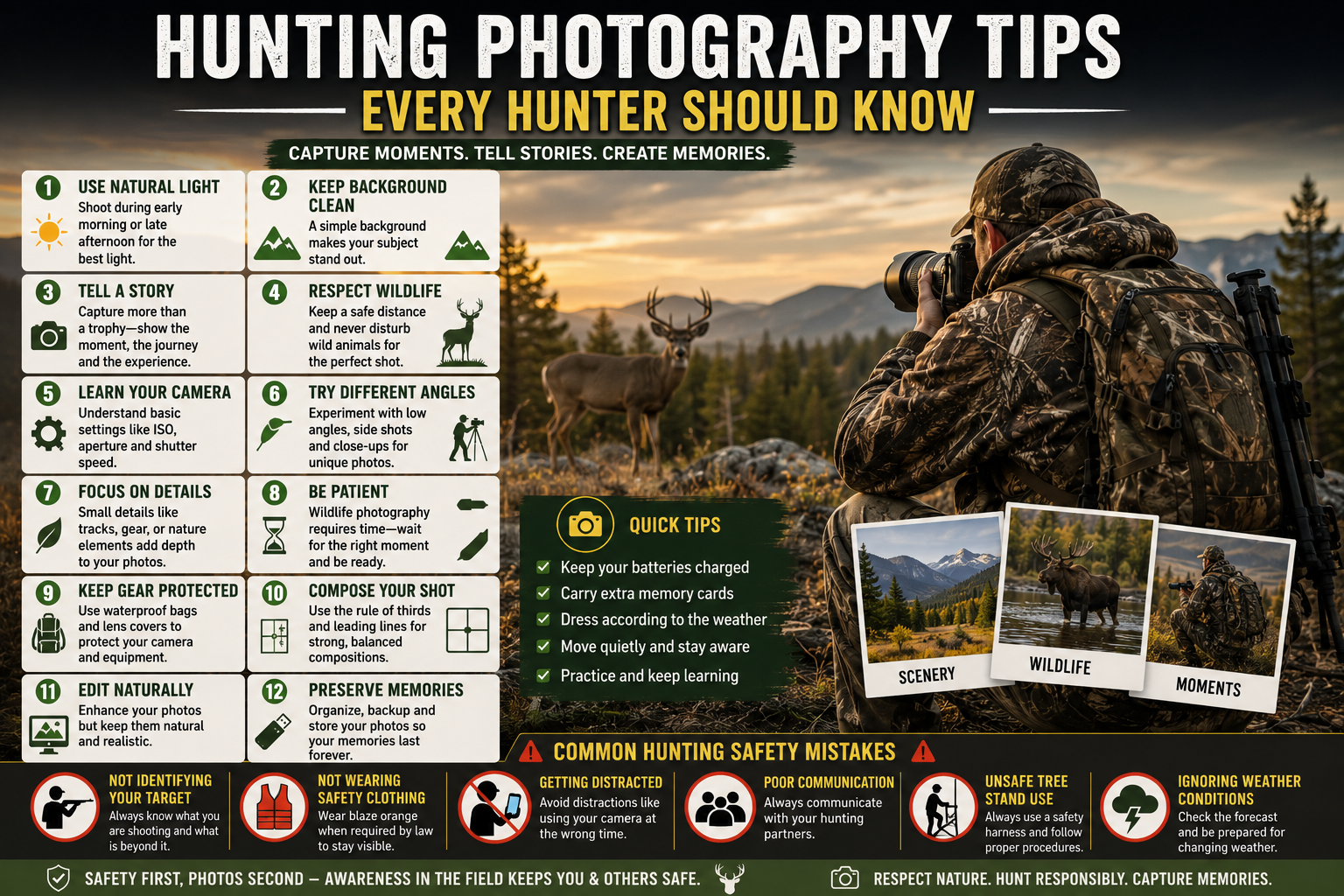
Hunting Photography Tips Every Hunter Should Know
Hunting Photography Tips Every Hunter Should Know
Introduction
Hunting photography is about much more than taking pictures. It is about preserving memories, documenting outdoor adventures, showcasing wildlife, and telling stories that can be shared with family and friends for years to come. Whether you’re photographing a sunrise over the mountains, wildlife in its natural habitat, or memorable moments from a hunting trip, great photography requires preparation, patience, and respect for nature.
Many hunters carry cameras or smartphones to capture these unforgettable experiences, but getting professional-looking photos isn’t always easy. Lighting changes quickly, wildlife moves unexpectedly, and outdoor conditions can be challenging. Fortunately, learning a few essential photography techniques can dramatically improve your images.
At the same time, photography should never distract you from safety. Many accidents happen because people become too focused on getting the perfect shot. Understanding Common Hunting Safety Mistakes while taking photographs helps ensure every hunting trip remains safe and enjoyable.
This guide covers the most important hunting photography tips every hunter should know, along with trusted resources where you can learn more about each topic.
Why Hunting Photography Matters
Photography helps preserve memories that last far longer than any hunting trip itself.
Benefits include:
- Recording outdoor adventures
- Documenting wildlife behavior
- Sharing ethical hunting experiences
- Teaching future generations
- Supporting conservation awareness
Learn more about ethical wildlife photography:
https://www.audubon.org/photography
1. Always Prioritize Safety Before Photography
No photograph is worth risking your safety or the safety of others.
Before taking any photo:
- Make sure all hunting activities have safely paused.
- Be aware of your surroundings.
- Know where your hunting partners are.
- Keep equipment secure.
Many Common Hunting Safety Mistakes occur because hunters become distracted while trying to capture photographs.
Hunter safety education:
https://www.hunter-ed.com/
2. Use Natural Lighting
Lighting makes the biggest difference in outdoor photography.
The best times are:
- Early morning
- Late afternoon
- Shortly before sunset
These periods provide softer light and richer colors than harsh midday sunlight.
Photography basics:
https://photographylife.com/
3. Keep the Background Clean
A cluttered background can distract from your subject.
Look for:
- Trees
- Mountains
- Rivers
- Open fields
- Natural landscapes
Avoid vehicles, trash, or unnecessary gear in the frame whenever possible.
4. Tell a Story
Great hunting photographs show more than a trophy.
Capture moments like:
- Preparing equipment
- Walking through the forest
- Campfire scenes
- Wildlife encounters
- Scenic landscapes
- Family traditions
Storytelling creates more meaningful images.
Photography storytelling tips:
https://digital-photography-school.com/
5. Respect Wildlife
Wildlife should never be stressed or disturbed simply for a photograph.
Good wildlife photography means:
- Keeping a respectful distance
- Avoiding unnecessary noise
- Never chasing animals
- Allowing natural behavior
Wildlife viewing ethics:
https://www.fws.gov/
6. Learn Basic Camera Settings
Understanding your camera gives you more creative control.
Practice adjusting:
- ISO
- Aperture
- Shutter speed
- Focus modes
- White balance
Even smartphones now include manual controls that improve outdoor photography.
Camera learning guide:
https://photographylife.com/
7. Keep Your Lens Clean
Outdoor environments expose equipment to:
- Dust
- Rain
- Mud
- Snow
- Fingerprints
Carry:
- Microfiber cloth
- Lens brush
- Weather-resistant camera bag
Clean lenses produce noticeably sharper images.
8. Photograph the Environment
Don’t focus only on people.
Capture:
- Rivers
- Forests
- Fog
- Mountains
- Wildlife habitats
- Campsites
These images provide context and complete the story of the hunt.
9. Use Different Angles
Instead of taking every picture at eye level:
Try:
- Low angles
- Side profiles
- Wide landscape shots
- Close-up details
Changing perspectives creates more interesting compositions.
10. Pay Attention to Composition
One simple technique is the Rule of Thirds.
Place your subject slightly off-center instead of directly in the middle.
This often creates a more balanced and visually appealing image.
Photography composition:
https://digital-photography-school.com/
11. Keep Safety Gear Visible
If photographing active hunting situations, appropriate high-visibility clothing required by local regulations should remain visible when necessary.
Never remove required safety equipment simply to improve a photograph.
Ignoring safety for a better picture contributes to Common Hunting Safety Mistakes.
Hunter education:
https://www.hunter-ed.com/
12. Take Photos Responsibly
Be respectful when sharing hunting images online.
Avoid:
- Graphic scenes
- Disrespectful poses
- Misleading edits
- Images that promote unsafe practices
Responsible photography helps present hunting positively.
13. Protect Your Camera
Outdoor conditions can change rapidly.
Carry:
- Waterproof bag
- Rain cover
- Spare batteries
- Extra memory cards
Preparation prevents missed opportunities.
14. Practice Patience
Wildlife photography requires patience.
Sometimes you’ll wait an hour—or longer—for the right moment.
Avoid rushing.
The best images often happen naturally.
15. Capture Small Details
Interesting photos aren’t always large landscapes.
Photograph:
- Boots on a trail
- Morning dew
- Animal tracks
- Campfire coffee
- Hunting equipment
- Autumn leaves
Small details enrich your photo collection.
16. Edit Photos Naturally
Editing should enhance—not completely change—your images.
Adjust:
- Brightness
- Contrast
- Highlights
- Shadows
- Color balance
Avoid excessive editing that makes scenes look unrealistic.
17. Organize Your Photos
After each trip:
- Rename files.
- Create folders by location.
- Back up images.
- Save copies to cloud storage.
Good organization protects valuable memories.
18. Respect Private Property
Always obtain permission before photographing on private land.
Respect:
- Landowners
- Property boundaries
- Local regulations
Ethical behavior builds trust between hunters and landowners.
19. Avoid Common Hunting Safety Mistakes While Using Cameras
Photography should never distract you from hunting safety.
Avoid these Common Hunting Safety Mistakes:
- Looking through the camera instead of observing your surroundings.
- Leaving equipment where others may trip.
- Standing in unsafe positions for a better angle.
- Becoming separated from your group.
- Ignoring weather conditions.
Safety always comes before photography.
20. Continue Learning
Photography is a skill that improves with practice.
Watch tutorials, study experienced photographers, and spend time experimenting with different techniques.
Helpful learning resources:
Photography Life:
https://photographylife.com/
Digital Photography School:
https://digital-photography-school.com/
National Audubon Society Photography:
https://www.audubon.org/photography
Essential Hunting Photography Checklist
Before leaving home:
- Camera or smartphone
- Charged batteries
- Extra memory cards
- Lens cloth
- Waterproof bag
- Tripod (if needed)
- Appropriate clothing
- Safety equipment
- First-aid kit
- Navigation tools
Preparation makes every trip more enjoyable.
Final Thoughts
Hunting photography is one of the best ways to preserve outdoor memories while celebrating nature, wildlife, and responsible hunting traditions. Great photographs don’t depend on expensive equipment alone—they come from patience, planning, good lighting, thoughtful composition, and respect for the environment.
Most importantly, never allow photography to compromise safety. Staying aware of your surroundings and avoiding common hunting safety mistakes ensures that every outing ends with great memories instead of preventable accidents. By combining strong photography skills with responsible hunting practices, you can create meaningful images that tell authentic stories and inspire others to appreciate the outdoors with the same care and respect.