Water Filter Maintenance Tips for beginners
Water Filter Maintenance Tips for beginners
Introduction
Water Filter Maintenance Tips for beginners, Clean drinking water is essential for maintaining good health, and a water filter plays a vital role in removing contaminants, improving taste, and ensuring your family has access to safe water every day. However, simply installing a water filtration system is not enough. Without proper care and regular maintenance, even the best water filter can lose its effectiveness over time.
Following the right Water Filter Maintenance Tips helps extend the life of your filtration system, improves water quality, reduces repair costs, and protects your family’s health. Whether you own a pitcher filter, faucet-mounted filter, under-sink system, reverse osmosis unit, or whole-house filtration system, routine maintenance is the key to getting the best performance.
In this comprehensive guide, you’ll learn practical maintenance tips, common mistakes to avoid, cleaning techniques, replacement schedules, and expert recommendations to keep your water filter working efficiently for years.
Why Water Filter Maintenance Is Important
Many homeowners believe that once a water filter is installed, it can continue working without attention. Unfortunately, that’s not the case.
Over time, filters collect dirt, sediment, chlorine, heavy metals, bacteria, and other contaminants. As these impurities accumulate, the filter becomes clogged and less efficient.
Proper maintenance helps:
- Maintain clean drinking water
- Improve filter efficiency
- Prevent bacterial growth
- Extend filter lifespan
- Reduce maintenance costs
- Improve water taste and odor
- Protect appliances connected to filtered water
Ignoring maintenance can lead to poor water quality and unnecessary expenses.
Know Your Water Filter Type
Different filters require different maintenance procedures.
The most common types include:
Pitcher Filters
Affordable and easy to maintain, pitcher filters usually require cartridge replacement every 2–3 months depending on usage.
Faucet-Mounted Filters
These attach directly to the faucet and require regular cleaning and cartridge replacement.
Under-Sink Filters
Popular for kitchens, these systems provide high-quality filtration and generally need replacement every 6–12 months.
Reverse Osmosis Systems
Reverse osmosis (RO) systems contain multiple filters and a membrane, all with different replacement schedules.
Learn more about reverse osmosis technology:
Whole-House Filters
Installed where water enters the home, these filters protect every tap and appliance. Maintenance schedules depend on water quality and household usage.
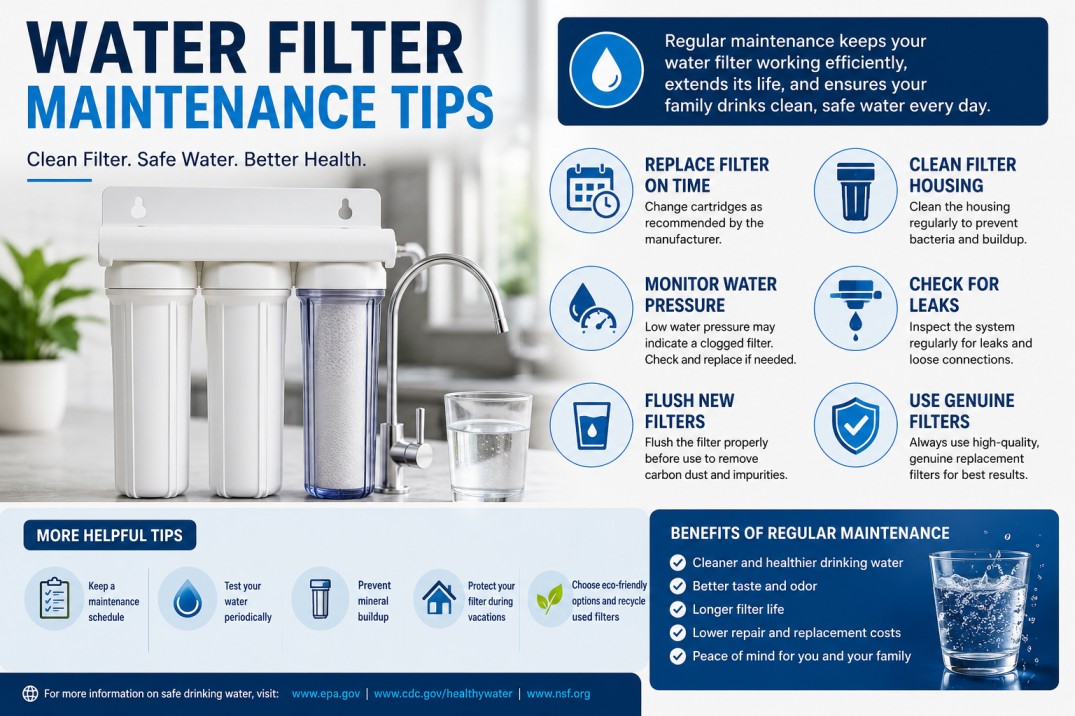
Replace Filter Cartridges on Time
One of the most important Water Filter Maintenance Tips is replacing cartridges before they become clogged.
An old cartridge can:
- Reduce water flow
- Lower filtration efficiency
- Allow contaminants to pass through
- Cause unpleasant odors
- Encourage bacterial growth
Always follow the manufacturer’s recommended replacement schedule.
Typical replacement intervals include:
- Pitcher filters: Every 2–3 months
- Carbon filters: Every 3–6 months
- Sediment filters: Every 3–6 months
- RO pre-filters: Every 6–12 months
- RO membranes: Every 2–3 years
- Whole-house filters: Every 6–12 months
Clean the Filter Housing Regularly
Replacing cartridges alone is not enough.
The filter housing can collect:
- Dirt
- Mold
- Bacteria
- Mineral deposits
Before installing a new cartridge:
- Turn off the water supply.
- Remove the old filter.
- Wash the housing using warm water.
- Use a mild dish soap if recommended.
- Rinse thoroughly.
- Sanitize if instructed by the manufacturer.
- Install the new cartridge.
Regular cleaning keeps the entire system hygienic.
Monitor Water Pressure
A sudden drop in water pressure often indicates a clogged filter.
Low pressure may result from:
- Dirty cartridges
- Sediment buildup
- Mineral deposits
- Damaged components
Ignoring pressure changes can strain your plumbing system.
If replacing the filter doesn’t restore pressure, inspect the system for additional issues.
Check for Leaks
Inspect your filtration system every few weeks.
Look for:
- Loose fittings
- Water around connections
- Cracked housings
- Worn O-rings
- Rust or corrosion
Fixing small leaks early prevents larger plumbing problems and water damage.
Flush New Filters Properly
New cartridges often contain loose carbon particles.
Always flush the filter according to the manufacturer’s instructions before drinking the water.
Flushing helps:
- Remove carbon dust
- Improve taste
- Prepare the filter for normal operation
Use Genuine Replacement Filters
Many inexpensive replacement cartridges appear identical to original filters.
However, counterfeit or low-quality filters may:
- Remove fewer contaminants
- Wear out faster
- Damage the filtration system
- Void manufacturer warranties
Purchase replacement filters from trusted retailers or directly from the manufacturer whenever possible.
Keep Maintenance Records
Keeping a maintenance log makes it easier to remember replacement dates.
Record:
- Installation date
- Filter replacement date
- Cleaning schedule
- Repairs
- Water quality concerns
Many homeowners also set reminders on their smartphones to avoid missing maintenance deadlines.
Test Your Water Periodically
Even with regular maintenance, testing your water is a smart practice.
Testing helps identify:
- Lead
- Chlorine
- Bacteria
- Hardness
- Nitrates
- pH levels
Understanding your water quality allows you to choose the most effective filtration system.
For drinking water information, visit:
https://www.cdc.gov/healthywater/drinking
Prevent Mineral Buildup
Hard water can leave mineral deposits inside your filtration system.
To reduce buildup:
- Clean components regularly.
- Replace sediment filters on time.
- Consider installing a water softener if needed.
- Inspect valves and connectors.
Mineral buildup reduces filtration efficiency and shortens equipment life.
Protect Your Water Filter During Vacations
If you’re away for several weeks:
- Turn off the water supply if recommended.
- Empty pitcher filters.
- Flush the system upon returning.
- Replace filters if required.
Stagnant water can encourage bacterial growth.
Signs Your Water Filter Needs Attention
Pay attention to warning signs such as:
- Slow water flow
- Unpleasant taste
- Bad odor
- Cloudy water
- Strange noises
- Visible leaks
- Expired filter indicator
Addressing these issues early helps prevent more serious problems.
Common Maintenance Mistakes
Many people unknowingly reduce the effectiveness of their filtration systems.
Avoid these mistakes:
- Waiting too long to replace cartridges
- Ignoring manufacturer instructions
- Forgetting to clean the housing
- Using incompatible replacement filters
- Ignoring leaks
- Skipping filter flushing
- Storing replacement filters improperly
Seasonal Maintenance Tips
Different seasons can affect your water supply.
Spring
Inspect for leaks after winter.
Summer
Increase monitoring if water usage rises.
Autumn
Replace filters before colder weather arrives.
Winter
Protect exposed pipes and filtration systems from freezing.
Seasonal inspections help maintain consistent water quality throughout the year.
Eco-Friendly Filter Maintenance
Maintaining your water filter also benefits the environment.
You can:
- Replace only worn components.
- Recycle cartridges where accepted.
- Fix leaks promptly.
- Reduce bottled water use.
- Choose long-lasting filters.
These small actions help reduce plastic waste and conserve resources.
Benefits of Proper Water Filter Maintenance
Consistent maintenance offers several long-term advantages:
- Cleaner drinking water
- Better-tasting water
- Longer equipment life
- Lower repair costs
- Improved appliance performance
- Increased filtration efficiency
- Greater peace of mind
Following these Water Filter Maintenance Tips ensures your system continues delivering safe and reliable water.
Choosing the Right Maintenance Schedule
Maintenance frequency depends on:
- Household size
- Water quality
- Filter type
- Daily water consumption
- Manufacturer recommendations
Homes with poor water quality may require more frequent filter changes than those using treated municipal water.
Helpful Online Resources
For reliable information about drinking water and filtration systems, refer to these trusted sources:
U.S. Environmental Protection Agency (EPA)
https://www.epa.gov
Centers for Disease Control and Prevention (CDC)
https://www.cdc.gov/healthywater/drinking
NSF International (Water Filter Certification)
https://www.nsf.org
These resources provide guidance on water safety, certified filtration products, and maintenance best practices.
Conclusion
Maintaining your water filter is one of the simplest yet most effective ways to protect your family’s health and ensure access to clean, great-tasting drinking water. By replacing cartridges on schedule, cleaning the filter housing, checking for leaks, monitoring water pressure, and testing your water periodically, you can maximize the performance and lifespan of your filtration system.
Following these Water Filter Maintenance Tips not only improves water quality but also saves money by preventing costly repairs and premature equipment replacement. Whether you use a simple pitcher filter or a sophisticated reverse osmosis system, consistent care ensures your investment continues to deliver safe and refreshing water every day. Make maintenance a regular habit, follow the manufacturer’s recommendations, and rely on trusted resources to keep your filtration system operating at its best for years to come.
for more: click here