Bullet Hunting Safety Tips Everyone Should Know
Bullet Hunting Safety Tips Everyone Should Know
Hunting is more than a sport or outdoor tradition—it is a responsibility. Every successful hunter understands that skill, patience, and respect for nature go hand in hand with safety. While accurate shooting and proper equipment are important, nothing matters more than ensuring that every hunting trip ends without injury or unnecessary risk. Whether you’re a first-time hunter or someone with years of experience, following proven safety practices should always be your top priority.
Bullet Hunting requires careful planning, sound judgment, and constant awareness of your surroundings. A single mistake, such as pointing a firearm in an unsafe direction or failing to identify a target correctly, can have serious consequences. Responsible hunters know that good habits save lives, protect wildlife, and preserve the positive reputation of the hunting community.
Modern hunting environments also present unique challenges. Hunters may share public land with hikers, campers, photographers, or other outdoor enthusiasts. Weather conditions can change rapidly, terrain can become difficult to navigate, and wildlife often behaves unpredictably. Because of these factors, every hunter should prepare thoroughly before entering the field.
In this guide, you’ll learn essential Bullet Hunting safety tips that every hunter should know. From firearm handling and protective gear to ethical hunting practices and emergency preparedness, these recommendations will help make every hunting trip safer, more enjoyable, and more successful.
Bullet Hunting Safety Tips Everyone Should Know:: Why Hunting Safety Matters
Safety is the foundation of responsible hunting. Every year, thousands of hunters enjoy successful seasons without incident because they follow established safety guidelines. At the same time, many hunting accidents could have been prevented through better preparation, proper firearm handling, and improved decision-making.
Safe hunting benefits everyone involved. It protects hunters, companions, landowners, and other outdoor visitors while promoting ethical treatment of wildlife. Responsible behavior also helps maintain public confidence in hunting traditions and encourages future generations to enjoy the outdoors responsibly.
Whether hunting alone or with a group, safety should never become an afterthought. It must remain a priority before, during, and after every trip.
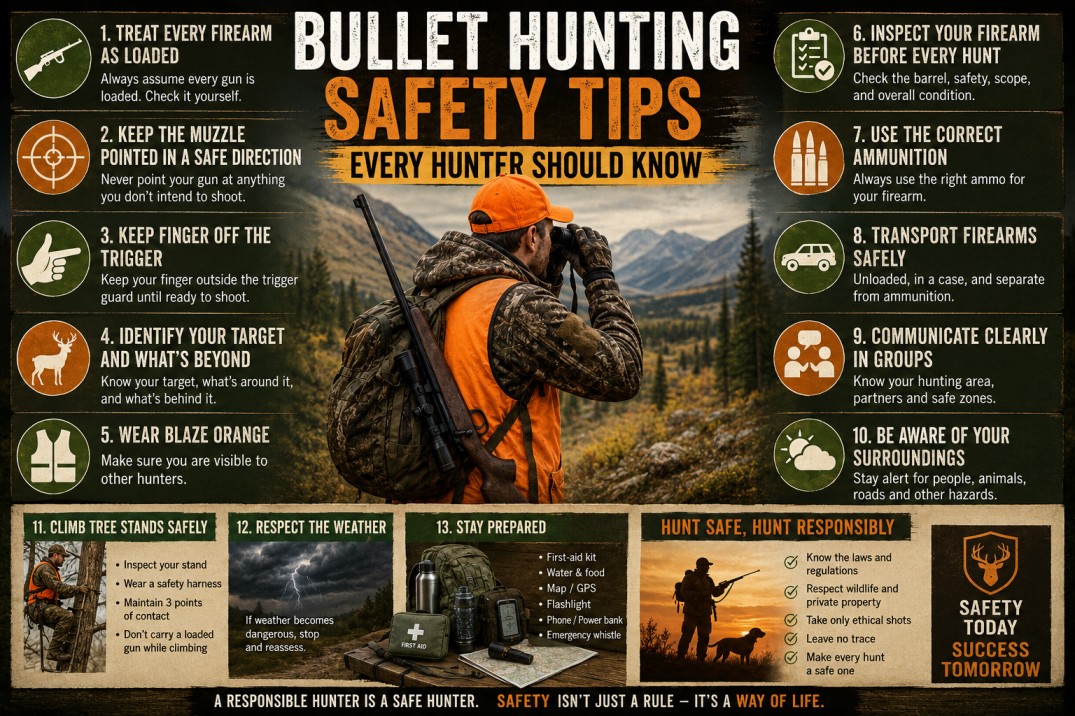
Always Treat Every Firearm as Loaded
One of the most important rules in Bullet Hunting is to assume every firearm is loaded, even if you believe it is empty.
This mindset helps prevent careless handling and reduces the chance of accidental discharge.
Before handling any firearm:
- Open the action.
- Visually inspect the chamber.
- Physically check that it is empty.
- Verify the magazine is removed if applicable.
Never rely solely on someone else’s statement that a firearm is unloaded. Always check it yourself.
Developing this habit early creates lifelong firearm safety.
Keep the Muzzle Pointed in a Safe Direction
The direction of your firearm matters at every moment.
Whether walking through the woods, climbing into a hunting stand, or crossing obstacles, the muzzle should always point where an accidental discharge would not cause injury or damage.
Avoid pointing your firearm toward:
- Other hunters
- Vehicles
- Buildings
- Livestock
- Roads
- Campsites
Maintaining muzzle discipline is one of the simplest yet most effective ways to prevent accidents.
Keep Your Finger Off the Trigger Until Ready to Shoot
Many accidental discharges happen because someone’s finger is resting on the trigger before they are prepared to fire.
Instead:
- Keep your finger outside the trigger guard.
- Rest it along the frame or stock.
- Move it to the trigger only after identifying your target and deciding to shoot.
This simple habit significantly reduces the likelihood of an unintended shot.
Identify Your Target and What’s Beyond It
One of the biggest mistakes in Bullet Hunting is shooting before fully identifying the target.
Never fire simply because you notice movement.
Always confirm:
- The species.
- The legal hunting status.
- The exact target.
- The area behind the target.
Bullets can travel long distances after passing through or missing an animal. Knowing what lies beyond your target is just as important as identifying the target itself.
Wear Blaze Orange Clothing
Visibility saves lives.
Many hunting accidents occur because one hunter mistakes another person for game.
Bright blaze orange clothing makes hunters highly visible while remaining suitable for most hunting situations.
Recommended gear includes:
- Blaze orange vest
- Orange cap
- Orange jacket
- Orange backpack cover
Different regions have different legal requirements, so always check local regulations before heading into the field.
Inspect Your Firearm Before Every Hunt
Even well-maintained firearms require inspection before each outing.
Check for:
- Clean barrel
- Properly functioning safety
- Secure scope mounts
- Tight screws
- Smooth bolt or action operation
- Clean chamber
Moisture, dirt, snow, or mud inside the barrel can create dangerous pressure when firing.
Routine inspections improve both safety and accuracy.
Use the Correct Ammunition
Using the wrong ammunition is one of the most dangerous mistakes a hunter can make.
Always verify:
- Caliber matches the firearm.
- Ammunition is undamaged.
- Cartridges are clean.
- Manufacturer specifications are correct.
Never force ammunition into a firearm if it does not fit properly.
During Bullet Hunting, selecting quality ammunition designed for your firearm improves reliability while reducing unnecessary risks.
Practice Safe Firearm Transportation
Firearms should remain unloaded while traveling unless local laws specifically allow otherwise.
Safe transportation includes:
- Unloaded firearm
- Locked firearm case
- Separate ammunition storage
- Trigger lock when appropriate
Whether traveling by truck, ATV, or boat, secure firearms carefully to prevent damage and accidental discharge.
Communicate Clearly When Hunting in Groups
Group hunting requires teamwork.
Every participant should understand:
- Hunting zones
- Safe shooting directions
- Meeting points
- Emergency procedures
- Communication methods
Never assume another hunter knows your location.
Using handheld radios or mobile phones can improve coordination, particularly in large hunting areas.
Be Aware of Your Surroundings
Nature changes constantly.
Responsible hunters remain alert to:
- Other hunters
- Hikers
- Livestock
- Roads
- Buildings
- Weather conditions
- Wildlife movement
Maintaining situational awareness reduces unnecessary risks while improving hunting success.
Avoid tunnel vision by regularly scanning your surroundings instead of focusing only on potential game.
Climb Tree Stands Safely
Tree stands provide excellent visibility but also introduce additional hazards.
Falls remain one of the leading causes of hunting injuries.
Before climbing:
- Inspect straps.
- Check platforms.
- Wear a full-body safety harness.
- Maintain three points of contact while climbing.
Never carry a loaded firearm while climbing into or out of a tree stand.
Instead, raise and lower unloaded firearms using a secure haul line after reaching your position.
Respect Weather Conditions
Weather affects both safety and hunting performance.
Heavy rain, snow, strong winds, and dense fog reduce visibility while increasing the chance of accidents.
If conditions become dangerous:
- Pause the hunt.
- Seek shelter.
- Reassess visibility.
- Wait for safer conditions.
Patience often leads to better opportunities than rushing under unsafe conditions.
Stay Physically Prepared
Hunting often involves hiking, climbing, carrying equipment, and navigating uneven terrain.
Physical preparation reduces fatigue and improves decision-making.
Bring essentials such as:
- Drinking water
- High-energy snacks
- First-aid kit
- Flashlight
- Map or GPS
- Fully charged phone
- Emergency whistle
Good physical condition helps hunters respond more effectively during unexpected situations.
For more:: Click here