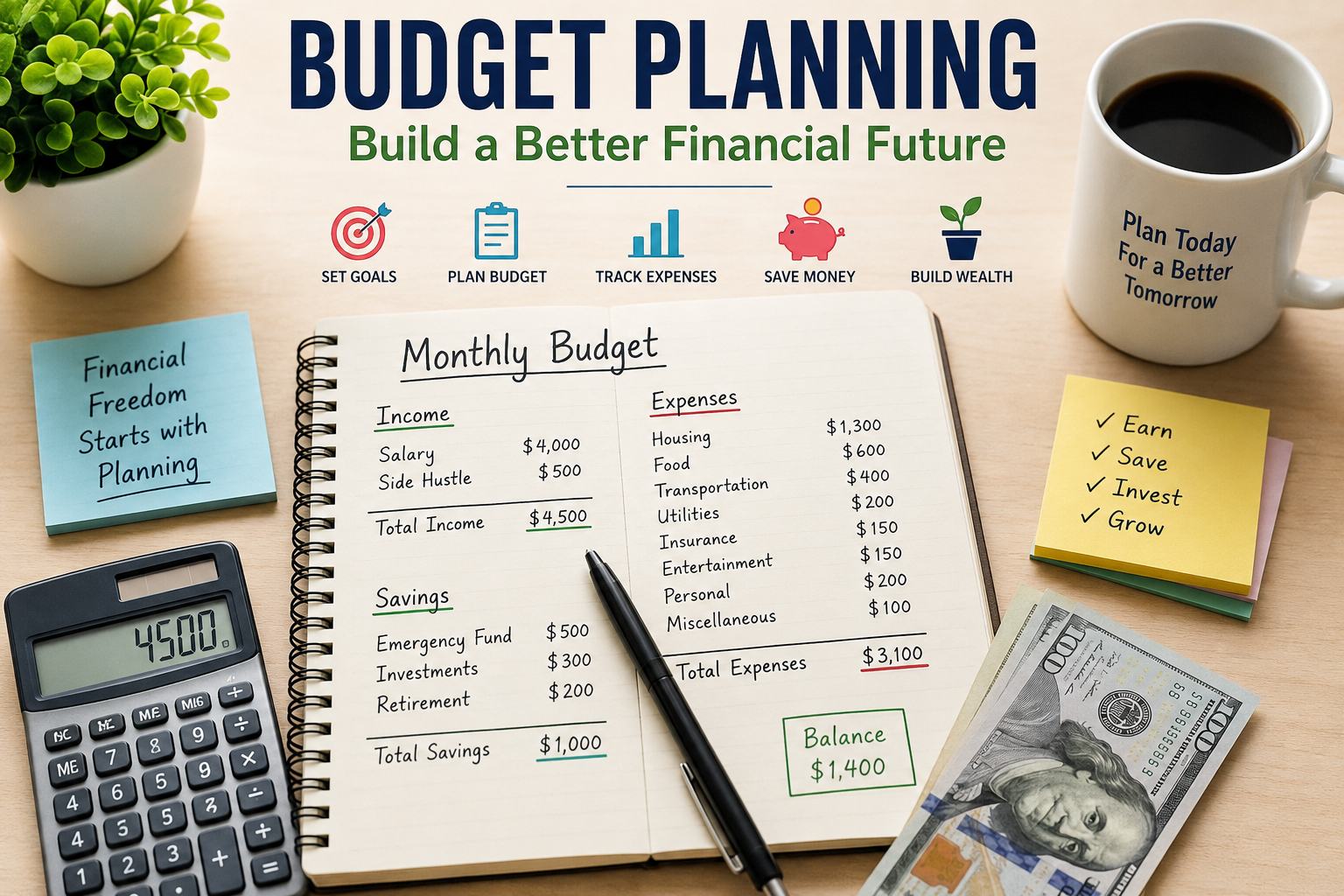
Budget Planning: Build a Better Financial Future
Budget Planning: Build a Better Financial Future
Introduction
Managing money wisely is one of the most important life skills anyone can develop. Whether you’re a student, an employee, a freelancer, or a business owner, budget planning helps you stay in control of your finances. Without a proper budget, it’s easy to overspend, fall into debt, and struggle to achieve your financial goals.
Budget planning is the process of creating a financial roadmap that outlines your income, expenses, savings, and investments. Instead of wondering where your money went every month, a budget gives every dollar a purpose.
In today’s world, where inflation continues to rise and unexpected expenses can happen at any time, having a solid budget is no longer optional—it’s essential. A well-designed budget helps you prepare for emergencies, reduce financial stress, and build long-term wealth.
In this comprehensive guide, you’ll learn everything you need to know about budget planning, including its importance, benefits, different budgeting methods, practical tips, common mistakes, and the best tools to help you manage your finances.
What Is Budget Planning?
Budget planning is the process of estimating your income and allocating it toward expenses, savings, debt payments, and investments before you actually spend it.
The primary purpose of budget planning is to ensure that your spending aligns with your financial goals.
A budget generally includes:
- Monthly income
- Fixed expenses
- Variable expenses
- Savings
- Emergency funds
- Investments
- Debt repayments
According to the Consumer Financial Protection Bureau (CFPB), budgeting helps people make informed financial decisions and prepare for future expenses.
Learn more:
https://www.consumerfinance.gov/consumer-tools/budgeting/
Why Budget Planning Is Important
Many people think budgeting is only for those with limited income. In reality, even high-income earners need budget planning because financial success depends more on how you manage money than how much you earn.
Here are the major reasons why budget planning matters.
1. Helps Control Spending
One of the biggest advantages of budget planning is preventing unnecessary spending.
When you know exactly how much money you can spend each month, you naturally become more disciplined.
Instead of impulse buying, you’ll prioritize your essential expenses.
2. Reduces Financial Stress
Money problems are among the leading causes of stress worldwide.
A proper budget helps you:
- Pay bills on time
- Avoid overdrafts
- Prepare for emergencies
- Reduce financial anxiety
When you know your finances are under control, life becomes much less stressful.
3. Encourages Saving
Saving money becomes easier when it’s included in your budget.
Instead of saving whatever remains at the end of the month, budget planning encourages you to save first.
Financial experts often recommend following the “Pay Yourself First” strategy.
Learn more:
https://www.investopedia.com/terms/p/pay-yourself-first.asp
4. Helps Achieve Financial Goals
Whether your goal is buying a house, purchasing a car, starting a business, or retiring early, budget planning provides a roadmap.
Your budget allows you to allocate money toward your goals consistently.
5. Prevents Debt
Many people rely on credit cards simply because they don’t track their spending.
A good budget ensures you only spend what you can afford.
As a result:
- Less credit card debt
- Better financial habits
- Higher credit score
Key Components of Budget Planning
An effective budget consists of several essential components.
Income
This includes every source of income, such as:
- Salary
- Freelance work
- Business income
- Rental income
- Investments
- Side hustles
Always calculate your net income (after taxes).
Fixed Expenses
These are expenses that usually remain the same every month.
Examples include:
- Rent
- Mortgage
- Insurance
- Internet
- School fees
- Loan payments
Variable Expenses
These expenses change every month.
Examples include:
- Groceries
- Fuel
- Entertainment
- Dining out
- Shopping
- Utilities
Tracking these expenses carefully can reveal opportunities to save money.
Savings
Savings should never be an afterthought.
Your budget should include:
- Emergency fund
- Vacation savings
- Retirement savings
- Education fund
Experts recommend saving at least 20% of your monthly income whenever possible.
Investments
Budget planning isn’t just about spending less.
It’s also about growing wealth.
Common investment options include:
- Stocks
- Mutual funds
- ETFs
- Real estate
- Retirement accounts
If you’re new to investing, the U.S. Securities and Exchange Commission offers beginner-friendly educational resources:
https://www.investor.gov/
Popular Budget Planning Methods
There isn’t a single budgeting method that works for everyone.
Here are the most popular approaches.
1. 50/30/20 Rule
The 50/30/20 budget is one of the easiest methods.
Income is divided into three categories:
- 50% Needs
- 30% Wants
- 20% Savings
This method is ideal for beginners.
Read more:
https://www.nerdwallet.com/article/finance/nerdwallet-budget-calculator
2. Zero-Based Budgeting
In this method, every dollar has a job.
Income minus expenses equals zero.
This doesn’t mean spending everything.
It means assigning every dollar toward:
- Bills
- Savings
- Investments
- Debt
This approach is highly effective for people who want maximum control.
Learn more:
https://www.ramseysolutions.com/budgeting/how-to-make-a-zero-based-budget
3. Envelope Budget System
With this method, you divide your spending into categories using cash envelopes.
Examples:
- Groceries
- Entertainment
- Transportation
- Dining
Once the envelope is empty, spending stops.
This method helps reduce overspending.
Best Budget Planning Tools
Technology has made budgeting much easier.
Here are some excellent budgeting tools.
Google Sheets
Perfect for creating custom budgets.
https://docs.google.com/spreadsheets/
Microsoft Excel Budget Templates
Ideal for advanced users.
https://create.microsoft.com/en-us/templates/budgets
EveryDollar
A popular zero-based budgeting app.
YNAB (You Need A Budget)
One of the world’s most recommended budgeting apps.
PocketGuard
Helps you understand how much money you can safely spend.
How to Create a Budget Planning Strategy Step by Step
Creating a successful budget planning strategy doesn’t have to be complicated. The key is consistency and understanding where your money comes from and where it goes.
Step 1: Calculate Your Monthly Income
The first step in budget planning is determining your total monthly income. Include every reliable source of earnings, such as:
- Salary
- Freelance income
- Business profits
- Rental income
- Investment returns
- Side hustle earnings
Always use your net income (income after taxes and deductions) because it reflects the money you actually have available to spend.
Step 2: Track Your Expenses
Before creating a budget, you need to understand your spending habits.
Separate your expenses into two categories:
Fixed Expenses
These remain nearly the same every month.
Examples include:
- Rent or mortgage
- Insurance
- Internet
- Phone bill
- Loan payments
- School fees
Variable Expenses
These change from month to month.
Examples include:
- Groceries
- Dining out
- Entertainment
- Fuel
- Shopping
- Utilities
Tracking expenses for at least one month gives you a realistic picture of your spending habits.
Step 3: Set Financial Goals
Budget planning becomes much more effective when you have clear financial goals.
Your goals may include:
- Building an emergency fund
- Paying off credit card debt
- Buying a car
- Purchasing a home
- Saving for retirement
- Starting a business
- Taking a vacation
Set both short-term and long-term goals.
Step 4: Create Spending Categories
Assign every dollar to a specific category.
A simple budget might include:
| Category | Suggested Percentage |
|---|---|
| Housing | 25–35% |
| Food | 10–15% |
| Transportation | 10–15% |
| Utilities | 5–10% |
| Savings | 20% |
| Entertainment | 5–10% |
| Miscellaneous | Remaining Balance |
Your percentages will vary depending on your income and lifestyle.
Step 5: Review Your Budget Every Month
Budget planning is not a one-time activity.
Review your budget monthly to:
- Adjust spending
- Increase savings
- Track financial progress
- Prepare for upcoming expenses
Regular reviews help you stay on track.
Common Budget Planning Mistakes to Avoid
Even the best budget can fail if you make common financial mistakes.
1. Not Tracking Small Expenses
Many people ignore small purchases like coffee, snacks, or online subscriptions.
These expenses add up quickly over time.
2. Setting Unrealistic Goals
A budget should challenge you—but not make life impossible.
For example:
Instead of trying to save 70% of your income immediately, start with 10–20%.
3. Forgetting Emergency Expenses
Unexpected costs happen.
Examples include:
- Medical bills
- Car repairs
- Home maintenance
- Job loss
Include an emergency fund in every budget.
4. Ignoring Debt
High-interest debt can destroy your financial progress.
Budget planning should include regular debt payments to reduce interest costs over time.
5. Giving Up Too Early
The first budget rarely works perfectly.
Review it monthly and make adjustments instead of quitting.
Budget Planning Tips for Different Life Stages
Budget Planning for Students
Students often have limited income, making budgeting especially important.
Helpful tips:
- Track every expense.
- Use student discounts.
- Avoid unnecessary debt.
- Buy used textbooks.
- Save part of any scholarship or allowance.
Budget Planning for Families
Families usually have more financial responsibilities.
A family budget should include:
- Housing
- Food
- Children’s education
- Insurance
- Healthcare
- Savings
- Emergency fund
Review family expenses together to encourage financial responsibility.
Budget Planning for Freelancers
Freelancers often deal with irregular income.
Best practices include:
- Save during high-income months.
- Build a larger emergency fund.
- Separate business and personal finances.
- Estimate taxes in advance.
Budget Planning for Small Business Owners
Business owners should create separate budgets for personal and business finances.
Include:
- Operating costs
- Payroll
- Marketing
- Taxes
- Equipment
- Emergency business savings
Keeping finances separate improves financial clarity.
The Importance of an Emergency Fund
An emergency fund is one of the most important parts of budget planning.
It protects you from unexpected financial emergencies without relying on loans or credit cards.
Experts generally recommend saving three to six months’ worth of living expenses in an easily accessible account.
Learn more:
https://www.consumerfinance.gov/an-essential-guide-to-building-an-emergency-fund/
How Budget Planning Helps You Build Wealth
Many people think budgeting limits freedom.
In reality, it creates financial freedom.
Budget planning allows you to:
- Invest consistently
- Save for retirement
- Avoid unnecessary debt
- Build assets
- Increase net worth
- Reach financial independence faster
Wealth is built through consistent financial habits, not just high income.
Best Budget Planning Apps
Technology makes managing money easier than ever.
1. YNAB (You Need A Budget)
Features:
- Goal tracking
- Debt management
- Expense tracking
- Real-time budgeting
Website:
https://www.ynab.com/
2. EveryDollar
Best for:
- Zero-based budgeting
- Monthly planning
- Easy-to-use interface
Website:
https://www.everydollar.com/
3. PocketGuard
Features:
- Spending insights
- Bill tracking
- Savings suggestions
Website:
https://pocketguard.com/
4. Google Sheets
Ideal for users who prefer customizable budgeting templates.
Website:
https://docs.google.com/spreadsheets/
5. Microsoft Excel Budget Templates
Offers professional budgeting templates for personal and business use.
Website:
https://create.microsoft.com/en-us/templates/budgets
Frequently Asked Questions (FAQs)
What is budget planning?
Budget planning is the process of organizing your income and expenses so you can manage money efficiently, save regularly, and achieve your financial goals.
Why is budget planning important?
Budget planning helps you control spending, reduce financial stress, avoid debt, build savings, and prepare for future expenses.
How often should I review my budget?
It’s recommended to review your budget at least once a month or whenever your income or expenses change significantly.
Which budgeting method is best?
The best method depends on your financial situation. Beginners often find the 50/30/20 Rule easy to follow, while those seeking greater control may prefer Zero-Based Budgeting.
Can budget planning help me get out of debt?
Yes. A well-structured budget allows you to prioritize debt payments, reduce unnecessary spending, and allocate more money toward paying off loans and credit cards.
Final Thoughts
Budget planning is one of the most powerful financial habits you can develop. It empowers you to make informed decisions about your money, reduce unnecessary expenses, and work steadily toward your financial goals. Whether you’re saving for a home, paying off debt, building an emergency fund, or planning for retirement, a well-crafted budget provides the structure needed to succeed.
Remember that budgeting is not about restricting your lifestyle—it’s about making intentional choices with your money. Start with a simple plan, review it regularly, and adjust as your circumstances change. Over time, these small, consistent efforts can lead to greater financial stability, reduced stress, and a more secure future.
By making budget planning a regular part of your financial routine, you’re taking an important step toward building a better financial future for yourself and your family
For more: click here